Kerassentials Ingredients: What’s in the Formula and Does It Make Sense?
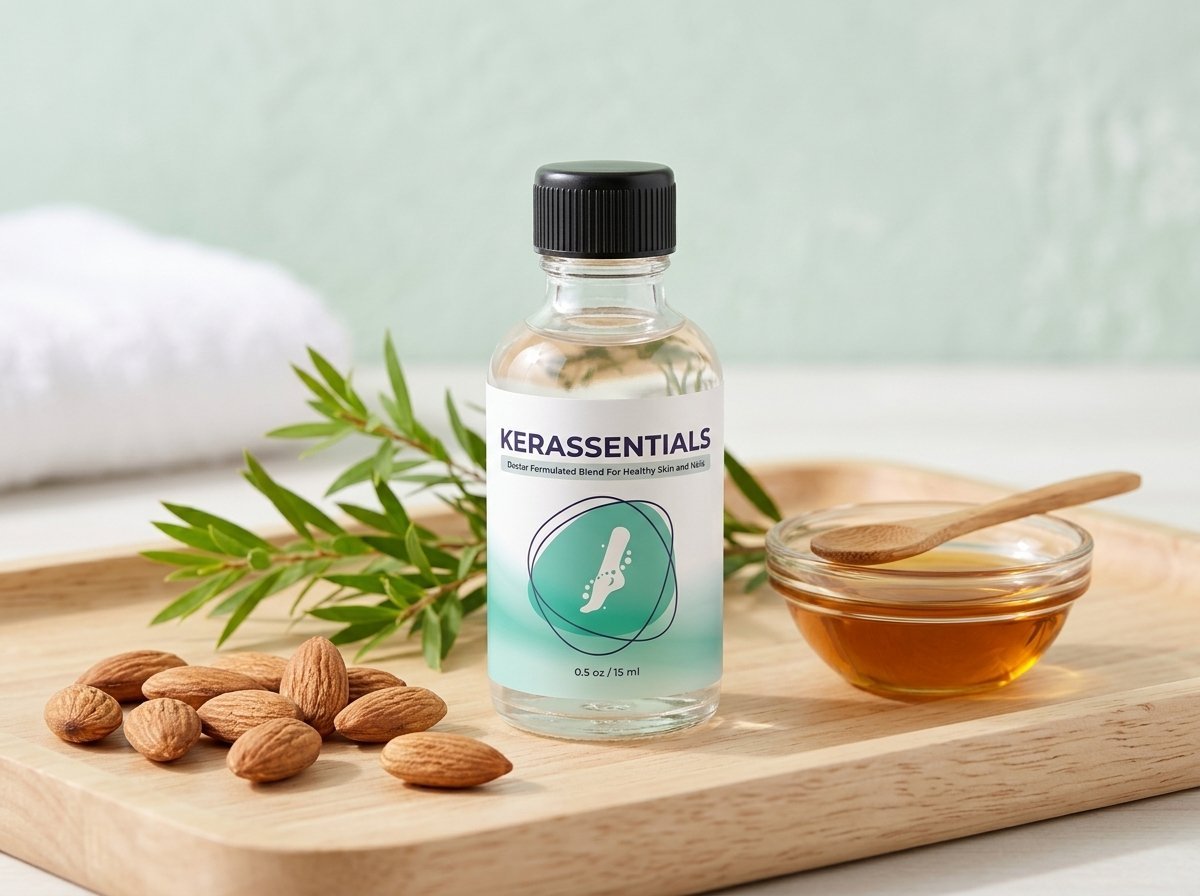
If you are considering Kerassentials, the ingredient list is one of the most important parts of the buying decision.
Kerassentials combines essential oils, carrier oils, and skin-supportive compounds in a topical formula designed for the nails and surrounding skin. Some ingredients have relevant antifungal research, while others are included mainly for conditioning, comfort, and barrier support.
The formula is not random. Undecylenic acid and tea tree oil give it a credible foundation for this product category, while lavender oil, lemongrass oil, aloe vera, flaxseed oil, almond oil, and vitamin E support the surrounding skin.
The main limitation is that Kerassentials does not disclose the concentration of each ingredient. That means we can evaluate whether the formula makes sense, but not whether every active compound is present at a level comparable to the research behind it.
For our broader evaluation of the product, including pricing, value, safety, and who it may suit, see our complete Kerassentials review.
Quick Answer
Kerassentials lists eight main ingredients:
- Undecylenic acid
- Tea tree oil
- Lavender oil
- Lemongrass oil
- Aloe vera
- Organic flaxseed oil
- Almond oil
- Tocopheryl acetate, a form of vitamin E
Undecylenic acid and tea tree oil provide the strongest antifungal rationale. The remaining ingredients mainly help condition the nail area, soothe surrounding skin, and make the formula more suitable for repeated topical application.
Our editorial conclusion: The ingredient selection is logical and more purposeful than a generic botanical oil blend. However, undisclosed concentrations and the lack of a finished-product clinical study make it impossible to confirm how closely Kerassentials matches the research behind its key ingredients.
Kerassentials Ingredients at a Glance
| Ingredient | Main Role in Formula | Evidence Profile |
|---|---|---|
| Undecylenic acid | Primary antifungal-relevant compound | Established OTC use for specified superficial fungal skin conditions; indirect for nail fungus |
| Tea tree oil | Antifungal and antimicrobial support | Human and laboratory evidence; results are mixed and concentration-dependent |
| Lavender oil | Botanical support and skin comfort | Mainly laboratory and supportive evidence |
| Lemongrass oil | Antimicrobial and soothing support | Mainly laboratory evidence |
| Aloe vera | Skin-soothing and barrier support | Stronger evidence for skin comfort than nail-specific antifungal effects |
| Organic flaxseed oil | Conditioning and carrier support | Indirect relevance through skin and barrier support |
| Almond oil | Carrier oil and emollient | Primarily a functional formulation ingredient |
| Tocopheryl acetate | Antioxidant and barrier support | Established topical skincare role; limited nail-fungus-specific evidence |
The lack of individual concentrations is the most important transparency limitation in the formula.
Full Kerassentials Formula Breakdown
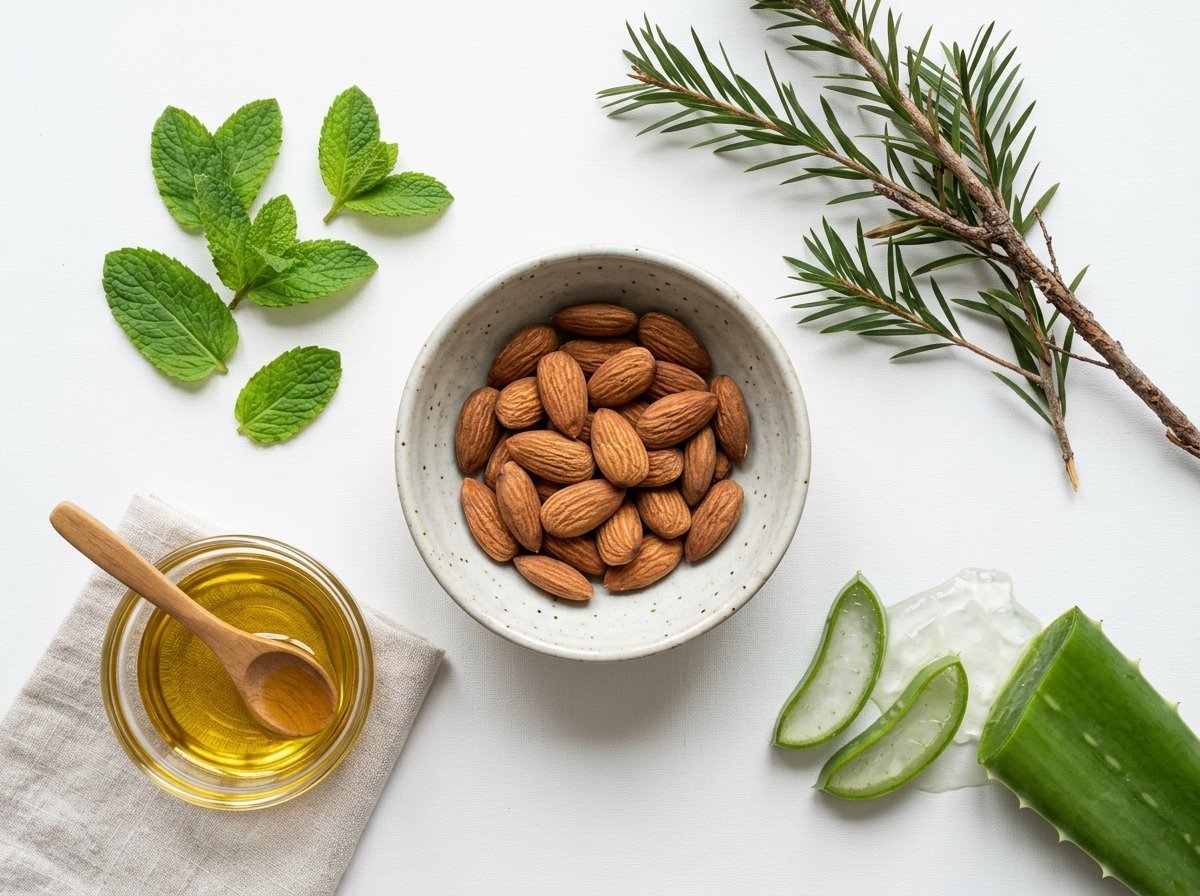
Undecylenic Acid
Undecylenic acid is one of the most meaningful ingredients in Kerassentials.
It is a fatty-acid derivative with a long history of use in topical antifungal products. Undecylenic acid and certain undecylenate salts are included in the FDA’s OTC topical antifungal framework when used at specified concentrations, generally totaling 10% to 25%, for superficial fungal skin conditions such as athlete’s foot, ringworm, and jock itch.
That regulatory context makes undecylenic acid more credible than a purely cosmetic botanical. However, it does not mean that Kerassentials itself is an FDA-approved antifungal medication, nor does it establish the product as a proven treatment for onychomycosis.
Nail fungus is more difficult to address than a superficial skin infection because the active compound must move through or around the dense nail plate. The presence of undecylenic acid is therefore encouraging, but concentration and delivery still matter. Kerassentials does not disclose how much undecylenic acid it contains, so it’s not possible to determine whether its concentration resembles the ranges used in regulated OTC topical antifungal products.
- Primary Function: Core antifungal active
- Evidence Quality: Strong for superficial skin mycoses; indirect for thick nail plates
- Key Consideration: One of the strongest inclusions in the formula. Its presence improves the product’s credibility, but the missing concentration prevents a confident assessment of its likely strength.
Tea Tree Oil (Melaleuca alternifolia)
Tea tree oil is one of the best-known botanical ingredients used in topical products for nail and skin concerns.
Laboratory studies have shown activity against several fungal species, but minimum inhibitory concentrations vary by organism, oil composition, and testing method. Laboratory thresholds should not be interpreted as automatically effective concentrations for a human toenail, where penetration is substantially more difficult.
One frequently cited randomized trial compared twice-daily application of 100% tea tree oil with 1% clotrimazole in 117 people with culture-confirmed toenail onychomycosis. After six months, culture clearance occurred in 18% of the tea tree oil group and 11% of the clotrimazole group. Partial or full clinical improvement was similar between groups, at approximately 60%. These findings suggest topical activity, but they do not establish tea tree oil as a consistently effective cure (Buck et al., 1994 — J Fam Pract).
The study also used undiluted tea tree oil. Kerassentials combines tea tree oil with seven other ingredients and does not reveal the percentage included. It would therefore be inappropriate to assume that the finished formula delivers an equivalent exposure.
- Primary Function: Natural topical antifungal and antimicrobial support
- Evidence Quality: Moderate to high — backed by both human trial data and laboratory research
- Key Consideration: A credible inclusion that may work best combined with undecylenic acid, though concentration remains an open question.
Lavender Oil (Lavandula angustifolia)
Lavender oil is included primarily as a supporting botanical. Laboratory research has reported antifungal activity against certain fungal species, but most of this evidence comes from in-vitro testing rather than controlled trials on affected human toenails.
Lavender oil may be more useful for the surrounding skin, where it’s commonly included for aromatic, soothing, and skin-conditioning qualities — relevant because people with unhealthy-looking nails may also experience dryness or irritation nearby.
- Primary Function: Botanical support and skin comfort
- Evidence Quality: Supportive, laboratory-based
- Key Consideration: A reasonable secondary ingredient — more defensible as skin support than as a primary antifungal active.
Lemongrass Oil (Cymbopogon citratus)
Lemongrass oil has demonstrated antimicrobial and antifungal properties in laboratory research, often studied against Candida species for its high citral content. There is limited direct human evidence showing that lemongrass oil alone improves toenail fungus.
In Kerassentials, lemongrass oil likely serves as a supporting botanical rather than the main active ingredient, complementing tea tree oil while contributing anti-inflammatory and skin-comfort properties.
- Primary Function: Secondary botanical antimicrobial
- Evidence Quality: Laboratory-based
- Key Consideration: A relevant supporting ingredient, but not one that should carry the product’s effectiveness claims on its own.
Aloe Vera
Aloe vera is best known for its soothing and skin-supportive role. Although some laboratory research has reported antifungal activity, aloe’s stronger and more reliable use in a formula like this is helping moisturize and calm the surrounding skin — useful in a product applied regularly around nails that may be dry, rough, or irritated.
- Primary Function: Cutaneous hydration and barrier relief
- Evidence Quality: High for general skin soothing; low for direct nail antifungal action
- Key Consideration: A sensible supporting ingredient for comfort and tolerability, rather than a primary antifungal compound.
Organic Flaxseed Oil
Flaxseed oil contains alpha-linolenic acid and other fatty components associated with skin conditioning and barrier support. Its role in Kerassentials is likely to help soften dry skin, improve the spreadability of the formula, and act as a carrier for other oil-soluble ingredients. Any antifungal relevance is secondary and insufficient to treat flaxseed oil as an active nail-fungus ingredient.
- Primary Function: Emollient and skin barrier support
- Evidence Quality: High for topical skin hydration
- Key Consideration: A useful conditioning and carrier oil that supports the formulation but isn’t a reason to expect antifungal activity.
Almond Oil
Almond oil serves primarily as an emollient and carrier, helping the formula spread across the nail and surrounding skin while reducing dryness. It does not have a strong evidence base for toenail fungus itself.
People with a known almond or tree-nut allergy should not assume topical almond oil is automatically harmless — the product does not clearly explain the refinement process or residual protein content of the oil. Allergy-sensitive users should avoid the product unless a qualified healthcare professional considers it appropriate.
- Primary Function: Formulation vehicle and skin emollient
- Evidence Quality: Functional skincare vehicle
- Key Consideration: Practical for texture and spreadability, but a critical consideration for buyers with tree-nut sensitivities.
Tocopheryl Acetate — Vitamin E
Tocopheryl acetate is a stable form of vitamin E widely used in skincare products. Its main functions are antioxidant support and skin conditioning, helping maintain the surrounding skin barrier and reduce dryness with consistent use. Vitamin E should not be interpreted as an antifungal ingredient — its role is supportive rather than active.
- Primary Function: Topical antioxidant and cuticle protection
- Evidence Quality: Well-established for dermatological hydration and protection
- Key Consideration: A practical, low-controversy addition that improves the formula’s skin-care profile.
Which Kerassentials Ingredients Matter Most?
The ingredients are not equally important.
Primary antifungal-relevant ingredients
The two ingredients carrying most of the formula’s antifungal rationale are:
Undecylenic acid — Provides the strongest regulatory and functional precedent in the formula. Its established use in OTC topical antifungal products makes it a meaningful inclusion, even though Kerassentials does not disclose its concentration.
Tea tree oil — Has human and laboratory research showing topical antifungal potential. Its usefulness depends heavily on concentration, formulation quality, stability, and the ability to reach the affected area.
These two ingredients give Kerassentials a stronger foundation than a product made only from carrier oils and general skincare botanicals.
Supporting ingredients
Lavender oil, lemongrass oil, aloe vera, flaxseed oil, almond oil, and vitamin E mainly help with skin comfort, hydration, conditioning, formula spreadability, and overall user experience. They are not unnecessary — a topical product used consistently should ideally be comfortable enough to apply every day — but they should not be mistaken for evidence that the formula can reliably eliminate a fungal infection.
What the Formula Appears Designed to Do
The ingredient list suggests a two-part formula strategy: (1) provide topical antifungal support through undecylenic acid and tea tree oil, creating an environment less favorable to fungal growth, and (2) condition the nail area and surrounding skin through the remaining six ingredients — useful for dryness, rough skin, irritation, and brittle-looking nails around the affected area.
This combination makes sense for a daily-use topical nail oil. The formula is broader than a single-active antifungal product because it also emphasizes comfort and cosmetic support.
What Is Missing or Underexplored?
Kerassentials has a logical ingredient list, but several important details remain unclear.
Exact ingredient concentrations. No individual amounts or percentages are disclosed. This matters most for undecylenic acid and tea tree oil because both ingredients have concentration-dependent activity. The absence of exact amounts does not prove the formula is weak — it simply means buyers cannot independently compare it with regulated OTC concentration ranges, human trials, or competing formulas with disclosed percentages.
Finished-product clinical testing. The available evidence relates primarily to individual ingredients, not the commercial Kerassentials formula. There does not appear to be a publicly available independent clinical trial showing that the complete product improves nail fungus or produces a defined success rate. Evidence for an ingredient does not automatically become evidence for every formula containing that ingredient.
Nail penetration. Toenails are made from dense keratin, a physical barrier that makes topical delivery challenging and contributes to the generally lower success rates seen with topical options compared with oral treatment. The disclosed formula does not contain an obvious keratolytic ingredient such as urea or salicylic acid, and the manufacturer does not identify a clinically validated nail-penetration system. Urea is sometimes used alongside antifungal products to soften thickened nail material, and reviews suggest it may improve some clinical outcomes as an adjunct, though the overall evidence remains limited and uneven. This doesn’t prove Kerassentials cannot penetrate the nail — oils and formulation vehicles may still influence delivery — but it does mean nail penetration remains an unresolved part of the product.
Formula Logic: The Bigger Picture
Yes, the formula makes logical sense.
Kerassentials combines two antifungal-relevant ingredients, several botanicals with supporting antimicrobial or soothing potential, carrier oils, skin-conditioning ingredients, and antioxidant support — a more coherent construction than a generic natural oil containing only cosmetic ingredients. The product is most convincing when viewed as a topical nail-and-skin support oil for people with mild concerns and realistic expectations.
The qualification is that formula logic and formula strength are not the same thing. A well-designed ingredient list can vary considerably in real-world performance depending on concentration, ingredient quality, stability, frequency of application, nail penetration, severity of the condition, and consistency of use. Because concentrations and finished-product testing are not disclosed, Kerassentials can be evaluated more confidently for ingredient selection than for expected effectiveness.
Safety and Allergy Considerations
Kerassentials is topical, so systemic drug interactions are less prominent than they would be with an oral supplement. The main concerns involve irritation, sensitivity, allergies, and the condition of the skin where the product is applied.
Essential-oil irritation. Tea tree oil and lavender oil can cause redness, burning, itching, or allergic contact dermatitis in sensitive users. Tea tree oil allergy is well documented, particularly when the oil has oxidized or is applied repeatedly, with reactions more common after exposure to undiluted or aged oil. A 24-hour patch test on a small area of intact skin is a sensible precaution before regular use, especially for anyone with sensitive skin or a history of essential oil reactions.
Almond and tree-nut allergy. Kerassentials contains almond oil. People with known almond or tree-nut allergies should avoid assuming that topical use is automatically safe — a clinician or allergy specialist is the appropriate person to assess individual risk.
Broken or irritated skin. Essential-oil formulas should not be applied casually to open wounds, actively bleeding skin, severely cracked areas, infected cuts, or highly inflamed skin. Compromised skin may react more strongly and may require medical evaluation.
Diabetes and poor circulation. People with diabetes, neuropathy, impaired circulation, or recurring foot problems should obtain professional guidance before self-treating nail or foot concerns — in these groups, small skin or nail problems can carry greater risk.
Pregnancy and breastfeeding. People who are pregnant or breastfeeding should discuss regular use of an essential-oil-containing topical product with a qualified healthcare professional before starting.
The issue is not that Kerassentials is known to be dangerous. The issue is that adequate product-specific safety data are not publicly available.
For a dedicated safety analysis, see our guide to Kerassentials side effects.
Medical Caution & Allergy Flags:
You should consult a healthcare professional before using Kerassentials if you have:
- Diabetes, peripheral neuropathy, or poor circulation
- Known almond or tree-nut allergies
- Open wounds, bleeding, or severely broken skin around the nail
- Pregnancy or breastfeeding considerations for daily essential oil exposure
For diabetic foot concerns or severe painful nail damage, seek professional medical guidance rather than relying on over-the-counter topicals.
Is Kerassentials Right for You? Quick Decision Guide
It’s a logical choice if:
- You have early, mild nail discoloration, brittleness, or rough surrounding skin
- You prefer a natural, non-prescription topical routine over oral medications
- You’re committed to applying the oil consistently for several weeks as the nail grows out (toenails grow slowly — typically 1 to 1.5 mm per month — so change takes time, not days)
- You want to try the formula under the official money-back guarantee before fully committing
It’s not the right starting point if:
- You have a severe, painful, or long-standing fungal infection that hasn’t responded to other treatment
- You have diabetes, neuropathy, or impaired circulation
- You have a tree-nut allergy (almond oil) or a history of essential oil skin reactions
- You expect a fast or guaranteed result rather than a gradual, uncertain one
Final Verdict
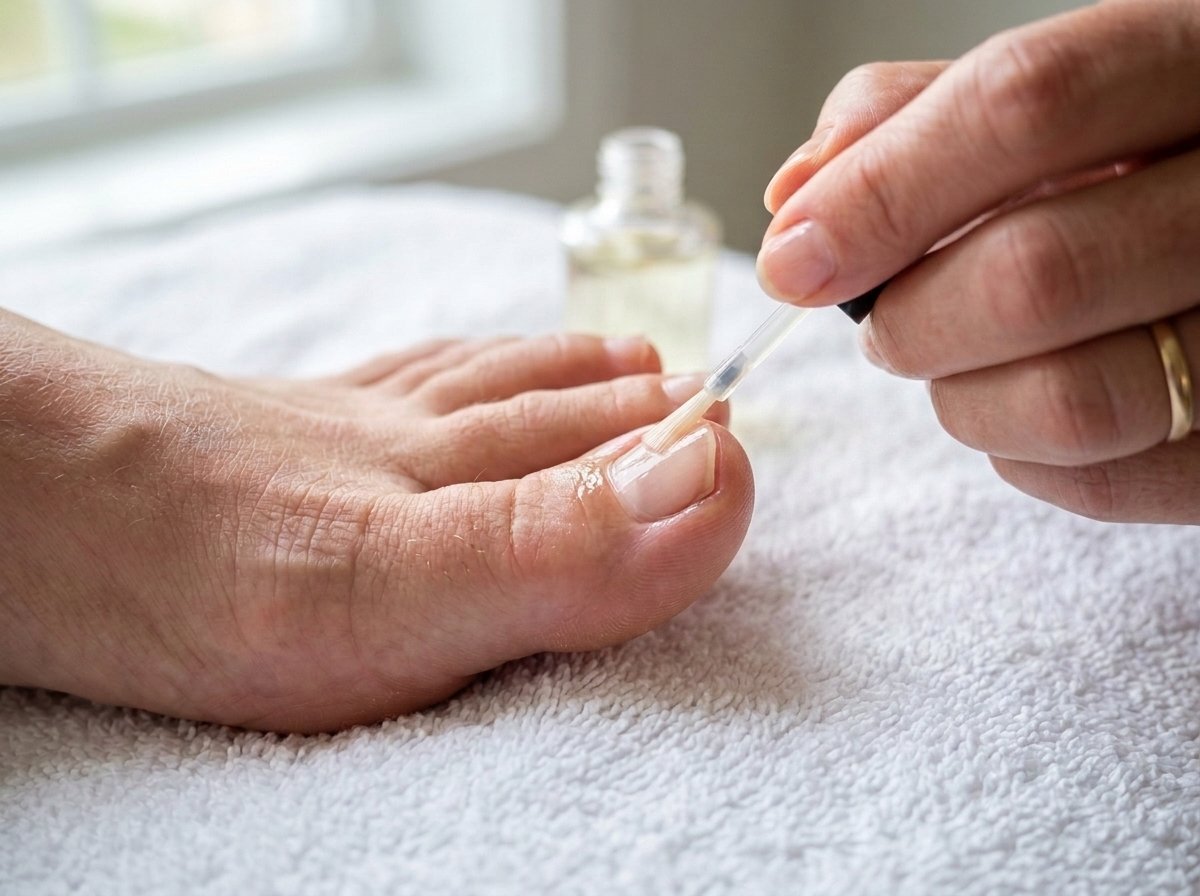
Kerassentials has a more coherent ingredient profile than many generic topical nail oils.
Undecylenic acid and tea tree oil provide a legitimate antifungal rationale. Lavender oil, lemongrass oil, aloe vera, flaxseed oil, almond oil, and vitamin E support skin comfort, conditioning, and daily usability. That makes the formula reasonable rather than empty.
The main limitation is transparency. Kerassentials does not disclose individual concentrations, and there is no publicly available independent clinical trial on the finished formula. To evaluate how these transparency limits affect buyer protection and refund policy terms, see our Kerassentials legitimacy check.
For qualified readers: If the decision guide above points to “logical choice” for your situation, Kerassentials’ ingredient list holds up to scrutiny — the concentration gaps are a real limitation to keep in mind, not a reason to dismiss it outright. For the full buying decision, including pricing, guarantee details, and who the product may suit, read our full Kerassentials review.
For higher-risk readers: If the decision guide points to “not the right starting point” — particularly diabetes, impaired circulation, a tree-nut allergy, or a severe or clinically diagnosed infection — this ingredient profile is not a substitute for professional care. Speak with a dermatologist, podiatrist, or physician before using any topical product in this category, this one included.
Frequently Asked Questions
What are the main active ingredients in Kerassentials?
The two most important antifungal-relevant ingredients are undecylenic acid and tea tree oil. The remaining ingredients mainly support the skin, improve conditioning, and help create a usable topical formula.
Does Kerassentials disclose ingredient concentrations?
No. Kerassentials lists its ingredients but does not disclose the individual amounts or percentages. This makes it impossible to confirm whether its key ingredients are present at concentrations comparable to regulated OTC products or published research.
Is undecylenic acid a real antifungal ingredient?
Yes. Undecylenic acid and certain related salts have recognized use in OTC topical antifungal products at specified concentrations (typically 10–25%) for superficial fungal skin conditions. That does not prove Kerassentials itself is an approved antifungal drug or that it treats toenail fungus.
Does tea tree oil work for toenail fungus?
Tea tree oil has shown antifungal activity in laboratory research and has been studied in people with toenail fungus. A clinical trial found similar partial or full clinical improvement between 100% tea tree oil and 1% clotrimazole after six months, but culture-clearance rates were low in both groups. The evidence suggests potential rather than guaranteed effectiveness.
Does Kerassentials contain urea or salicylic acid?
No. Kerassentials does not include strong keratolytic agents like urea or salicylic acid to help soften thick nail plates. Its formula relies on essential and carrier oils rather than a dedicated nail-penetration system.
Is almond oil in Kerassentials safe for people with nut allergies?
People with almond or tree-nut allergies should not assume that topical almond oil is safe. They should avoid the product unless a qualified healthcare professional advises otherwise.
Can people with diabetes use Kerassentials?
People with diabetes or neuropathy should consult a podiatrist or physician before self-treating foot or nail concerns, since minor complications can carry higher risk in this group.
How long should I use Kerassentials before evaluating results?
Toenails grow slowly — typically 1 to 1.5 mm per month. Consistent application for at least 8 to 12 weeks is a more realistic window for judging visible change than a few days or even a couple of weeks.
Is Kerassentials sold on Amazon or eBay?
No. Kerassentials is sold exclusively through its official website. Third-party marketplace listings are not authorized by the manufacturer and are not covered by the guarantee.
Does the ingredient list prove that Kerassentials works?
No. A logical ingredient list supports formula plausibility, but it does not prove the finished product works. Product-level proof would require reliable testing of Kerassentials itself, including its actual concentrations and clinical outcomes.