Kerassentials Side Effects: What to Know Before Use
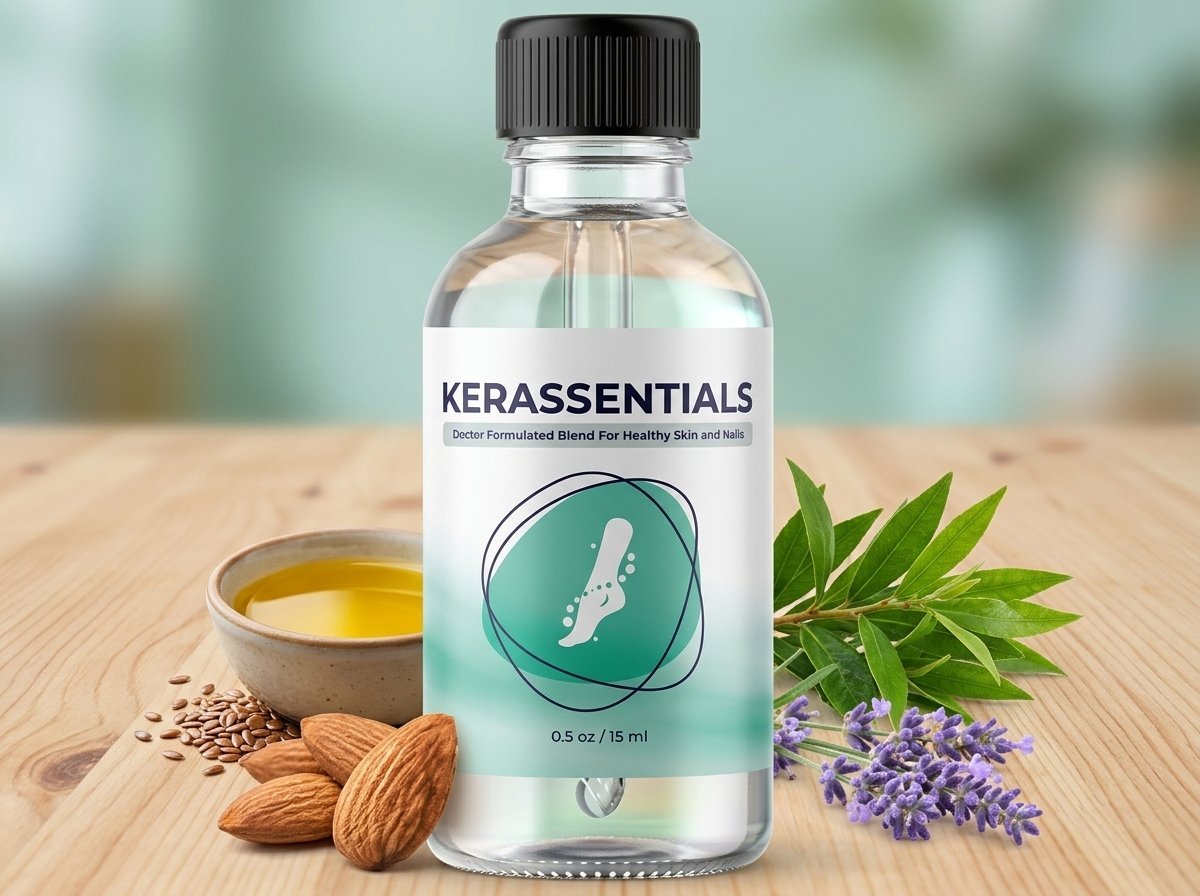
Kerassentials is a topical nail and skin oil, so its potential side effects are different from those associated with oral antifungal medications.
The main concerns are local reactions around the application area, including redness, itching, burning, sensitivity, or allergic contact dermatitis. These reactions are most relevant because Kerassentials contains several essential oils, along with almond oil and other botanical ingredients.
That does not mean the product is unusually dangerous. Most topical cosmetic and wellness products can cause irritation in some users, and there is no published safety study showing how frequently reactions occur with Kerassentials specifically.
This guide explains the most plausible Kerassentials side effects, which ingredients deserve the closest attention, how to reduce the chance of irritation, and when professional medical advice is more appropriate than self-treatment.
For a broader look at the formula, benefits, value, and realistic expectations, read our complete Kerassentials review.
Quick Answer
Kerassentials is applied locally, so the most plausible side effects are skin-related rather than systemic.
Possible reactions may include:
- Redness
- Itching
- Burning or stinging
- Dryness
- Rash
- Swelling
- Allergic contact dermatitis
- Irritation when applied to broken or inflamed skin
Tea tree oil, lavender oil, and lemongrass oil can irritate or sensitize some people. Almond oil may also be relevant for buyers with almond or tree-nut allergies.
There is no published product-specific safety trial, so the actual frequency of Kerassentials side effects is unknown.
Bottom line: Kerassentials does not appear to present the same systemic concerns as an oral antifungal, but it should still be treated like any concentrated topical botanical product. Use it only on intact skin, follow the manufacturer’s directions, and stop if significant irritation develops.
Does Kerassentials Appear Safe?
Based on its format and ingredient list, Kerassentials appears to have a relatively straightforward topical safety profile.
It does not contain stimulants or orally consumed compounds, and it is not intended to be swallowed. That makes systemic side effects less likely than with an oral product.
However, “topical” does not mean “risk-free.”
Essential oils and botanical extracts can cause:
- Immediate irritation
- Delayed allergic reactions
- Fragrance sensitivity
- Worsening of pre-existing dermatitis
- Discomfort when applied to damaged skin
Because Kerassentials does not disclose individual ingredient concentrations, it is not possible to estimate how irritating or sensitizing the completed formula may be. For a full breakdown of the blend, read our analysis of Kerassentials ingredients.
There is also no publicly available clinical study reporting the rate of adverse reactions among Kerassentials users.
The most accurate position is therefore: Kerassentials has a plausible topical safety profile, but its actual tolerability as a finished product has not been independently established.
Possible Kerassentials Side Effects
Redness and Mild Irritation
Redness is one of the most plausible reactions to a topical essential-oil formula.
It may appear shortly after application and may be accompanied by warmth, mild stinging, dryness, tightness, or localized discomfort.
A brief sensation does not always indicate an allergy, but persistent burning, worsening redness, or increasing discomfort is a reason to stop using the product.
Do not assume that stronger sensation means stronger effectiveness. Applying more than directed may increase irritation without improving results.
Itching
Itching may occur when the skin is irritated or when a person is sensitive to one of the ingredients.
Mild itching that begins soon after application may represent simple irritation. Itching that becomes progressively worse, spreads beyond the application area, or appears with swelling or rash may suggest an allergic contact reaction.
Stop using the product if itching is persistent or clearly worsening.
Burning or Stinging
Essential oils can sting when applied to cracked skin, recently trimmed cuticles, abrasions, open wounds, or inflamed tissue.
Kerassentials should not be applied casually to damaged skin.
If burning is significant or continues after the product is removed, discontinue use and wash the area gently.
Rash or Contact Dermatitis
Contact dermatitis is an inflammatory skin reaction caused by either irritation or allergy.
Irritant Contact Dermatitis
This occurs when a substance directly damages or disrupts the skin barrier. Possible signs include burning, dryness, redness, scaling, and tenderness. It may appear relatively soon after application.
Allergic Contact Dermatitis
This is an immune-mediated reaction to an ingredient. Possible signs include intense itching, swelling, blistering, oozing, rash spreading beyond the exact application area, and symptoms that continue after the product is discontinued.
Allergic contact dermatitis may be delayed, which means it can appear after repeated use rather than after the first application.
Swelling
Mild localized swelling may accompany irritation or contact dermatitis.
More significant swelling, especially when combined with blistering, spreading redness, hives, or breathing difficulty, requires prompt medical attention.
Severe allergic reactions from a topical nail oil would be expected to be uncommon, but they should not be ignored.
Ingredient-Related Safety Considerations
Tea Tree Oil
Tea tree oil is one of the most important ingredients to consider from a tolerability standpoint.
It is widely used in topical antimicrobial products, but it can cause allergic contact dermatitis in susceptible individuals.
A dermatology review found that positive reactions during routine patch testing ranged from approximately 0.1% to 3.5%. Those figures come from clinical patch-testing populations and should not be interpreted as the expected reaction rate among Kerassentials users or the general population. They simply confirm that tea tree oil can act as a contact allergen.
The condition of the oil also matters. Fresh tea tree oil is generally considered a weak-to-moderate sensitizer, while exposure to air, light, and heat can create oxidation products with greater allergenic potential.
This does not mean an opened Kerassentials bottle automatically becomes unsafe. It means sensible storage is worthwhile.
Practical considerations:
- Keep the bottle tightly closed
- Store it away from excessive heat and direct sunlight
- Follow the stated expiration and storage instructions
- Stop using it if the product changes noticeably in odor, appearance, or texture
- Use extra caution if you have previously reacted to tea tree oil, fragrances, or essential oils
Lavender Oil
Lavender oil can also cause contact sensitivity.
Two of its main components, linalool and linalyl acetate, can oxidize after exposure to air and form more sensitizing compounds.
In one study involving patients already referred for suspected allergic contact dermatitis, 2.8% reacted to oxidized lavender oil. This does not represent the expected reaction rate among healthy users or Kerassentials buyers. It shows that oxidized lavender oil is a recognized potential contact allergen in susceptible dermatology patients.
A separate retrospective patch-testing study reported positive lavender reactions in 2.2% of tested dermatology patients. Again, this selected clinical population is not equivalent to the general public.
Who should be more cautious?
People with fragrance allergy, prior reactions to lavender products, eczema, highly reactive skin, or known sensitivity to linalool or related fragrance compounds.
Lemongrass Oil
Lemongrass oil deserves more attention than it often receives in product marketing.
It commonly contains citral, a fragrance compound known to act as both a contact irritant and a contact allergen.
One clinical patch-testing study found positive and irritant reactions to citral among patients with hand eczema, confirming that it can cause both true allergy and non-allergic irritation in susceptible individuals.
Other dermatology data also identify lemongrass oil as a relevant essential-oil allergen in patch-tested patients.
The concentration and chemical composition of lemongrass oil in Kerassentials are not disclosed, so its individual contribution to the formula’s tolerability cannot be estimated.
People with fragrance sensitivity or previous reactions to lemongrass, citral, or essential oils should approach the product cautiously.
Almond Oil
Almond oil functions mainly as a carrier and conditioning ingredient, but it raises a separate concern for people with almond or tree-nut allergies.
The label does not provide enough information to determine whether the oil is refined, how much residual protein it contains, how relevant it may be for a specific allergy, or how much is present in the formula.
People with a known almond or tree-nut allergy should not assume topical almond oil is automatically safe.
The prudent approach is to avoid using Kerassentials until the ingredient has been discussed with an allergist or qualified healthcare professional. This is especially important for people with a history of severe allergic reactions.
Aloe Vera
Aloe vera is generally included for its soothing and moisturizing role.
It is less prominent as a safety concern than the essential oils, but isolated cases of irritation or allergic contact dermatitis have been reported with topical aloe products.
Aloe vera should therefore be viewed as a relatively mild supporting ingredient, not as one that guarantees the formula will be non-irritating.
Tocopheryl Acetate — Vitamin E
Vitamin E derivatives are widely used in skincare and are tolerated by many users.
However, tocopherol and tocopheryl acetate can occasionally cause allergic contact dermatitis.
This appears to be uncommon, but it reinforces an important point: even familiar skincare ingredients can trigger individual reactions.
Undecylenic Acid
Undecylenic acid has a long history of use in topical antifungal products.
Possible localized reactions may include irritation, redness, burning, and sensitivity.
The risk depends partly on concentration, which Kerassentials does not disclose.
Its presence is logical for the product category, but buyers with sensitive skin should still pay attention to how the application area responds.
Can Kerassentials Interact With Other Products?
Because Kerassentials is applied locally, systemic drug interactions appear less likely than they would be with an oral antifungal.
However, there is no product-specific absorption or interaction study, so the risk cannot be described as zero.
The more practical concern is combining several topical products on the same area. Using Kerassentials alongside prescription nail treatments, OTC antifungal liquids, salicylic acid, urea products, exfoliating acids, alcohol-based solutions, medicated creams, or other essential oils may increase irritation or make it difficult to identify which product caused a reaction.
Do not layer several topical treatments simply because they are available without a prescription. People already using a prescription or medically directed nail treatment should ask the prescribing clinician or pharmacist before adding Kerassentials.
Who Should Speak With a Healthcare Professional First?
People with diabetes
People with diabetes should obtain professional advice before self-treating nail or foot concerns. Diabetes can increase the importance of circulation, neuropathy, wound healing, infection control, and early assessment of skin damage. A seemingly minor nail or skin issue may need closer medical attention in this group.
People with poor circulation or neuropathy
Reduced circulation or decreased sensation can make it harder to notice irritation, wounds, or worsening infection. Professional guidance is more appropriate than trial-and-error self-treatment.
People with severe or spreading symptoms
Kerassentials is not an appropriate first step when symptoms include severe pain, swelling, discharge, bleeding, spreading redness, warmth, open wounds, major nail separation, or rapidly worsening discoloration. These symptoms may require professional diagnosis and treatment.
People unsure whether the problem is fungal
Not every discolored, thickened, or brittle nail is caused by fungus. Other possible causes can include trauma, psoriasis, eczema, bacterial infection, nail dystrophy, medication effects, or other medical conditions. Using an oil without knowing the underlying cause may delay more appropriate care.
Pregnant or breastfeeding individuals
Kerassentials contains multiple essential oils, but product-specific pregnancy and breastfeeding safety data do not appear to be publicly available. That does not establish that the product is unsafe. It means regular use should be discussed with an appropriate healthcare professional.
People with known fragrance or essential-oil allergies
Anyone with a known allergy to tea tree oil, lavender, lemongrass, citral, linalool, fragrance mixes, or other essential oils should review the formula carefully and avoid assuming that a small application will necessarily be safe.
People with almond or tree-nut allergies
Because the product contains almond oil, allergy-sensitive buyers should obtain individual medical advice before use. The label does not provide enough detail to determine the risk for a particular person.
How to Reduce the Risk of Irritation
Use only as directed. Do not apply more frequently or in larger quantities than recommended. More product does not necessarily mean better results.
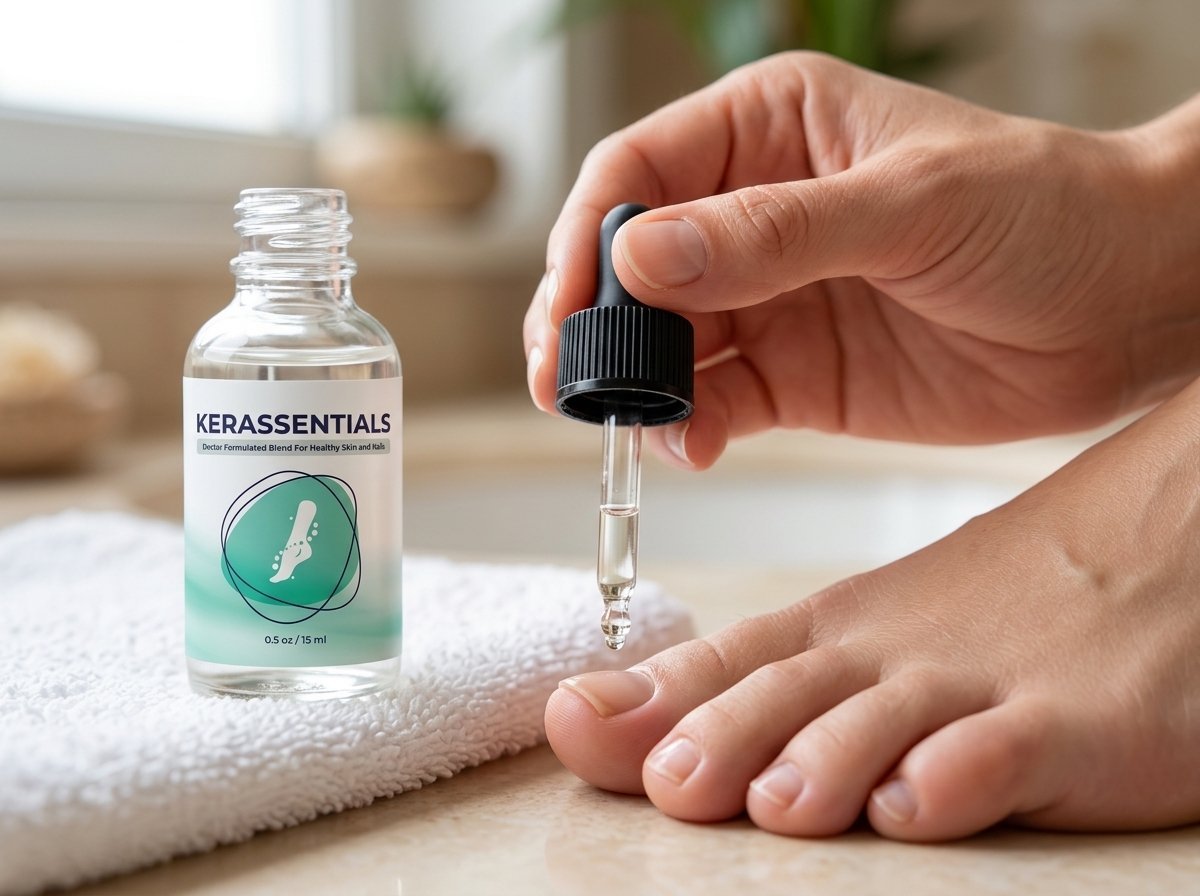
Apply only to intact skin. Avoid applying the oil to open wounds, cuts, bleeding skin, severely cracked areas, or actively inflamed tissue.
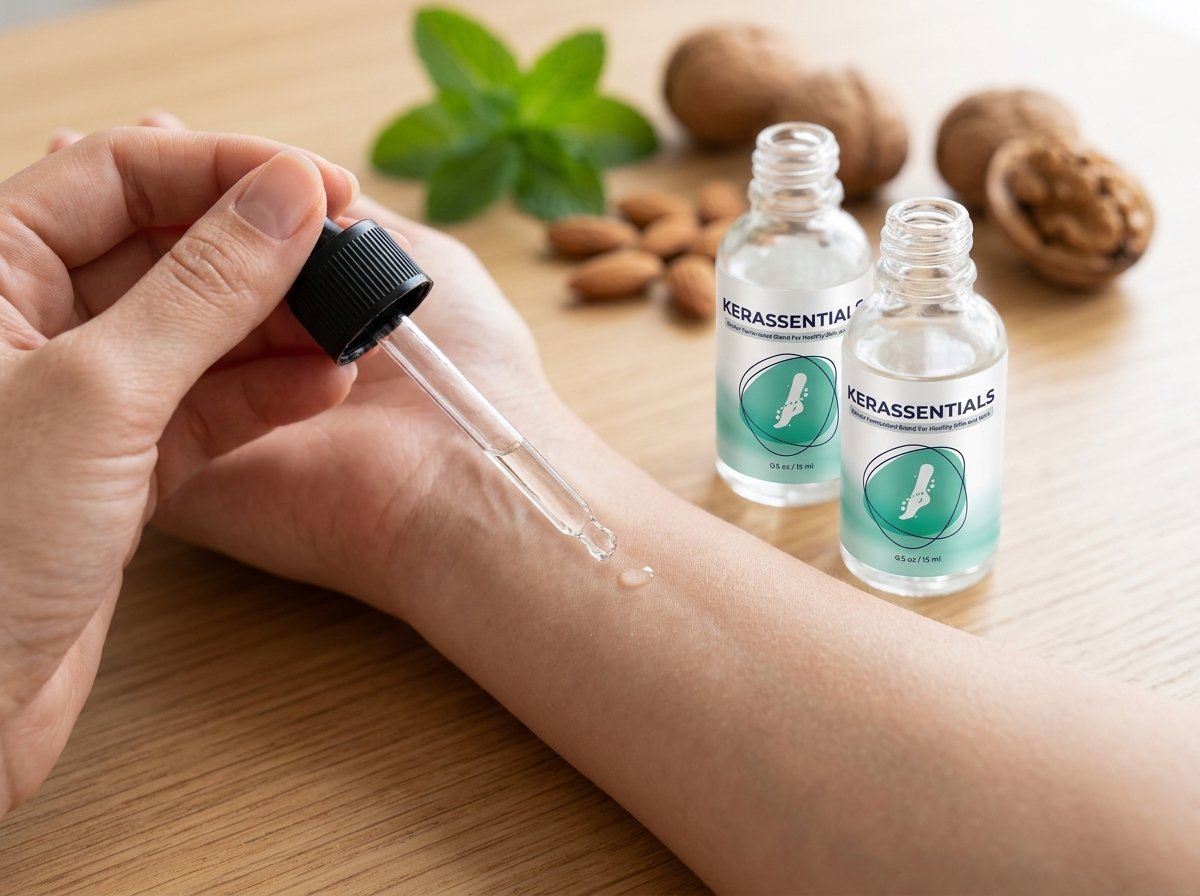
Consider a small-area use test. Applying a small amount to a limited area may help identify immediate irritation before broader use. However, this is not the same as diagnostic patch testing performed by a dermatologist. It cannot rule out delayed allergic contact dermatitis or sensitization that develops after repeated exposure. Stop using the product if redness, burning, itching, or swelling appears.
Introduce one topical product at a time. Avoid starting several new nail or skin products simultaneously. Using one product at a time makes it easier to identify the cause if irritation develops.
Keep the bottle properly closed. Essential oils can change after prolonged exposure to air, heat, and light. Store the product according to the manufacturer’s directions and keep the container tightly closed.
Do not apply immediately after aggressive nail care. Freshly cut cuticles, filed skin, or recently abraded nail areas may be more sensitive. Allow irritated or damaged tissue to recover before applying a concentrated botanical oil.
Stop rather than “push through” a reaction. Persistent burning or worsening irritation is not a sign that the product is working. Continuing to apply an irritating product can worsen the skin barrier and make the reaction more difficult to resolve.
When to Stop Using Kerassentials
Stop use if you develop persistent burning, worsening redness, intense itching, rash, swelling, blistering, oozing, cracked or painful skin, or symptoms spreading beyond the application area.
Wash the area gently and avoid applying additional active products until the reaction settles or has been assessed.
When to Seek Medical Help
Seek prompt medical attention if you experience significant swelling, widespread hives, facial, lip, or tongue swelling, breathing difficulty, severe pain, fever, pus or discharge, spreading redness, signs of infection, or worsening symptoms in a person with diabetes or poor circulation.
These are not routine cosmetic side effects and should not be managed solely by changing how the oil is applied.
Is Kerassentials Safe Enough to Try?
For an otherwise healthy adult with intact skin, no relevant allergies, and mild nail concerns, Kerassentials may be reasonable to try with normal topical-product precautions. If that sounds like your situation, our complete Kerassentials review covers pricing, the money-back guarantee, and what to expect before buying.
Its topical format is a practical advantage because it avoids the broader systemic concerns associated with oral antifungal medications.
The key limitations are: no published finished-product safety study, no disclosed ingredient concentrations, several essential oils capable of irritation or contact allergy, almond oil for allergy-sensitive users, and uncertainty about use alongside other topical treatments. To examine how seller trust and marketing claims match these practical safety concerns, read our Kerassentials legitimacy check.
These limitations do not make Kerassentials inherently unsafe. They mean the product should be used thoughtfully rather than treated as risk-free simply because it is marketed as natural.
Final Takeaway
The most plausible Kerassentials side effects are localized skin reactions rather than systemic problems.
Tea tree oil, lavender oil, and lemongrass oil can irritate or sensitize susceptible individuals. Almond oil deserves special consideration for people with almond or tree-nut allergies. Other ingredients may also cause individual reactions, although they appear less central to the formula’s overall risk profile.
The actual adverse-reaction rate for Kerassentials is unknown because the finished formula has not been independently studied and the ingredient concentrations are not disclosed.
For most qualified buyers, the practical approach is straightforward: apply it only to intact skin, follow the label, avoid combining several topical treatments without guidance, store the bottle properly, and stop if significant irritation develops.
Final editorial position: Most healthy adults with intact skin and no relevant allergies can try Kerassentials with ordinary topical-product precautions. If you have diabetes, poor circulation, a known fragrance or tree-nut allergy, or a severe or unclear nail condition, talk to a healthcare provider before use — not after a reaction.
For the full buying decision, including ingredients, potential benefits, value, and realistic expectations, read our complete Kerassentials review.
Frequently Asked Questions
What are the most likely Kerassentials side effects?
The most plausible side effects are localized redness, itching, burning, dryness, rash, or contact dermatitis around the application area.
Can Kerassentials cause an allergic reaction?
Yes. Tea tree oil, lavender oil, lemongrass oil, almond oil, and other topical ingredients may trigger allergic reactions in susceptible individuals. The frequency of reactions specifically caused by Kerassentials is unknown.
Is Kerassentials safe for sensitive skin?
Sensitive-skin users may be more likely to experience irritation from essential oils or fragrance compounds. A limited-area use test may help identify immediate irritation, but it cannot rule out delayed allergy.
Can I use Kerassentials on broken skin?
No. It should not be applied casually to cuts, wounds, bleeding skin, or severely cracked and inflamed areas.
Is tea tree oil in Kerassentials dangerous?
Tea tree oil is widely used in topical products and is tolerated by many people, but it can cause allergic contact dermatitis in susceptible users. Oxidized or aged tea tree oil may have greater sensitizing potential.
Can lavender oil cause a reaction?
Yes. Lavender oil and its oxidized components can cause contact allergy in some people, especially those already sensitive to fragrances or essential oils.
Why is lemongrass oil a concern?
Lemongrass oil commonly contains citral, which is a recognized contact irritant and allergen. The amount in Kerassentials is not disclosed.
Can someone with a nut allergy use Kerassentials?
Kerassentials contains almond oil. People with almond or tree-nut allergies should consult an allergist or qualified healthcare professional before using it.
Can Kerassentials interact with prescription medication?
Systemic interactions appear less likely because it is applied topically, but no product-specific absorption study is available. The more immediate concern is combining it with prescription or OTC topical nail treatments on the same area.
Can people with diabetes use Kerassentials?
People with diabetes should speak with a healthcare professional before using a product for foot or nail concerns. Nail and skin problems may require more careful assessment in this group.
Should I stop using Kerassentials if it stings?
Mild brief sensation may occur with some topical products, but persistent or significant stinging, burning, redness, or swelling is a reason to stop using it.
How can I lower the chance of irritation?
Use the product only as directed, apply it to intact skin, avoid combining several topical actives, keep the bottle closed, and stop if a reaction develops.