
Tea Tree Oil for Toenail Fungus: What the Research Actually Shows
Tea tree oil for toenail fungus is one of the most popular home remedies, and it is easy to see why: it is cheap, sold everywhere and has real antifungal activity in the lab. The harder question is whether brushing it on a thick, discolored toenail actually clears the infection.
This guide looks at the human studies behind tea tree oil, what results they found, how people use it, and the skin and safety risks worth knowing first. It also explains why toenail fungus is difficult to treat with any topical product, so you can set realistic expectations before spending months on one.
Quick Answer
Tea tree oil kills fungi in laboratory tests, but the evidence in people is thin. The best-known trial, from 1994, found that undiluted tea tree oil performed about as well as a 1% clotrimazole solution after six months, yet the fungus was cleared in only 18% of patients [2].
That makes it a low-cost option some people try for mild, confirmed infections, not a reliable cure. Expect a slow process measured in months, watch for skin irritation or allergy, and never swallow it.
Why Toenail Fungus Is Hard to Treat With Anything Topical
Toenail fungus (onychomycosis) lives in and under the nail plate, a hard, dense barrier that most topical products struggle to penetrate. Even when a treatment works, the damaged nail has to grow out before the toe looks normal again, and results may not be apparent for about a year [1].
Diagnosis matters too. Only about half of thickened or discolored nails are caused by fungus; psoriasis, injury and other conditions can look very similar [1]. A clinician can confirm the cause with a nail clipping test, which is worth doing before committing to months of any treatment.
For context, here is how prescription options performed in the research summarized by the American Academy of Family Physicians [1]:
| Treatment | Type | Fungus cleared (mycologic cure) |
|---|---|---|
| Terbinafine | Oral prescription | About 76% |
| Itraconazole | Oral prescription | About 59%–63% |
| Ciclopirox 8% | Topical prescription lacquer | About 29%–36% (clinical cure 6%–9%) |
Even these treatments fail in a meaningful share of people, and clinical recurrence after treatment ranges from 10% to 53% [1]. Any honest assessment of tea tree oil should be read against that background: toenail fungus is stubborn, and topical options generally sit at the lower end of the effectiveness range.
What Tea Tree Oil Is and How It Is Thought to Work
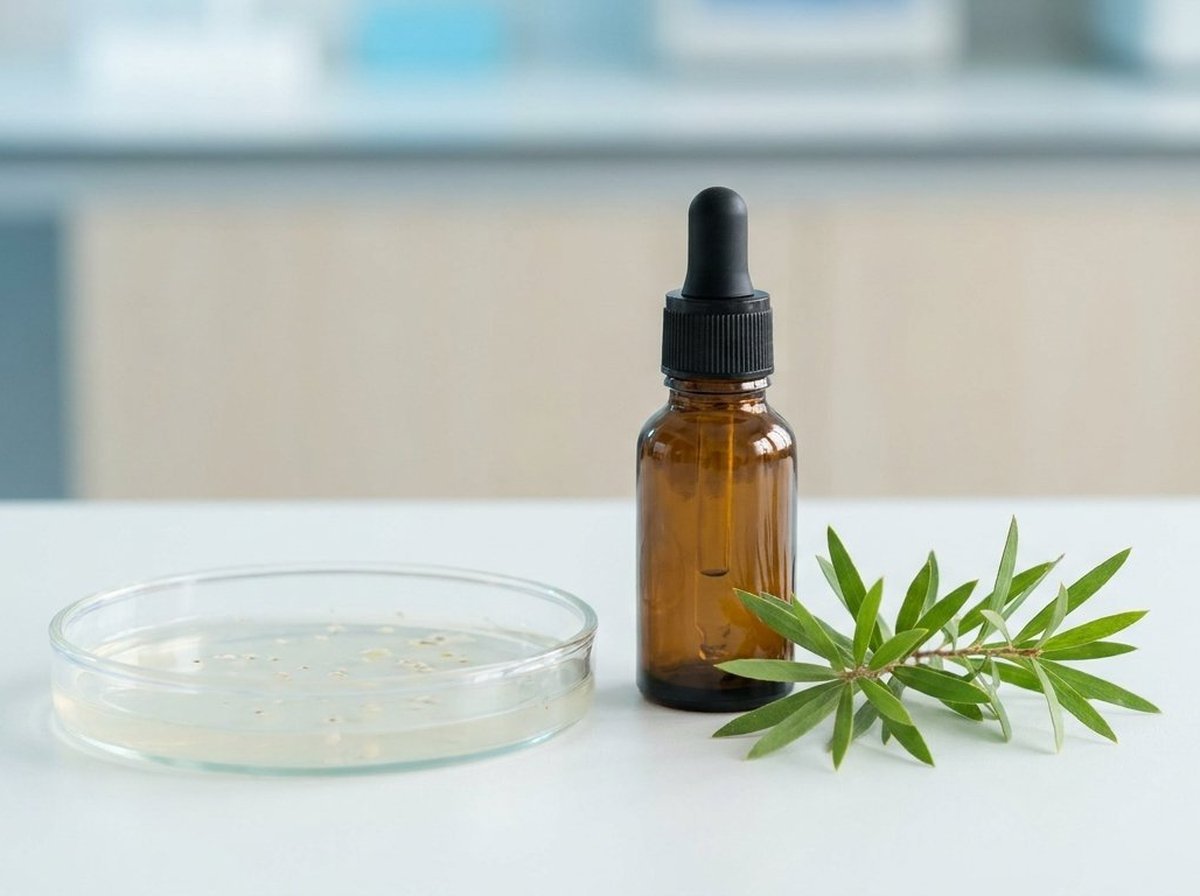
Tea tree oil is an essential oil distilled from the leaves of Melaleuca alternifolia, a plant native to Australia. Its main active compound is terpinen-4-ol, and the oil has shown activity against a range of fungi in laboratory studies, including the dermatophytes that cause most nail infections [5].
Laboratory activity is a starting point, not proof of a clinical result. A fungus in a dish is fully exposed to the oil; a fungus beneath a thick toenail is not. That gap is why the human studies matter more than the lab data.
What the Research Suggests
The 1994 trial: undiluted tea tree oil vs. clotrimazole
In a randomized, double-blind trial, 117 people with culture-confirmed toenail fungus applied either 100% tea tree oil or 1% clotrimazole solution twice a day for six months [2]. The results were similar between groups:
- The fungus was cleared on culture in 18% of the tea tree oil group and 11% of the clotrimazole group.
- About 60% of the tea tree oil group and 61% of the clotrimazole group showed partial or full improvement in nail appearance.
- Redness and irritation were reported in about 7.8% of people using tea tree oil [4].
The authors concluded the two treatments were comparable and that topical therapy combined with trimming and filing the nail was a reasonable first step [2]. In practice, that means most nails were not cured, and clotrimazole itself is a weak option for toenail fungus.
The 1999 cream study: tea tree oil combined with a drug
A second trial tested a cream containing 5% tea tree oil plus 2% butenafine, an antifungal drug, in 60 people for 16 weeks. About 80% of the active group were cured, compared with none in the comparison group [3].
This study is often quoted as evidence for tea tree oil, but it does not support that conclusion. The active cream contained a drug, and a later review notes that the comparison cream contained tea tree oil alone [4]. If anything, the 5% tea tree oil cream on its own produced no cures in that trial.
What reviews conclude
Independent reviews read the evidence cautiously. The National Center for Complementary and Integrative Health (NCCIH) says only a few studies have been done and that the amount and quality of the research are too limited to draw conclusions [8]. A 2016 dermatology review agreed that natural remedies show antifungal activity but said larger randomized trials are needed before they can be recommended [4], and the American Academy of Family Physicians review found no significant benefit when the data were combined [1].
- Laboratory research: tea tree oil shows clear antifungal activity, including against dermatophytes [5].
- Human studies of tea tree oil itself: limited. One small 1994 trial found modest results comparable to a weak comparison treatment [2].
- Finished nail products containing tea tree oil: no independent clinical trials of specific brands were found, and most do not disclose how much tea tree oil they contain.
How People Use Tea Tree Oil for Toenail Fungus
There is no established dose or schedule for tea tree oil on nails. The closest reference point is the 1994 trial, in which participants applied undiluted oil twice daily for six months [2]. If you decide to try it, these practical points reflect the research and the main safety concerns:
- Confirm the diagnosis first. A nail clipping test avoids months of treating something that is not fungal [1].
- Patch-test before regular use. Apply a small amount to the inner forearm and wait 48 hours; stop if redness, itching or blistering appears.
- Apply to the nail and its edges only. Keep it off broken or irritated skin, and wash your hands afterward.
- Keep the nail trimmed and filed. The 1994 authors paired topical treatment with debridement, which thins the nail and may help the product reach the infection [2].
- Store it tightly closed, away from heat and light. Oxidized (old or poorly stored) tea tree oil is more likely to cause skin allergy [6][8].
- Track progress with photos. The sign to look for is clear, healthy nail growing in from the base, which usually takes several months to judge.
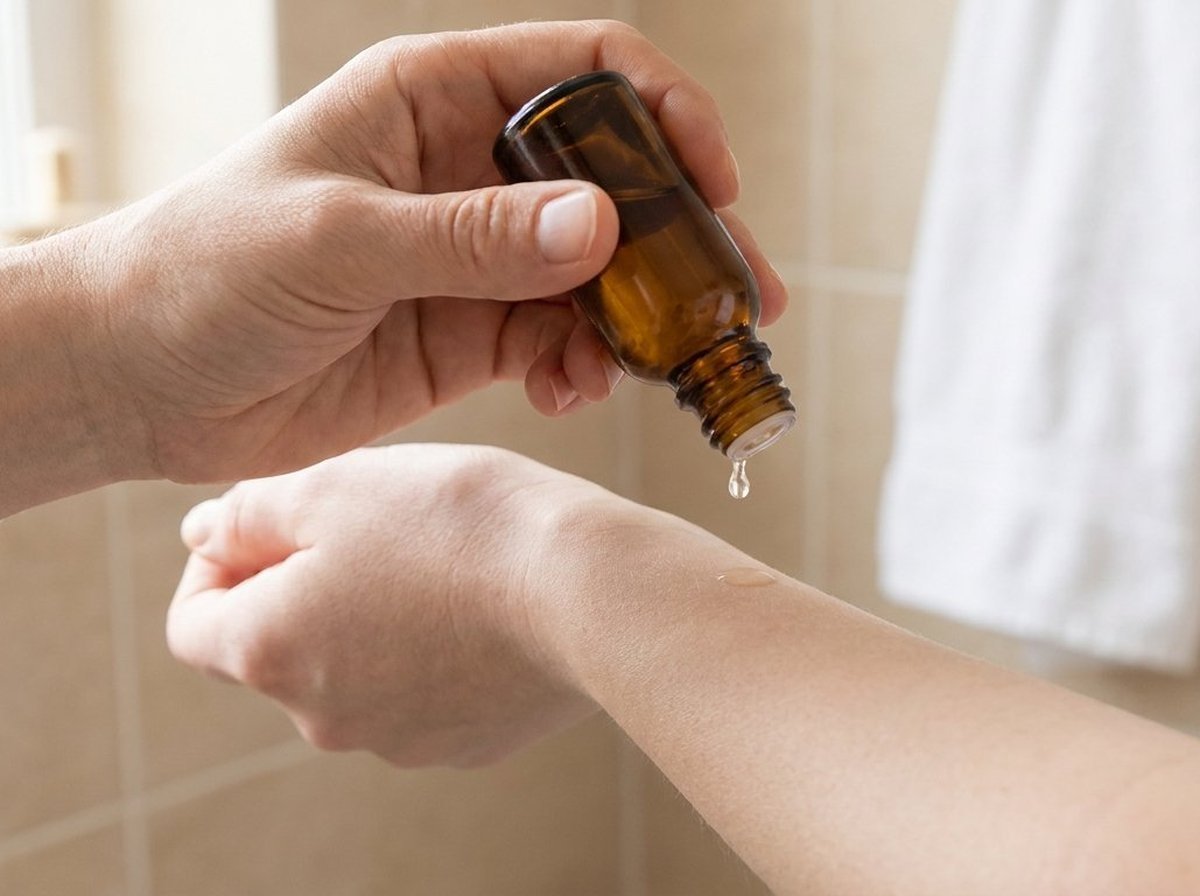
Undiluted oil is more likely to irritate the skin, while diluted products may deliver less oil to the infection. No study has settled the best concentration, so neither choice can be called the right one.
Safety and Interactions
Tea tree oil is natural, but it is not harmless. The main risks are on the skin and, more seriously, if it is swallowed.
Skin irritation and allergic reactions
Some people develop redness, itching, dryness or a rash where they apply it [8]. Allergic contact dermatitis is the bigger concern: tea tree oil has caused more published allergic reactions than any other essential oil, and most cases involve the pure oil rather than cosmetics [6]. People already sensitive to fragrances, colophonium (rosin), turpentine or other essential oils are more likely to react [6].
Never swallow tea tree oil
Taken by mouth, tea tree oil can cause serious symptoms, including confusion, unsteadiness, inability to walk and coma [8][5]. Keep bottles out of reach of children and pets, and do not use it near the mouth.
Children and hormone-related concerns
Case reports have linked repeated use of lavender and tea tree oil products to breast growth in prepubertal boys, which resolved after the products were stopped [7]. These were a small number of cases and do not prove cause, but they are a reason to avoid routine use in children without a pediatrician’s advice.
Pregnancy, medications and surgery
NCCIH says topical tea tree oil products may be safe during pregnancy and breastfeeding [8], but anyone pregnant or nursing should still check with their obstetric provider before starting a months-long treatment.
Topical tea tree oil is not known for major drug interactions; if you already use a prescription nail or skin treatment, ask your pharmacist before adding another product on the same area. If you have surgery scheduled, tell your surgical team about every product you use on your skin and follow their instructions on when to stop.
- People with diabetes: toenail fungus is 1.9 to 2.8 times more common in diabetes, and foot problems can escalate faster [1]. A podiatrist or physician should guide treatment.
- People with poor circulation or peripheral vascular disease: it is a recognized risk factor for nail fungus [1], and skin problems on the feet can be slower to heal.
- People with a weakened immune system, including those on immunosuppressive medication or chemotherapy.
- People with known essential-oil or fragrance allergies.
- Pregnant or breastfeeding readers, and children.
- Anyone with surgery scheduled.
When to Talk to a Clinician
Home care is not appropriate for every nail problem. Book an appointment with a podiatrist, dermatologist or primary care clinician if you notice any of the following:
- Pain, swelling, warmth, spreading redness or pus around the nail, which can signal a bacterial infection.
- A dark streak or band under the nail that is not explained by an injury; it should always be examined.
- Several nails affected, or the nail lifting away from the skin.
- No visible improvement in new nail growth after three to six months of consistent use.
- Any nail problem if you have diabetes, poor circulation or a weakened immune system.
Tea Tree Oil in Commercial Nail Products
Many nail oils sold online include tea tree oil alongside other ingredients, usually without saying how much. Kerassentials is one example: it combines tea tree oil with undecylenic acid and six other ingredients, including lavender, almond and flaxseed oils, and does not disclose the concentration of any of them. Our ingredient-by-ingredient breakdown looks at whether that formula makes sense, the side effects guide covers its skin-reaction risks, and our full review covers price and refund terms.
The general point applies to any product: research on tea tree oil does not automatically transfer to a blend that contains an unknown amount of it. A product label that lists concentrations is easier to judge than one that does not.
The Bottom Line
Tea tree oil has genuine antifungal activity, but the human evidence for toenail fungus is limited to small, older studies with modest results. It is a reasonable, low-cost experiment for some people and a poor substitute for medical care for others. The right next step depends on your situation:
- If your nail fungus is mild, confirmed by a test and you are otherwise healthy, you can try tea tree oil with realistic expectations: patch-test it, apply it consistently, and review your progress photos after three to six months.
- If your nail has never been tested, start with a clinician visit or a nail clipping test, because about half of abnormal-looking nails are not fungal.
- If you are comparing nail oils that contain tea tree oil, look for products that disclose concentrations, and read the ingredient analysis linked above before you buy.
- If you have diabetes, circulation problems or a weakened immune system, talk to a podiatrist or your prescriber before using any home remedy on your feet.
- If you have sensitive skin or a history of fragrance or essential-oil allergy, ask a pharmacist about over-the-counter antifungal alternatives before trying tea tree oil.
Frequently Asked Questions
Does tea tree oil kill toenail fungus?
Tea tree oil kills fungi in laboratory tests, but results on toenails are modest. In the main clinical trial, undiluted tea tree oil cleared the fungus in 18% of patients after six months, similar to 1% clotrimazole.
How long does tea tree oil take to work on toenail fungus?
Expect months, not weeks. The key study used it twice daily for six months, and because toenails grow slowly, it can take close to a year to see a fully clear nail even when treatment works.
Should I use tea tree oil undiluted on my toenails?
The 1994 trial used 100% tea tree oil, but undiluted oil is more likely to irritate skin. Apply it to the nail and edges only, patch-test first, and stop if redness, itching or blistering appears.
Is tea tree oil better than prescription treatments for toenail fungus?
No study shows that. Oral prescription drugs such as terbinafine clear the fungus in a much higher share of patients. Tea tree oil performed about as well as clotrimazole, a weaker topical option.
Can tea tree oil cause a skin reaction?
Yes. Redness, itching, dryness and allergic contact dermatitis are possible. Old or oxidized oil is more likely to cause allergy, and people sensitive to fragrances or other essential oils react more often.
Is tea tree oil safe for people with diabetes?
People with diabetes should talk to a podiatrist or physician before treating toenail fungus at home. Foot infections can become serious faster, and the diagnosis and treatment plan should be medically guided.
Can I use tea tree oil on my toenails during pregnancy?
NCCIH says topical tea tree oil products may be safe during pregnancy and breastfeeding. Check with your obstetric provider before starting a months-long treatment, and never take tea tree oil by mouth.
Should I stop using tea tree oil before surgery?
Tell your surgical team about every product you apply to your skin, including tea tree oil, and follow their instructions on when to stop using it before the procedure.