
Gluco6 Ingredients: What’s in the Formula and What’s Missing
Gluco6 ingredients are the part of the product you can actually check, so they are the best place to start if you are weighing this blood sugar supplement. The official page names six components and one unnamed blend, but it does not say how much of anything each capsule contains.
This analysis looks at each named ingredient, what research suggests about it, and how far that research can be applied to a formula with undisclosed doses. It judges the formula’s logic and transparency, not whether you should buy it; that question is covered in our full Gluco6 review.
Gluco6 Ingredients at a Glance
| Ingredient | Dose disclosed? | Main research area | Evidence for blood sugar |
|---|---|---|---|
| Cinnamon | No | Fasting glucose, lipids | Mixed [1][5] |
| Chromium | No | Insulin action, HbA1c | Mixed [4][5] |
| Gymnema | No | Glucose-lowering activity | Limited [3] |
| Green tea | No | Fasting glucose | Modest [2] |
| TeaCrine (theacrine) | No | Energy and focus | Not studied for glucose [6] |
| Sukre | No | Not explained | No published research found |
| “Mediterranean plants and supernutrients” | Not named | Unknown | Cannot be assessed |
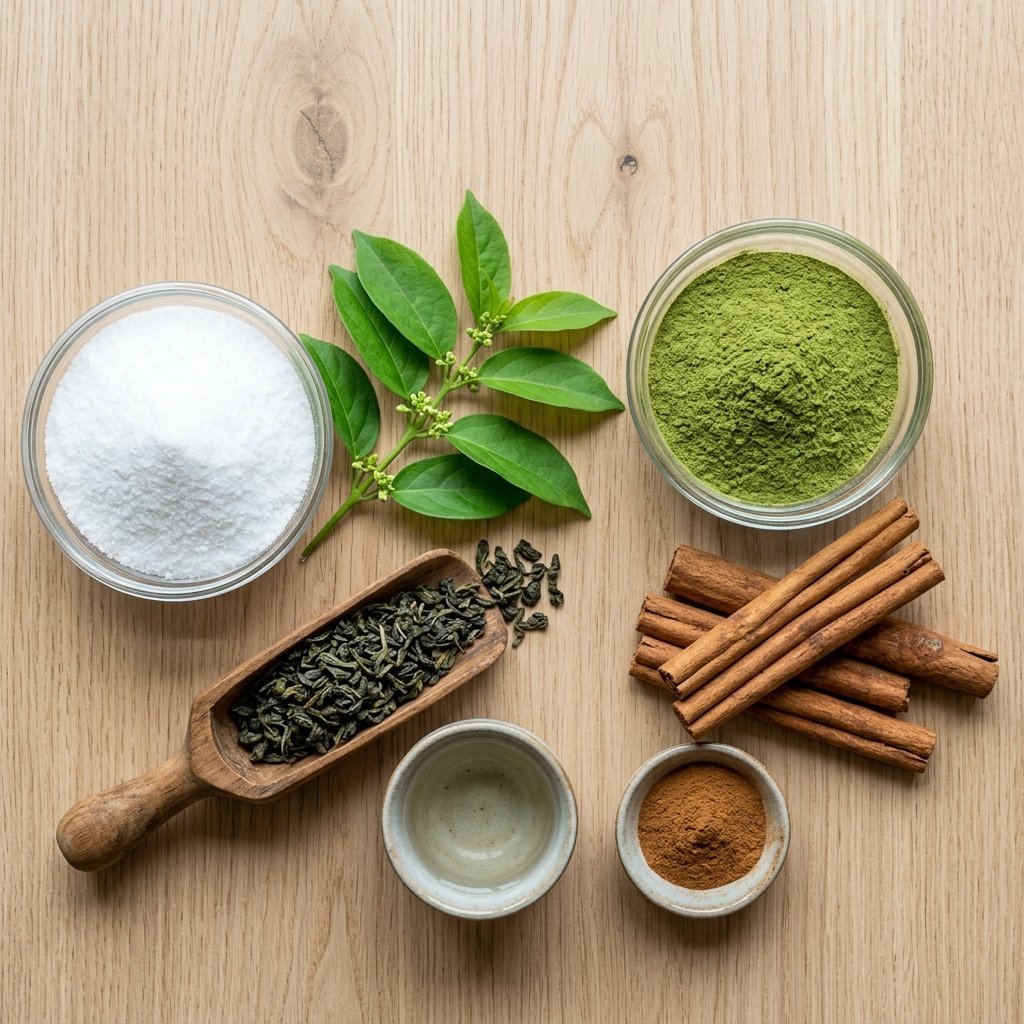
Full Formula Breakdown
Cinnamon
Cinnamon is one of the most studied spices for blood sugar. A meta-analysis of randomized trials in people with type 2 diabetes found that cinnamon was associated with lower fasting glucose and improvements in some blood lipids, but no significant change in HbA1c, the longer-term marker of glucose control [1]. Doses in those trials ranged from 120 mg to 6 g per day, and results varied widely between studies. NCCIH describes the overall evidence as conflicting [5].
Cassia cinnamon, the most common type sold in the U.S., contains coumarin, which may cause or worsen liver problems in large amounts [5]. Gluco6 does not say which type of cinnamon it uses.
Chromium
Chromium is a trace mineral involved in how insulin works. Studies of chromium supplements in people with diabetes have produced mixed results, and the American Diabetes Association does not recommend chromium supplements for people with diabetes [4]. NCCIH notes some reviews found small reductions in HbA1c while others found no effect on fasting glucose [5].
Chromium is also relevant for safety: NIH warns that taking it with insulin or other diabetes medicines might cause low blood sugar, and that it can reduce absorption of levothyroxine [4].
Gymnema
Gymnema sylvestre is a plant used in traditional medicine for blood sugar. A review of its pharmacology describes glucose-lowering activity, but much of the evidence comes from laboratory and animal studies, with a smaller number of human trials [3]. It is a logical ingredient for this category, but the human evidence is thin and the effective dose is uncertain.
Green tea
A meta-analysis of 17 randomized trials found that green tea or its extracts produced small reductions in fasting blood glucose [2]. The effect is modest, and it is not clear whether Gluco6 uses a concentrated extract or a small amount of leaf. Green tea also contains caffeine.
TeaCrine (theacrine)
TeaCrine is a branded form of theacrine, a compound related to caffeine. An eight-week safety study in healthy adults taking 200 or 300 mg per day found no clinically meaningful changes in safety markers [6]. Theacrine is studied for energy and focus, not for blood sugar, so it appears to be included for how the product feels rather than for glucose control.
Sukre and the unnamed blend
The official page describes Sukre only as “a healthy sugar” and we could not find published research on an ingredient by that name. The page also mentions “a blend of Mediterranean plants and supernutrients” without naming them. Unnamed ingredients cannot be assessed for benefit or safety.
Which Gluco6 Ingredients Matter Most
If the formula has any meaningful effect on blood sugar, it would most likely come from chromium, cinnamon and gymnema, the three ingredients with the most direct research in this area. Green tea adds a smaller, supporting effect. TeaCrine and the undisclosed components are unlikely to matter for glucose, based on what is published.
What the Formula Seems Designed to Do
The combination appears designed to target fasting glucose and insulin sensitivity, with a stimulant-like component for energy. That design is coherent for a blood sugar product. The sales page goes much further, claiming the product “Normalizes Glucose Levels” and “Prevents Spikes,” claims that ingredient research does not support and that no study of Gluco6 has tested.
What’s Missing From the Gluco6 Formula
- Doses: not one ingredient amount is disclosed, so the formula cannot be compared with the research.
- Ingredient identities: the type of cinnamon, the form of chromium and the gymnema extract strength are not stated.
- The unnamed blend: “Mediterranean plants and supernutrients” are not identified.
- Product research: no published clinical trial of the finished formula, despite a “Clinically Tested” badge on the sales page.
- Third-party testing: no certificate of analysis or independent lab test is shown.
Does the Formula Make Sense?
- Ingredient research: cinnamon, chromium, gymnema and green tea have each shown small or inconsistent effects in some studies [1][2][3][4].
- Formula plausibility: the combination fits the blood sugar category, but without doses there is no way to know whether the amounts are meaningful.
- Product proof: none. NCCIH concludes there is not enough evidence that any supplement can help manage or prevent type 2 diabetes [5].
Safety and Interaction Notes
Three ingredients carry specific cautions. Chromium may push blood sugar too low when combined with diabetes medication and may interfere with levothyroxine [4]. Cassia cinnamon contains coumarin, a concern for people with liver disease [5]. TeaCrine and green tea add caffeine-like stimulation. Our Gluco6 side effects guide covers risk groups and interactions in more detail.
- Take insulin, metformin or other diabetes medication
- Take levothyroxine
- Have kidney or liver disease
- Are pregnant, breastfeeding or under 18
- Are sensitive to caffeine
- Have surgery scheduled
Gluco6 Ingredients: Formula Verdict
The ingredient choices are reasonable for a blood sugar product, but the formula scores poorly on transparency. No doses, an unexplained “healthy sugar” and an unnamed plant blend mean the research on individual ingredients cannot be applied to the capsule with any confidence. For a seller-side view of the product and its refund terms, see our Gluco6 legitimacy check.
- If you are healthy and simply curious about these ingredients, look for products that list each ingredient’s form and dose so you can compare them with the research.
- If you take diabetes medication, ask your doctor or pharmacist before adding chromium, cinnamon or gymnema in any form, because they may add to your medication’s effect.
- If you have liver or kidney disease, or take levothyroxine, get personal advice first, since several of these ingredients carry specific cautions for you.
Frequently Asked Questions
What are the main ingredients in Gluco6?
The official page names Sukre, TeaCrine, gymnema, chromium, cinnamon and green tea, plus an unnamed blend of Mediterranean plants and supernutrients.
Does Gluco6 list the dose of each ingredient?
No. The official page does not disclose the amount of any ingredient, so the formula cannot be compared with the doses used in research.
Is there research on Gluco6’s ingredients?
Yes, for some. Cinnamon, chromium, gymnema and green tea have been studied for blood sugar with mixed or modest results. There is no published study of the Gluco6 formula itself.
What is Sukre in Gluco6?
The official page describes it only as a healthy sugar. We could not find published research on an ingredient by that name.
Does Gluco6 contain caffeine?
It contains green tea and TeaCrine, a caffeine-related compound. The amounts are not disclosed, so people sensitive to stimulants should be cautious.
Can the ingredients in Gluco6 interact with medication?
Yes. Chromium may lower blood sugar further when taken with diabetes medicines and may reduce levothyroxine absorption. Ask a pharmacist before combining them.