Pine Bark Extract for Joints: What the Research Actually Shows
Pine bark extract for joints turns up on a lot of supplement labels, usually next to ingredients such as Boswellia and ginger. The research behind its reported benefits is real but thin: a few small trials in people with knee osteoarthritis, using a branded extract at 100 to 150 mg a day for three months. This guide covers what those studies found, how far the findings can be taken, and who should check with a clinician first.
We read the studies and reference pages cited below on November 21, 2026.
Quick Answer
Short answer: Small trials in adults with osteoarthritis reported better pain and function scores with pine bark extract than with placebo [1] [2]. A Cochrane review of the wider pine bark literature rated the certainty of that evidence as very low and concluded that no definitive conclusions about effectiveness or safety are possible [3]. The extract was generally reported as well tolerated in trials [4], but it may raise bleeding risk in people who take blood thinners [5].
Treat it as a plausible but unproven option, not a substitute for medical care. One review of the extract notes that weight loss, exercise and physiotherapy can also ease osteoarthritis symptoms [6].
What Pine Bark Extract Is and How It Is Used
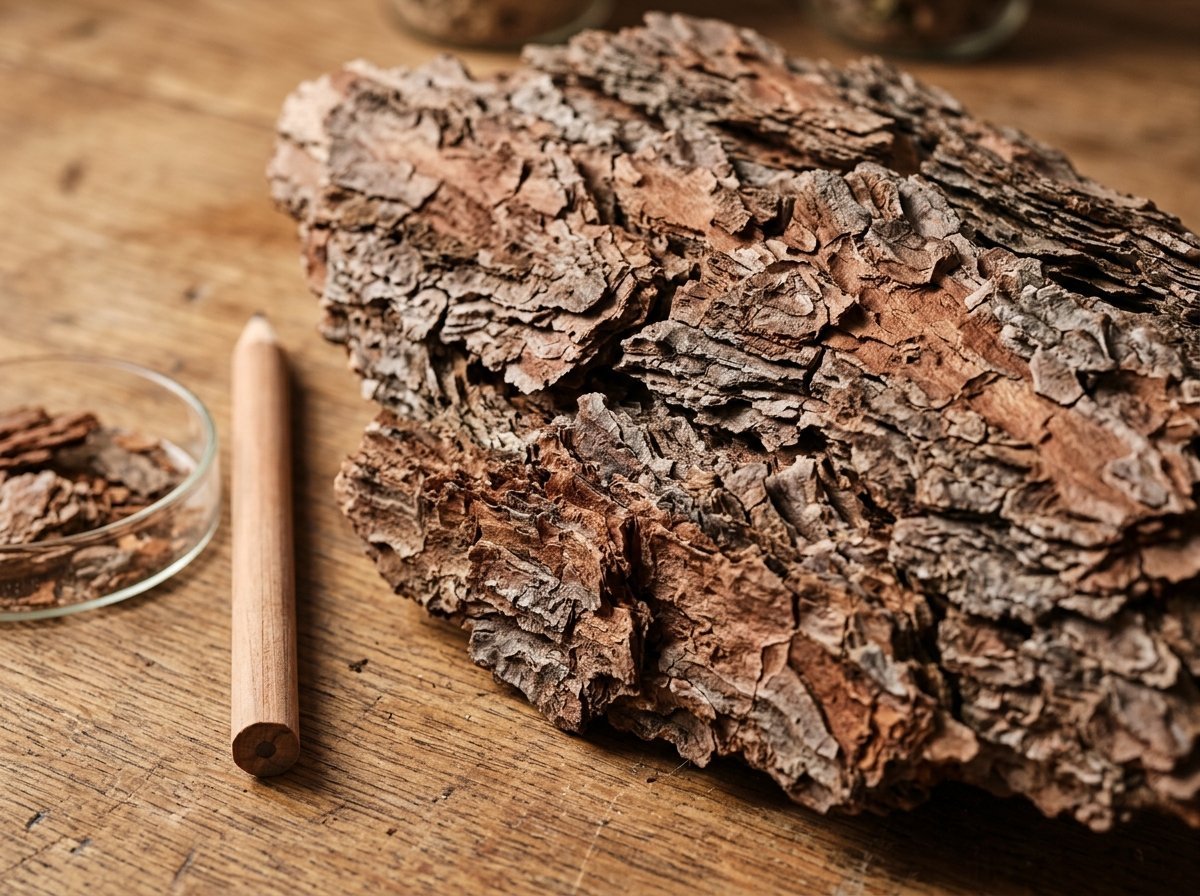
Pine bark extract usually means a concentrate from the bark of the French maritime pine, Pinus pinaster. It is rich in bioflavonoids, mainly proanthocyanidins [3]. In laboratory studies, some of these plant pigments showed anti-inflammatory and antioxidant properties [4]. A lab finding points to a mechanism worth studying, not to a capsule that relieves joint pain.
Pycnogenol is a proprietary, standardized pine bark extract [6], and it is the extract used in the trials summarized below [1] [2] [7]. Other products labeled “pine bark extract” may come from other pine species [3] and be processed differently, so a dose that worked in a trial for one extract does not automatically carry over to another.
The best dose is unknown [4]. The osteoarthritis trials used 100 mg a day, given as capsules, in one case [1] and 150 mg a day in another [2].
What the Research Suggests About Pine Bark Extract for Joints
Research on pine bark extract suggests a possible benefit for knee osteoarthritis symptoms, with large caveats. The table summarizes the main studies.
| Study | Who and how long | What was reported |
|---|---|---|
| Belcaro 2008 [1] | 156 adults with osteoarthritis; 100 mg a day for 3 months versus placebo | Global WOMAC score fell 56% on the extract and 9.6% on placebo; drug use fell 58% versus 1% |
| Cisár 2008 [2] | 100 adults with mild to moderate knee osteoarthritis; 150 mg a day for 3 months versus placebo | Better WOMAC and pain scores on the extract; analgesic use fell on the extract and rose on placebo |
| Mülek 2017 [7] | 33 adults awaiting knee replacement; 200 mg a day for 3 weeks versus no treatment | Pine bark polyphenols were found in joint fluid, which shows distribution, not relief |
| Cochrane review 2020 [3] | 27 trials, 1,641 people, 10 conditions; 3 trials in osteoarthritis (293 people) | Evidence rated very low certainty; no definitive conclusions possible |
Two points matter when reading those numbers. First, the trials were small, lasted about three months, and relied mostly on the WOMAC questionnaire, in which people rate their own pain, stiffness and function [2]. Second, the Cochrane reviewers found that the knee osteoarthritis results rested on very few trials: each outcome they could analyze came from a single study of 35 to 37 participants, and all of it was graded very low certainty [3].
The review’s authors concluded that small samples, few trials per condition, varied outcome measures and poor reporting leave no room for definitive conclusions [3]. Memorial Sloan Kettering’s summary calls the osteoarthritis data preliminary and notes that one meta-analysis recommended against Pycnogenol for musculoskeletal pain [5].
All of this is ingredient-level evidence about specific extracts. It says nothing about any finished supplement that happens to contain pine bark.
Safety and Interactions
Trials generally described the extract as well tolerated. Versus Arthritis lists upset stomach and headache as mild effects and notes that earlier trials reported no serious adverse effects [4]. The Cochrane review adds a caution: for most comparisons, trials did not report serious adverse events or hospital admissions, so the safety record is thinner than it sounds [3]. Memorial Sloan Kettering’s clinician summary also lists irritability and lower energy [5].
Some readers should check first:
- Blood thinners and antiplatelet drugs: pine bark extract may raise bleeding risk, especially with warfarin or similar medicines [5].
- Planned surgery: because of that possible bleeding effect, tell your surgical team well before the procedure and follow their instructions on timing.
- Diabetes and high blood pressure: pine bark may lower blood sugar and blood pressure, so people with either condition, especially on medication, should be careful [4].
- Allergy to pine bark: do not take it [5].
- Pregnancy and breastfeeding: the osteoarthritis trials enrolled adults, and none of the sources we reviewed establishes safety in pregnancy or breastfeeding, so ask a clinician first.
Several studies counted anti-inflammatory or pain medicine use as an outcome. That is a research measure, not advice. Do not reduce or stop a prescribed pain medicine without your prescriber.
Practical Considerations
- Read the label for specifics. Look for the species (Pinus pinaster), whether the extract is standardized, and the amount per serving. A label that names none of these cannot be matched to the extract used in the trials.
- Match the timeframe. The trials ran for three months. A few days of use does not resemble them, and a short symptom diary helps you and your clinician judge whether anything has changed.
- Check what else is in the capsule. Pine bark often appears in blends with Boswellia, ginger and other ingredients. A blend label does not show which ingredient, if any, is responsible, and the trials above tested pine bark on its own.
One example is Joint Genesis, which lists 150 mg of pine bark extract per capsule without naming a brand or standardization; our ingredients analysis compares that label with the trial doses.
When to Talk to a Clinician First
If you are curious about pine bark as an ingredient: compare any label you are considering with the 100 to 150 mg of standardized extract used in the trials above, and keep expectations modest given the very low certainty rating.
If you take blood thinners, diabetes or blood pressure medicine, are pregnant or breastfeeding, or have surgery planned: ask your prescriber or pharmacist before trying it, and bring the product label with you.
If your joint pain is new, getting worse or followed an injury: see a clinician first, because a supplement cannot tell you what is causing the pain. Swelling, redness, warmth, fever or trouble putting weight on the joint need prompt medical attention.
Frequently Asked Questions
Does pine bark extract help joint pain?
It may help some people with knee osteoarthritis, but the evidence is weak. Two small three-month trials of a branded extract reported better pain and function scores than placebo [1] [2]. A Cochrane review rated the evidence very low certainty and found that no definitive conclusions are possible [3]. Results for other extracts or other joints are not covered by those trials.
Is pine bark extract the same as Pycnogenol?
Not exactly. Pycnogenol is a proprietary, standardized pine bark extract [6], and the trials above used it [1] [2]. Other pine bark products may use different species or processing, so trial results for Pycnogenol do not automatically apply to them. Check whether the label names the extract and its standardization.
How much pine bark extract was used in studies?
The osteoarthritis trials used 100 mg a day in one study and 150 mg a day in another, both for three months [1] [2]. The best dose is not known [4]. Follow the product label and ask a clinician if you are unsure.
Is pine bark extract safe with blood thinners?
Not without asking first. Memorial Sloan Kettering says pine bark extract may raise bleeding risk, especially with warfarin or antiplatelet drugs [5]. Ask your prescriber or pharmacist before combining them, and bring the product label.
What are the side effects of pine bark extract?
Trials reported mild effects such as upset stomach and headache, and earlier trials reported no serious adverse effects [4]. The Cochrane review notes that most comparisons did not report serious adverse events [3]. Contact a clinician if you notice unusual bruising or bleeding, or signs of an allergic reaction.
Can I take pine bark extract before surgery?
Ask your surgical team first. Because of the possible effect on bleeding [5], they may want you to stop it for a period before the procedure. Do not choose the timing yourself.
Can pine bark extract replace anti-inflammatory pain medicine?
No. Some trials recorded less use of pain medicine in the pine bark group [1] [2], but they were small, and that outcome is a research measure, not a reason to change a prescription. Talk to your prescriber before reducing or stopping any medicine.
What are the benefits of pine bark extract?
The best-studied possible benefit is symptom relief in knee osteoarthritis: two small three-month trials of a branded extract reported better pain and function scores than placebo [1] [2]. In laboratory studies, some of its plant pigments showed anti-inflammatory and antioxidant properties, but that does not show the same effect in people [4]. A Cochrane review rated the evidence very low certainty, so treat any benefit as possible, not established [3].