Nettle Root for Prostate Health: Benefits, Evidence, and Safety
Nettle root has a place in prostate supplements because it has been studied for urinary symptoms associated with an enlarged prostate. If you are researching nettle root for prostate health, the useful questions are what those studies found, how extracts differ, and whether a particular formula fits your goals.
There are encouraging findings to consider. The clearest way to use them is to look beyond the ingredient name and check the preparation, the amount, and the rest of the label. This guide explains those details, including how nettle root appears in ProstaVive.
Quick Answer: Is Nettle Root Worth Considering?
- It is relevant to urinary support. Nettle root has a history of research in men with lower urinary tract symptoms associated with benign prostatic hyperplasia (BPH).
- Some trials report improvements. NCCIH describes the overall evidence as limited, so a promising ingredient is not a guarantee of results. [2]
- The extract matters. Root powder, different root extracts, and nettle leaf are not interchangeable.
- It is generally well tolerated. Reported effects are mostly mild digestive symptoms, and the EU herbal monograph reports no known interactions. Medication use and medical context still matter. [4][5]
What Is Nettle Root?
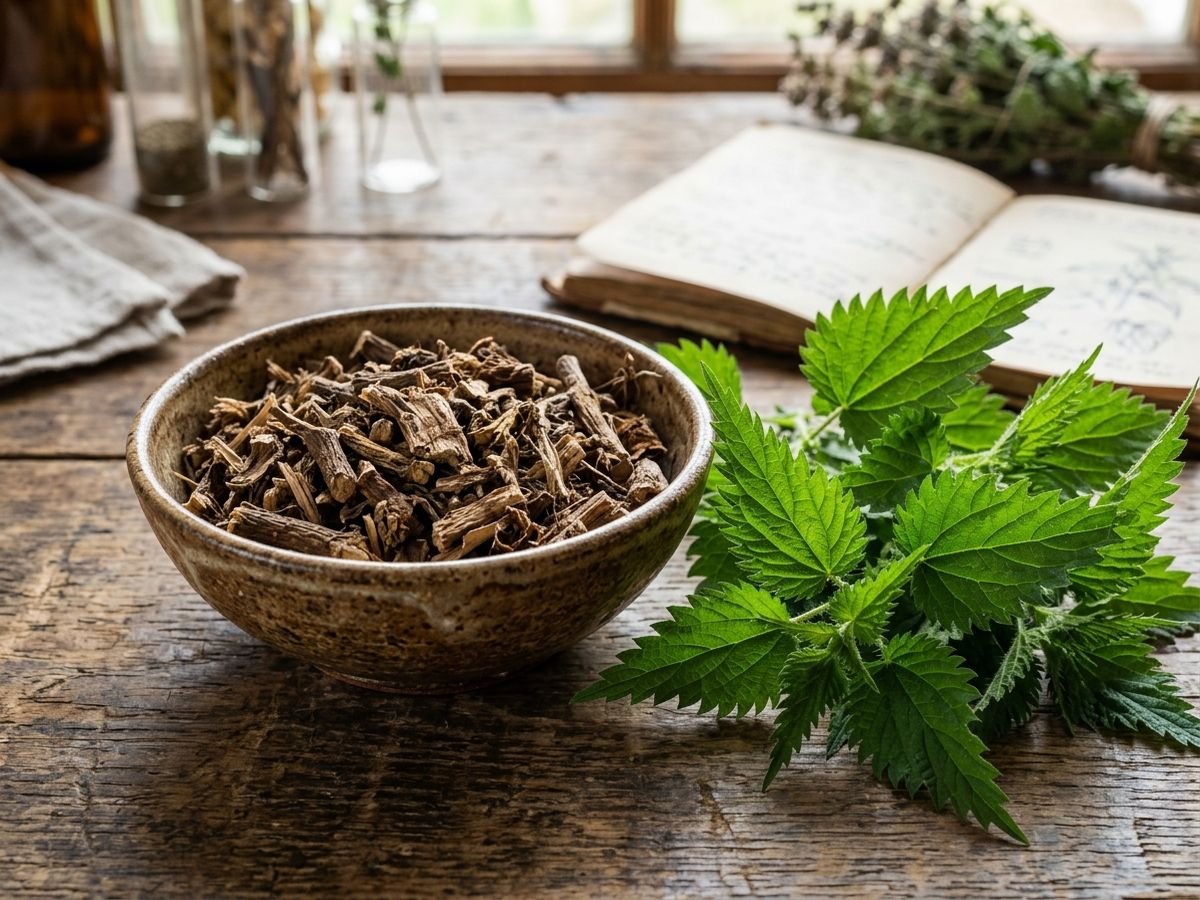
Stinging nettle (Urtica dioica) is a plant whose root and leaf are used in different preparations. For prostate and urinary products, the root is the part to look for. A label that says only “nettle” leaves an important question unanswered.
Nettle root products may contain dried root or an extract. Extraction changes what is concentrated in the finished ingredient. That is why knowing the plant part and preparation is more useful than comparing ingredient names alone.
Nettle Root for Prostate Health: What the Research Shows
Researchers have studied nettle preparations in men with BPH-related urinary symptoms. These trials often use the International Prostate Symptom Score (IPSS), a questionnaire that measures symptom severity, along with measurements such as maximum urinary flow.
The evidence includes studies of nettle alone and products combining nettle with saw palmetto. They answer different questions: a combination result belongs to that combination, rather than establishing what nettle would do by itself. [2]
| Research | Main finding | What it means for buyers |
|---|---|---|
| 2005 trial of 620 men [1] | Nettle performed better than placebo on symptom scores and maximum urinary flow during the six-month comparison. | A positive finding for the study preparation; it does not establish the effect of every nettle-containing supplement. |
| Combination trials summarized by NCCIH [2] | Some nettle-plus-saw-palmetto preparations reported favorable urinary symptom results. | These results cannot be attributed to nettle alone or transferred directly to another blend. |
| 2016 systematic review and meta-analysis: five publications, 1,128 patients [3] | The authors reported favorable pooled results for urinary symptoms and flow. | This summarizes existing studies; it is not an additional trial of a new supplement. |
The 2005 trial also reported longer follow-up. Its later phase involved crossover and continued use, so the 18-month findings should not be read as 18 months of an unchanged placebo-controlled comparison. [1]
The 2025 European Medicines Agency monograph recognizes a traditional use of specified nettle root preparations for BPH-related urinary symptoms after a doctor has excluded serious causes. This reflects long-standing use, rather than a finding that any commercial formula has proven effectiveness. [4]
Our interpretation: nettle root has enough relevant research to merit a closer look. The evidence remains limited, and the studies above were not trials of ProstaVive. There is no publicly available clinical evidence on ProstaVive as a complete formula. For a buyer, the next step is to examine the actual product rather than stop at the ingredient name.
How to Compare Nettle Root Extracts and Amounts
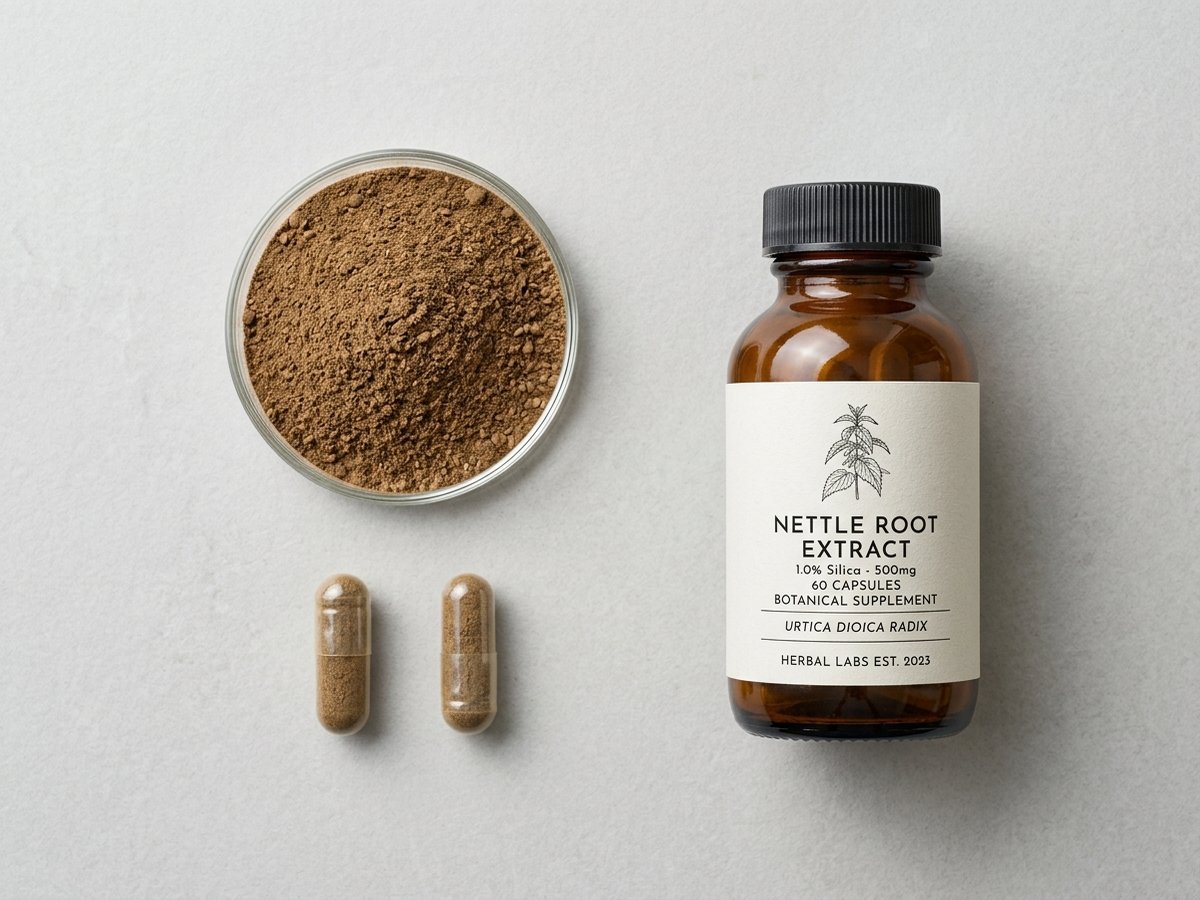
A larger milligram number does not automatically mean a more effective product. An extract and plain root powder may concentrate different constituents, and two extracts may use different manufacturing methods.
An extract ratio describes the relationship between the starting plant material and the resulting extract. It helps characterize the ingredient, but does not by itself establish potency or clinical benefit. The EMA monograph distinguishes preparations by extraction ratio and solvent, with different amounts for different preparations. For dry extracts, the daily amounts it lists run from roughly 300 to 720 mg, depending on the extract. [4]
When reading a label, check:
- Plant part: does it clearly say root?
- Amount: is the quantity shown per serving?
- Preparation: is it powder or extract, and is any extraction or standardization information supplied?
- Complete formula: what else will you be taking?
- Quality information: is any testing or certification identifiable and verifiable?
Testing can help you assess product quality. It does not establish that a formula will improve urinary symptoms. Likewise, when extract details are missing, the fair conclusion is that comparison with research is difficult, not that effectiveness or ineffectiveness has been established.
How Nettle Root Fits into ProstaVive
The Supplement Facts panel displayed on the manufacturer’s page lists stinging nettle extract (root), 200 mg per scoop, taken once daily. It identifies the plant part and amount, although it does not specify an extraction ratio for nettle. [6]
That missing detail matters. The label cannot establish whether this preparation matches one used in a clinical trial, and 200 mg once daily is lower than the dry-extract daily amounts listed in the EMA monograph unless the extract is more concentrated than those preparations. That is a label comparison, not a finding about effectiveness. [4]
ProstaVive combines nettle with other botanicals, vitamins, and minerals in a daily powder. Its broader men’s wellness positioning may appeal to readers who prefer a mixable formula rather than a standalone nettle capsule. That is a format and formula preference; it does not show that the blend is more effective.
For the amounts and context behind the other ingredients, read our ProstaVive ingredients review. For price, convenience, and the overall buying assessment, see our full ProstaVive review.
Side Effects and Medication Considerations
NIH’s LiverTox reference describes nettle extracts as generally well tolerated, with reported effects including headache, nausea, abdominal discomfort, and changes in bowel habits. That is reassuring background, although it does not guarantee that a particular person or multi-ingredient product will be well tolerated. [5]
The EMA root monograph also lists gastrointestinal symptoms and allergic reactions, lists hypersensitivity as a contraindication, and states that no interactions are reported. NCCIH separately notes a possible issue with concurrent iron supplements because of tannins. These sources do not justify treating every warning about nettle leaf as an established interaction of nettle root. [4] [2]
“No reported interactions” applies to nettle root itself. A multi-ingredient formula is a different question, because the other ingredients carry their own cautions. Our ProstaVive side effects guide covers the wider formula.
Who should speak with a doctor or pharmacist first:
- Readers taking prescription medication, especially for diabetes, blood pressure, or blood thinning, or prostate medication such as an alpha-blocker or a 5-alpha-reductase inhibitor
- Anyone taking iron supplements
- Anyone with kidney or liver conditions
- Anyone scheduled for surgery, since clinicians commonly advise pausing non-essential herbal supplements beforehand
- Anyone with a known plant allergy or sensitivity
- Anyone who is pregnant or breastfeeding: these products are aimed at adult men, and the EU monograph lists no fertility data, so use without medical guidance is not advisable
- Children and adolescents, for whom these products are not studied
Medical Caution & Red Flags:
Urinary symptoms deserve medical assessment before being treated as a supplement-shopping question. Blood in the urine, painful urination, fever, or sudden worsening warrant prompt evaluation. A sudden inability to urinate requires urgent medical care.

What Can You Realistically Expect?
A study reporting improvement over several months does not tell you exactly when you will notice a change. It also does not establish that a different extract or combination will deliver the same result.
If a clinician agrees that a supplement is appropriate, ask what changes to watch for and when to reassess. Follow the product directions rather than increasing servings to match a number from a study. In a blend, doing so increases the amounts of all ingredients.
For a purchase decision, consider the full serving, monthly cost, ease of use, and your expectations together. A product that is convenient and clearly labeled can be easier to evaluate, even when its benefits remain uncertain.
Who Might Find a Nettle-Containing Formula Worth Exploring?
Nettle-containing products may interest adult men whose urinary concerns have already been evaluated and who want to discuss a botanical option with a clinician. Among those readers, the choice often comes down to a focused nettle preparation versus a broader men’s wellness blend. Our guide to prostate health supplements explains the buying criteria across the category.
Final Verdict
Nettle root is a relevant prostate-supplement ingredient with encouraging clinical findings and a recognized traditional-use history. Its inclusion is a reason to investigate a formula more closely, while the extract details and complete label help determine how much can reasonably be inferred.
Path A: for adult men with mild urinary changes, no regular medication, and symptoms a clinician has already checked, nettle root is reasonable to research further. If a daily powder with a broader ingredient mix appeals to you, ProstaVive is one formula to compare. Check the current label and offer on the manufacturer’s page before ordering, and keep in mind that the research discussed here does not establish that ProstaVive reproduces the trial results.
Path B: for readers who take prescription medication, have kidney or liver conditions, are scheduled for surgery, are pregnant or breastfeeding, or have painful, sudden, or worsening urinary symptoms, the better next step is a conversation with a doctor or pharmacist, with the complete product label in hand. A supplement should complement appropriate medical care, not delay it.
Frequently Asked Questions
Is nettle root the same as nettle leaf?
No. They are different plant parts used in different preparations. For a prostate-oriented product, check that the label specifically identifies the root.
What are the potential benefits of nettle root for prostate health?
Some studies report improvements in BPH-related urinary symptom scores and flow measurements. Those findings apply to the preparations studied, and the overall evidence remains limited.
Does nettle root have side effects?
Reported effects are usually mild and include stomach upset, headache, and changes in bowel habits. Allergic reactions such as itching, rash, or hives are also listed, and NCCIH notes that nettle may reduce the effect of iron taken at the same time.
How long does nettle root take to work?
There is no reliable universal timeline. The main placebo-controlled trial discussed here evaluated six months of use; that duration is not a promise of when an individual will notice a benefit.
Can nettle root be taken with prostate medication?
Ask your prescriber or pharmacist before combining them. Bring the complete supplement label, especially for a multi-ingredient formula, and do not change prescribed medication to make room for a supplement.
Is 200 mg of nettle root extract enough?
The number alone cannot answer that question. Extract characteristics and the evidence for the preparation matter. ProstaVive lists 200 mg per scoop without a nettle extraction ratio, so direct equivalence with a studied product cannot be established.