NeuroSerge Ingredients: What’s in the Formula and What’s Missing
NeuroSerge ingredients are the most concrete thing you can check about this brain health capsule, yet the official page names only six of the “20+ ingredients and nutrients” it promises, and gives no amount for any of them. This analysis looks at those six, what research says about each, and how well they fit a product sold for brain health.
It judges the formula, not whether you should buy it; that question is covered in our full NeuroSerge review. We checked the official page on November 7, 2026.
Quick Answer
The six named NeuroSerge ingredients are olive leaf, cassia cinnamon, deglycyrrhizinated licorice (DGL), green tea extract, grape seed extract and bilberry. They are general antioxidant and metabolic botanicals. None has meaningful human evidence for improving memory, focus or brain fog.
No dose is disclosed, the remaining 14 or more ingredients are not named, and the sales page itself lists heart, blood sugar, vision and dental benefits for these botanicals rather than brain benefits.
NeuroSerge Ingredients at a Glance
| Ingredient | Dose disclosed? | What the sales page says it does | Evidence for memory or focus |
|---|---|---|---|
| Olive leaf | No | Heart health, fiber, blood sugar | Not established |
| Cassia cinnamon | No | Inflammatory response, heart, insulin | Not established [5] |
| DGL licorice | No | Stress, inflammation, teeth and gums | Not established [6] |
| Green tea extract | No | Heart, “good for the brain,” weight loss | Not established [2] |
| Grape seed extract | No | Blood pressure, blood flow | Not established [3] |
| Bilberry extract | No | Vision, inflammation, blood sugar | Not established [4] |
| “20+ plants and nutrients” | Not named | Not described | Cannot be assessed |
Full Formula Breakdown
Green tea extract
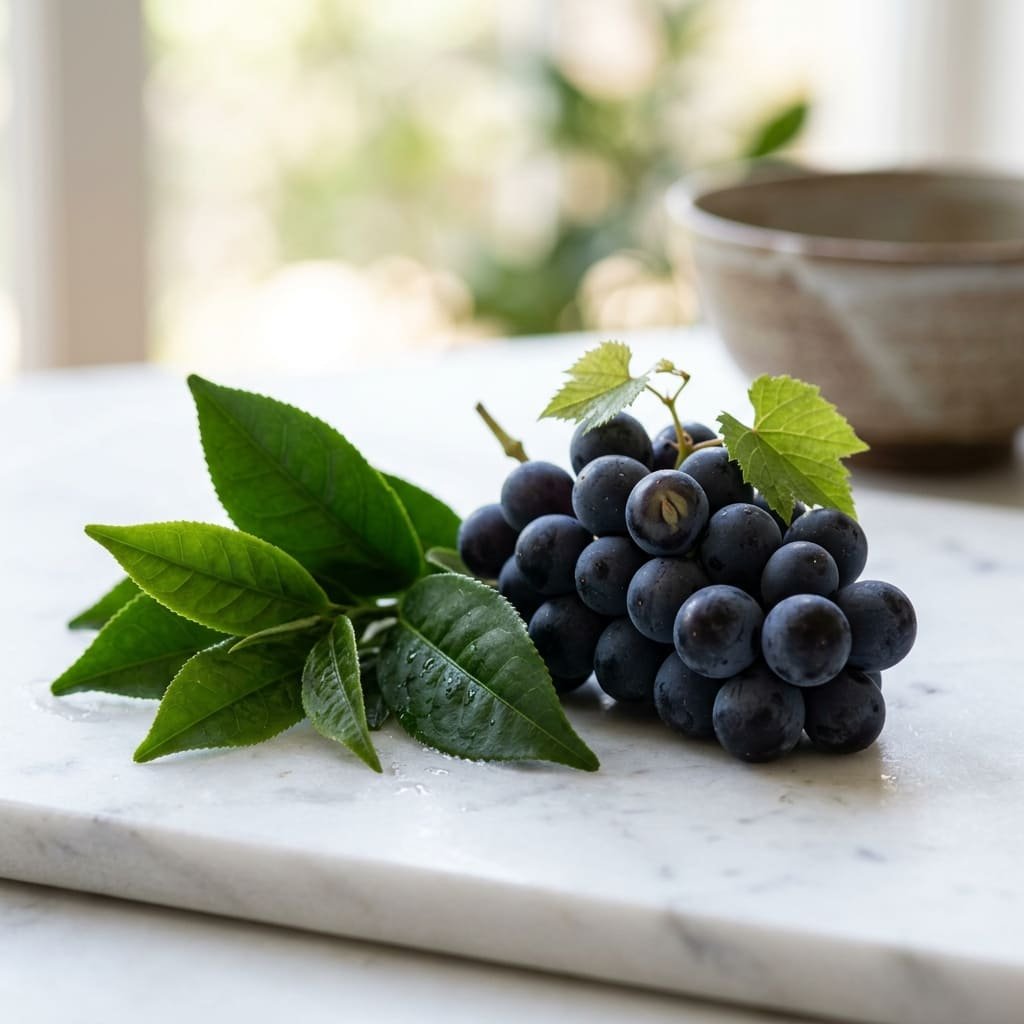
Green tea is one of the most researched botanicals, but NCCIH’s summary of the evidence does not list memory or cognition among its established uses. Concentrated extracts have been linked to rare liver injury, they contain caffeine, and at high doses green tea can lower blood levels of the beta-blocker nadolol [2]. NeuroSerge does not say how much extract each capsule holds or how much caffeine that adds.
Grape seed extract
Small reviews suggest grape seed extract may modestly lower LDL cholesterol, triglycerides and diastolic blood pressure, with results that vary by product [3]. Those are cardiovascular markers, not measures of memory or focus.
Bilberry extract
Bilberry is traditionally used for vision and blood sugar. NCCIH notes that studies on night vision have had conflicting results and that bilberry has not been clearly shown to help any health condition [4].
Cassia cinnamon
Cinnamon has been studied mainly for blood sugar, with mixed findings. Cassia cinnamon, the type NeuroSerge names, contains coumarin, which has been linked to liver problems in sensitive people when taken long term [5]. There is no established role for cinnamon in cognition.
Deglycyrrhizinated licorice (DGL)
DGL is licorice with glycyrrhizin removed, the compound behind licorice’s effects on blood pressure and heart rhythm. NCCIH says DGL might be safe for up to four months [6]. It is used for digestive comfort, and its inclusion in a brain formula is hard to explain.
Olive leaf
Olive leaf extract is mostly marketed for blood pressure and blood sugar. The NeuroSerge page itself credits it with heart health, fiber and blood sugar, not with any brain effect.
The unnamed ingredients
The page promises “20+ ingredients and nutrients” but names six, and in the same section repeats the heading “Proprietary Blend of 4 Plants and Minerals.” Unnamed ingredients cannot be checked for benefit or safety, which is a problem for anyone taking medication.
Which NeuroSerge Ingredients Matter Most
None of the six stands out for brain health. If the formula has any noticeable effect, the most likely source is green tea’s caffeine. Grape seed, bilberry, cinnamon and olive leaf are better known for cardiovascular and metabolic markers, and DGL for digestion.
What the Formula Seems Designed to Do
As listed, NeuroSerge reads like a general antioxidant and metabolic blend with a brain-health label. Ingredients that buyers often associate with cognition, such as omega-3 fatty acids, B vitamins or ginkgo, are not named, and NCCIH notes that even those have not shown clear benefits for preventing cognitive decline [1].
What’s Missing From the NeuroSerge Formula
- Doses: not one ingredient amount is disclosed.
- Most of the ingredients: only 6 of the claimed 20+ are named.
- Ingredient identities: extract strengths and standardization are not stated.
- Product research: no published trial of the finished formula, despite the “clinically proven” wording on the sales page.
- Relevant references: the page’s 14 references concern sleep, obesity and metabolism, not these ingredients or the brain.
- Third-party testing: no certificate of analysis is shown.
Does the Formula Make Sense?
- Ingredient research: the six botanicals have some research for heart, blood sugar or vision markers, mostly modest or mixed [2][3][4][5].
- Formula plausibility for brain health: weak; the named ingredients do not target memory or focus.
- Product proof: none published.
Safety and Interaction Notes
Green tea extract carries a rare risk of liver injury and contains caffeine, cassia cinnamon contains coumarin, and DGL is considered safe only for limited periods [2][5][6]. Our NeuroSerge side effects guide covers risk groups and interactions in more detail.
- Take diabetes, blood pressure or blood-thinning medication
- Take nadolol
- Have liver, heart or kidney disease
- Are pregnant, breastfeeding or under 18
- Are sensitive to caffeine
- Have surgery scheduled
NeuroSerge Ingredients: Formula Verdict
Judged as a brain health formula, NeuroSerge scores poorly on both logic and transparency: the named ingredients do not target memory or focus, the doses are hidden and most of the ingredient list is missing. For the seller and refund details, see our NeuroSerge legitimacy check.
- If you want a supplement for memory or focus, look for products that name every ingredient and dose so you can compare them with research, and keep expectations modest even then.
- If you take medication or have liver, heart or kidney disease, ask your pharmacist before adding green tea extract, cinnamon or licorice products in any form.
- If your memory has changed noticeably, see your doctor before trying any supplement, since several common causes are treatable.
Frequently Asked Questions
What are the main ingredients in NeuroSerge?
The official page names olive leaf, cassia cinnamon, deglycyrrhizinated licorice, green tea extract, grape seed extract and bilberry extract. It says the blend contains 20+ ingredients but does not name the rest.
Does NeuroSerge list the dose of each ingredient?
No. All ingredients are inside a proprietary blend with no amounts, so the formula cannot be compared with research.
Are NeuroSerge’s ingredients proven for memory?
No. None of the six named ingredients has meaningful human evidence for improving memory or focus. They are mainly studied for heart, blood sugar or vision markers.
Does NeuroSerge contain caffeine?
It is sold as stimulant-free, but green tea extract naturally contains caffeine. The amount is not disclosed.
Is the licorice in NeuroSerge safe?
NeuroSerge uses deglycyrrhizinated licorice, which removes the compound linked to blood pressure and heart rhythm effects. NCCIH says DGL might be safe for up to four months.
Can NeuroSerge’s ingredients interact with medication?
Possibly. Green tea can lower levels of the beta-blocker nadolol, and the undisclosed doses make other interactions hard to judge. Ask a pharmacist before combining it with any medication.