Audifort Ingredients: What’s in the Formula and What the Label Leaves Out
People search for Audifort ingredients because the ingredient list says more about a supplement than its marketing does. It shows what the product is built around, how closely that matches the claims, and how much the maker is willing to disclose.
In this analysis, we look at each ingredient the Audifort sales page names and what the research on it actually covers. We also look at the bigger issue: most of the formula, and every dose, is not disclosed. This page judges the formula itself. For the overall buying assessment, see our full Audifort review.
Quick Answer
Audifort names six ingredients: green tea, grape seed, GABA, maca root, Gymnema sylvestre and capsicum. Its sales page says the formula has “over 20” ingredients but does not list the others, and it gives no doses.
The named ingredients point to a theme of antioxidants plus relaxation. None has strong human evidence for improving hearing or tinnitus, and the undisclosed doses mean the formula cannot be compared with any study.
Audifort Ingredients at a Glance
| Ingredient | Likely role in the formula | Human evidence for hearing | Dose disclosed |
|---|---|---|---|
| Green tea | Antioxidant (catechins) | Not established | No |
| Grape seed | Antioxidant (proanthocyanidins) | Not established | No |
| GABA | Relaxation and stress | Not established; limited for stress | No |
| Maca root | Energy and general vitality | Not established | No |
| Gymnema sylvestre | Blood-sugar support | Not established | No |
| Capsicum annuum | Circulation (capsaicin) | Not established | No |
| About 14 or more other ingredients | Unknown | Cannot be assessed | Not named |
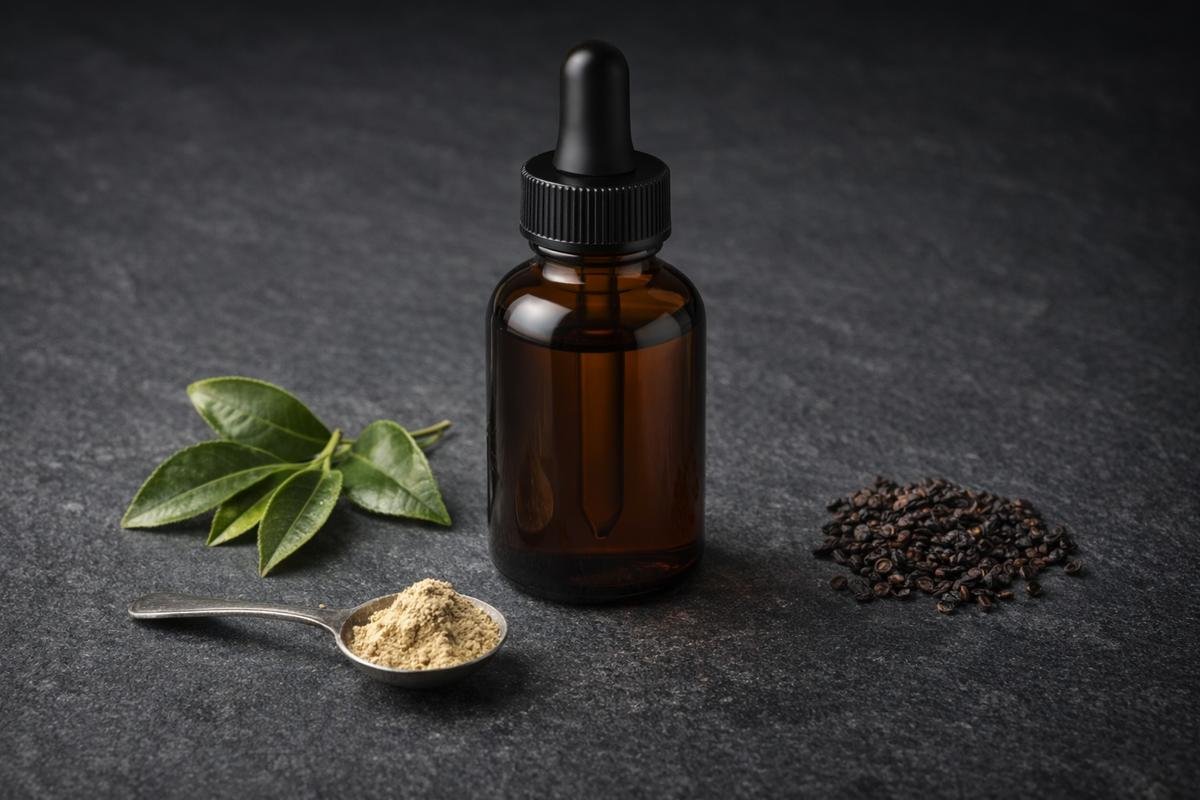
Full Formula Breakdown
Green Tea
Green tea is included for its catechins, a group of antioxidant compounds. Research on green tea centers on heart, metabolic and other general-health uses, and NCCIH notes that firm conclusions cannot yet be drawn for most of them [5]. We found no basis in that research for a specific hearing benefit.
Two practical points matter more for buyers. Green tea extract has been linked to rare cases of liver injury, and it contains caffeine [5]. Because Audifort does not disclose the amount, neither risk can be sized.
Health Reviews take: a common antioxidant choice with a general-wellness rationale, not a hearing-specific one.
Grape Seed
Grape seed extract supplies proanthocyanidins, another family of antioxidants. NCCIH describes it as generally well tolerated, with research focused on cholesterol, blood pressure and wound healing rather than hearing [6].
Health Reviews take: it fits the antioxidant theme, but its link to hearing is indirect at best.
GABA (Gamma-Aminobutyric Acid)
GABA is the brain’s main calming neurotransmitter, and it is the most distinctive ingredient in Audifort. Its presence suggests the formula targets the stress and poor sleep that often come with tinnitus, rather than the ear itself.
The evidence is thinner than that logic suggests. A systematic review found limited evidence that oral GABA helps with stress and very limited evidence for sleep [4]. Researchers also still debate how much GABA taken by mouth reaches the brain [3].
Health Reviews take: a reasonable idea for people bothered by stress around tinnitus, with weak evidence and no data on reducing the sound itself.
Maca Root
Maca is a Peruvian root traditionally used for energy, fertility and sexual function, and most of its research covers those areas [8]. It has no meaningful research connecting it to hearing.
Health Reviews take: a general-vitality addition that does not strengthen the formula’s hearing rationale.
Gymnema Sylvestre
Gymnema has been studied mainly for its effects on blood sugar [7]. Some marketing connects blood-sugar balance to inner-ear health, but there is no direct evidence that gymnema supports hearing.
Its blood-sugar effect is also the formula’s clearest interaction point: it could add to the effect of diabetes medication.
Health Reviews take: the weakest fit for a hearing product and the most relevant ingredient for safety.
Capsicum Annuum
Capsicum is the source of capsaicin, the compound that makes chili peppers hot. It is sometimes added to formulas for circulation, and the sales page credits Audifort’s ingredients with better blood flow to the ears. We are not aware of human research showing that capsicum in a supplement affects blood flow to the inner ear.
Health Reviews take: a theoretical inclusion that can also irritate the mouth or stomach in sensitive people.
Which Audifort Ingredients Matter Most?
GABA carries the formula’s most specific idea: easing the stress that can make tinnitus harder to tolerate. Green tea and grape seed provide the antioxidant theme. Maca, gymnema and capsicum are general-wellness additions with little connection to hearing.
From a safety standpoint, the order changes. Gymnema, green tea extract and GABA are the ingredients most likely to matter for people taking medication, which our Audifort side effects guide covers in detail.
What the Formula Seems Designed to Do
The combination appears designed around three ideas:
- reducing oxidative stress with plant antioxidants;
- supporting relaxation and sleep with GABA;
- supporting general circulation and metabolism with capsicum, gymnema and maca.
As a concept, that is coherent. It is a broad wellness formula positioned for hearing, rather than an ingredient set built specifically around hearing research.
What the Label Doesn’t Tell Us
This is the formula’s biggest weakness. The sales page text we reviewed does not:
- name roughly 14 or more of the “over 20” ingredients it mentions;
- list the amount of any ingredient;
- identify the extract type or standardization of the botanicals;
- state how many servings each bottle contains.
Without doses, it is impossible to say whether any ingredient is present at an amount comparable to research. Without the full ingredient list, readers with allergies or medication concerns cannot check what they would be taking. Ask the seller for a complete Supplement Facts label before ordering, and share it with your pharmacist if you take medication.
Does the Audifort Formula Make Sense?
Partly. The antioxidant-and-relaxation idea hangs together, and the named ingredients are familiar supplement ingredients. But none has strong human evidence for hearing or tinnitus, and the NIDCD states that no supplement advertised for tinnitus has been proven effective [1]. In a survey of 1,788 people with tinnitus, most supplement users reported no effect [2].
The undisclosed doses make the picture weaker still. A formula can be judged as well designed only when its contents can be checked, and most of Audifort’s cannot.
Ingredient-Specific Safety Notes
- Gymnema may lower blood sugar, which matters for anyone taking insulin, metformin or other glucose-lowering medication [7].
- GABA may add to the effect of sleep aids, sedatives or anti-anxiety medication.
- Green tea extract has been linked to rare liver injury, can interact with some medications such as nadolol and atorvastatin, and contains caffeine [5].
- Capsicum can irritate the mouth, throat or stomach.
Pregnant or breastfeeding women, children, people with liver or kidney disease and anyone scheduled for surgery should get medical advice before using any of these ingredients in combination.
Formula Verdict
Audifort’s named ingredients form a coherent but loosely targeted antioxidant-and-relaxation formula. Its main weakness is transparency: roughly two-thirds of the ingredients and all of the doses are undisclosed, so the formula cannot be checked against research or screened properly for interactions.
- If you are a healthy adult comparing formulas: weigh the missing dose information heavily, and compare Audifort with products that publish a full Supplement Facts panel.
- If you take diabetes, sleep, anxiety or other regular medication: bring the complete label to your pharmacist or prescriber before trying it, because the undisclosed amounts make self-assessment unreliable.
- If your tinnitus is new, one-sided, pulsing or comes with hearing loss: start with a medical evaluation rather than any supplement formula.
For seller details and how the refund process works, see our Audifort legitimacy check.
Frequently Asked Questions
What are the ingredients in Audifort?
The sales page names six ingredients: maca root, grape seed, green tea, Capsicum annuum, Gymnema sylvestre and GABA. It says the formula contains over 20 ingredients in total but does not identify the rest.
Does Audifort list the dose of each ingredient?
Not on the sales page we reviewed. No amounts are given for any named ingredient, which makes it impossible to compare the formula with doses used in research.
Which Audifort ingredient is most relevant to tinnitus?
GABA is the most distinctive choice because it is linked to relaxation, and stress can make tinnitus harder to live with. Evidence for oral GABA is limited for stress and very limited for sleep, and none of it shows a reduction in tinnitus itself.
Are Audifort’s ingredients proven to help hearing?
No. None of the named ingredients has strong human evidence for improving hearing or reducing tinnitus, and the NIDCD states that no supplement advertised for tinnitus has been proven effective.
Is Gymnema in Audifort a concern for people with diabetes?
It can be. Gymnema has been studied for lowering blood sugar, so people taking insulin, metformin or other glucose-lowering medication should ask their prescriber before using a product that contains it.
Does Audifort contain caffeine?
It contains green tea, and NCCIH notes that green tea contains caffeine. The amount in Audifort is not disclosed, so people who limit caffeine should take that into account.