Audifort Review: Formula, Evidence, Safety and Refund Terms
If you are considering Audifort for ringing in the ears or general hearing support, three questions matter most. What is actually in the bottle? What does the research say about those ingredients? And what happens if it does not work for you?
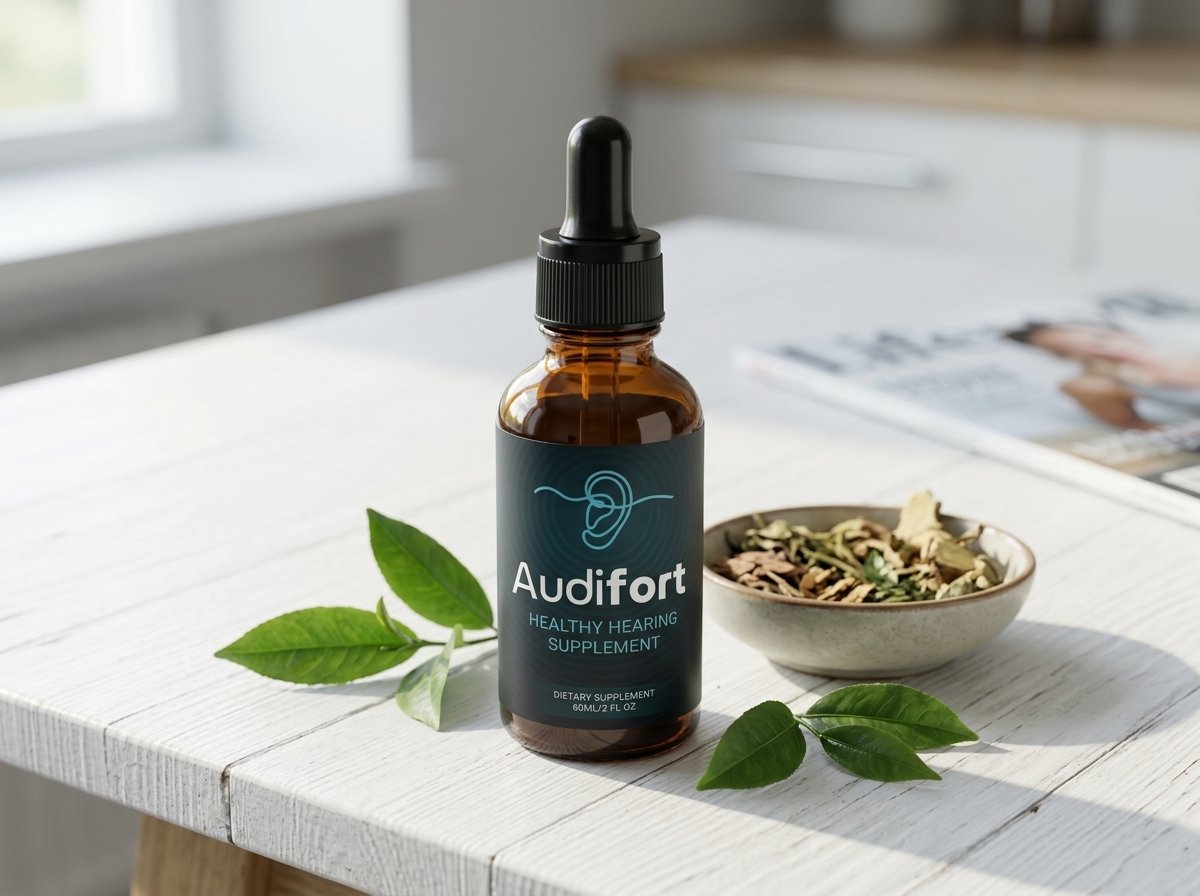
Audifort is a liquid dropper supplement sold through ClickBank and marketed for hearing health, “less noise” and mental clarity. In this Audifort review, we compared the official sales page, its label disclosures and its return policy against the published research on the ingredients it names.
The short version: the formula has a recognizable theme, but the label discloses very little, the evidence for supplements in tinnitus is weak, and the refund fine print is stricter than the headline guarantee.
Quick Verdict
Our assessment: cautious, low confidence.
Audifort names six ingredients (green tea, grape seed, GABA, maca root, Gymnema sylvestre and capsicum) out of what its sales page calls “over 20” in total. No doses are listed for any of them.
Its main strength is a coherent antioxidant-and-relaxation theme. Its main limitations are more serious. Most of the formula is undisclosed, and there is no published trial of the product. The National Institute on Deafness and Other Communication Disorders (NIDCD) also states that no supplement advertised for tinnitus has been proven effective [1].
It may suit a healthy adult whose tinnitus has already been checked by a clinician and who accepts the uncertainty. It is not a substitute for a hearing evaluation, and the refund terms deserve a careful read before ordering.
If you want to read the current label and guarantee wording yourself, the official Audifort page shows both.
Audifort Review Score Breakdown
| Criterion | Score | Why |
|---|---|---|
| Ingredient Logic | 5.5/10 | The antioxidant and relaxation theme is coherent; maca, gymnema and capsicum have only a loose link to hearing. |
| Formula Transparency | 2.5/10 | Six of “over 20” ingredients are named, and no doses are disclosed. |
| Evidence Quality | 3.0/10 | Ingredient research rarely measures hearing in people, there is no product-level trial, and supplement research in tinnitus is largely negative. |
| Safety Profile | 6.0/10 | Familiar ingredient types, but blood-sugar, sedative and liver considerations apply, and the amounts are unknown. |
| Value & Refund Terms | 4.0/10 | $49–$79 per bottle with a two-bottle minimum; the “no questions asked” guarantee conflicts with a stricter return-policy page. |
| Overall Score | 4.2/10 | Average of the five criteria. |
Audifort at a Glance
| Product name | Audifort |
| Product type | Hearing-support dietary supplement |
| Marketed for | Hearing health, “less noise,” mental clarity and focus |
| Format | Liquid dropper; one full dropper (about 15 drops) daily, under the tongue or in water or juice |
| Named ingredients | Maca root, grape seed, green tea, Capsicum annuum, Gymnema sylvestre, GABA |
| Doses disclosed | No |
| Price | $49–$79 per bottle depending on package (two-bottle minimum) |
| Guarantee | Advertised as a 90-day money-back guarantee (see the fine print below) |
| May suit | Healthy adults with clinician-evaluated, stable tinnitus who want to try a low-evidence supplement |
| Not ideal for | New, sudden, one-sided or pulsing tinnitus; people on diabetes, sedative or anti-anxiety medication |
What Is Audifort?
Audifort is a dietary supplement sold as a liquid dropper and marketed for hearing support. The sales page attributes it to “Audifort Research,” names Andrew Ross as its creator and says the product is assembled in the USA. Orders are processed by ClickBank, an online retailer that handles payments for many supplement brands.
The marketing goes beyond hearing. The sales page also promotes better focus, cognitive clarity and less “mental fog,” and the three- and six-bottle packages include two downloadable eBooks about sleep and brain health.
How We Evaluated Audifort
We reviewed the official sales page, the vendor’s affiliate terms and the return-policy page, all checked on November 4, 2026. We then compared each named ingredient against published research and federal health resources. We did not test the product, and we do not publish user testimonials.
The score uses five criteria, each rated from 1 to 10:
- Ingredient Logic: whether the ingredients fit the claimed purpose.
- Formula Transparency: whether ingredients and doses are fully disclosed.
- Evidence Quality: the strength of ingredient research and any product-level evidence.
- Safety Profile: tolerability and interaction risk for a typical adult.
- Value & Refund Terms: price per bottle and how usable the guarantee really is.
The overall score is the average of the five.
How Audifort Claims to Work
According to the sales page, Audifort supports hearing health, with “less noise and better ear health” once the body adapts. It credits its ingredients with antioxidant protection for the ear, better blood flow to the ears, a healthy inflammatory response and relaxation. Its FAQ says most people feel a difference “after the first week.”
These are manufacturer claims. Some of the underlying ideas are biologically reasonable in general terms, since oxidative stress and blood flow both matter to the inner ear. But the sales page offers no evidence that this formula, at its undisclosed amounts, changes any of them in people. The one-week timeline is a marketing claim, not a research finding.
Audifort Ingredients Overview
The table covers the six ingredients the sales page names. The rest of the formula is not disclosed, so it cannot be assessed.
| Ingredient | Mainly studied for | Link to hearing | Evidence for hearing |
|---|---|---|---|
| Green tea extract | Antioxidant catechins; heart and metabolic health | Indirect | Limited |
| Grape seed extract | Antioxidant proanthocyanidins; blood pressure, cholesterol | Indirect | Limited |
| GABA | Relaxation, stress and sleep | May affect how stressful tinnitus feels, not the ear itself | Limited |
| Maca root | Energy, mood, sexual function | Little direct relevance | Theoretical |
| Gymnema sylvestre | Blood-sugar support | Indirect at best | Theoretical |
| Capsicum annuum | Circulation and metabolism (capsaicin) | Theoretical | Theoretical |
GABA is the most distinctive ingredient. Research on oral GABA supplements is small and inconsistent, and it is still unclear how much GABA taken by mouth reaches the brain [3][4]. It may help some people feel calmer, which could matter if stress makes tinnitus harder to tolerate, but that is different from reducing the sound itself.
Green tea and grape seed are well-known antioxidant extracts. The National Center for Complementary and Integrative Health (NCCIH) notes that firm conclusions about green tea cannot yet be drawn for most of its uses. Its grape seed summary centers on cholesterol and blood pressure, not hearing [5][6].
Maca, gymnema and capsicum read more like general-wellness additions. Gymnema has been studied mainly for its effects on blood sugar [7], and maca mainly for energy, mood and fertility [8]. None of the three has meaningful hearing research behind it. For a closer look at each component, see our breakdown of the Audifort formula.
Does Audifort Work? Realistic Expectations
- Ingredient-level evidence: research on the individual ingredients suggests antioxidant or calming effects in some settings, but almost none of it measured hearing or tinnitus in people.
- Formula plausibility: the combination appears designed around oxidative stress, circulation and stress response. As a concept, that is coherent. With most of the formula and all of the doses undisclosed, we cannot judge whether it is plausible at the amounts used.
- Product-level proof: there is no publicly available clinical trial of Audifort as a finished product.
The wider category matters too. The NIDCD notes that vitamins, herbal extracts and other supplements are often advertised for tinnitus, but none has been proven effective [1]. In a survey of 1,788 people with tinnitus, 70.7% of supplement users reported no effect, 19.0% reported improvement and 10.3% reported their tinnitus got worse. The authors concluded that supplements should not be recommended to treat tinnitus, although some may help with sleep or emotional reactions in some people [2].
If a supplement helps at all, the effect is usually gradual and modest. Tinnitus also varies on its own with sleep, stress, noise exposure and caffeine, which makes it easy to credit or blame a supplement for normal ups and downs. A simple daily log of loudness, sleep and stress over the first weeks gives you a fairer basis for judging any change.
Potential Benefits and How Confident We Are
- Relaxation or easier sleep: plausible for some users, mainly through GABA, but uncertain [3][4].
- General antioxidant intake: plausible, though not specific to hearing.
- Less ringing or “less noise”: manufacturer claim only. Published evidence does not support it for this product or for supplements in general [1][2].
- Mental clarity and focus: manufacturer claim only.
Audifort Side Effects and Safety
Because the doses are undisclosed, the main safety questions involve interactions and specific health conditions rather than common side effects.
- Blood sugar: gymnema may lower blood sugar [7]. Anyone taking insulin, metformin or other glucose-lowering medication should check with their prescriber first.
- Sedation: GABA may add to the effect of sleep aids, sedatives or anti-anxiety medication.
- Liver and medications: green tea extract has been linked to rare cases of liver injury, can interact with some medications such as nadolol and atorvastatin, and contains caffeine [5].
- Stomach irritation: capsicum can irritate the mouth, throat or stomach in sensitive people; taking the drops in water may be easier to tolerate.
Surgical teams usually ask patients to stop supplements before an operation, so tell yours if you take Audifort. People who are pregnant or breastfeeding, children, and people with liver or kidney disease or hormone-related conditions should not use it without medical advice.
Tinnitus itself can have treatable causes, including earwax, ear infections and medication effects, and tinnitus that pulses with your heartbeat often has an identifiable cause [1]. New, sudden or one-sided ringing, or ringing with hearing loss or dizziness, should be checked by a clinician before you try any supplement. For the full list of interactions and risk groups, see our Audifort side effects and interactions guide.
Pricing, Guarantee and Where to Buy
Prices as listed on the official sales page on November 4, 2026:
| Package | Per bottle | Total | Extras |
|---|---|---|---|
| 2 bottles (60-day supply) | $79 | $158 + shipping | None |
| 3 bottles (90-day supply) | $69 | $207 | Free U.S. shipping, 2 eBooks |
| 6 bottles (180-day supply) | $49 | $294 | Free U.S. shipping, 2 eBooks |
The guarantee fine print. The sales page advertises a “90-Day Money Back Guarantee,” calls it “No Questions Asked,” and says refunds are issued “minus shipping and handling fees.” The separate return-policy page is stricter. It requires a return authorization (RMA) number from support and says you pay for return shipping. Items with obvious signs of use may receive only a partial refund, and “some health and personal care items” are listed as non-returnable.
Those two descriptions do not fully match. Before ordering, read the current return policy, keep your receipt, and note that ClickBank runs its own order-support portal for refund requests [9]. A guarantee is purchase protection, not evidence that the product works.
The vendor’s terms prohibit reselling Audifort on marketplaces such as Amazon or eBay, so listings there may not be covered by the guarantee. The official Audifort page is where current pricing and guarantee terms appear. For seller verification and how to recognize unofficial listings, see our Audifort legitimacy check.
Pros and Cons
Pros
- A clear, single concept: antioxidants plus relaxation support.
- Simple once-daily liquid format that can be taken in water.
- Package prices are published on the sales page.
- The named ingredients are common supplement ingredients with known general safety profiles.
Cons
- Only six of “over 20” ingredients are named, and no doses are disclosed.
- No published trial of the product, and supplements in general are unproven for tinnitus.
- The return-policy fine print is stricter than the headline guarantee.
- Blood-sugar, sedative and liver considerations, with unknown amounts of each ingredient.
- Expensive to start: the smallest order is $158 plus shipping.
Who Audifort May Suit and Who Should Skip It
May suit: healthy adults whose tinnitus has already been evaluated and is stable, who want to try a supplement with realistic expectations, and who are mainly hoping for relaxation support.
Should skip it, or check with a clinician first:
- Anyone with new, sudden, one-sided or pulsing tinnitus, or ringing with hearing loss or dizziness.
- People taking diabetes, sedative, sleep or anti-anxiety medication.
- People with liver or kidney disease.
- Anyone who is pregnant, breastfeeding or scheduled for surgery.
- Buyers who want a proven treatment or a fully disclosed label.
Is Audifort Worth Considering?
For most readers, the better first step is a hearing evaluation. The NIDCD lists treatable causes of tinnitus and describes sound therapy and behavioral approaches, such as cognitive behavioral therapy, as established ways to manage it [1].
If you have had that evaluation and still want to try a supplement, Audifort is one option. Its limited disclosure makes it harder to judge than formulas that publish a full label with doses, and that is the main reason for our low score.
Final Verdict on Audifort
Audifort scores 4.2 out of 10 in our review. The concept is coherent; the evidence and the transparency are not. We found no published trial of the product, the sales page names six ingredients without doses, and the refund terms need a careful read.
If your tinnitus has already been checked, you take none of the medications listed above, and you have read the current return policy, the next step is to verify the label and guarantee on the official page before deciding.
Path B: higher-risk readers
If you take medication for diabetes, anxiety or sleep, or have liver disease, talk to your prescriber or pharmacist before trying Audifort. The same applies if you are pregnant or breastfeeding or have surgery coming up. If your tinnitus is new or changing, see a clinician or audiologist first; a medical evaluation is likely to do more for you than any supplement purchase.
Frequently Asked Questions
Does Audifort work for tinnitus?
There is no published clinical trial of Audifort, and the NIDCD states that no supplement advertised for tinnitus has been proven effective. Some ingredients, such as GABA, may help some people feel calmer, but that is different from reducing the ringing itself.
What are the ingredients in Audifort?
The sales page names maca root, grape seed, green tea, Capsicum annuum, Gymnema sylvestre and GABA, and says the formula contains over 20 ingredients in total. It does not list doses for any of them.
How long does Audifort take to work?
The sales page says most people feel a difference after the first week, but that is a marketing claim with no published evidence behind it. Supplement effects, if any, are usually gradual, and tinnitus naturally varies from day to day.
Is Audifort safe to take with medication?
Not without checking first. Gymnema may lower blood sugar, GABA may add to sedatives or sleep aids, and green tea extract can interact with some medications and has been linked to rare liver injury. Ask your prescriber or pharmacist before combining Audifort with any medication.
How much does Audifort cost?
On November 4, 2026, the official page listed $79 per bottle for two bottles ($158 plus shipping), $69 per bottle for three ($207) and $49 per bottle for six ($294). The three- and six-bottle packages include free U.S. shipping.
What is Audifort’s refund policy?
The sales page advertises a 90-day money-back guarantee, minus shipping and handling fees. The return-policy page adds that you need an RMA number from support, you pay return shipping, and used items may receive only a partial refund. Read the current policy before ordering.
Is Audifort legit?
Audifort is a real product sold through ClickBank with a published guarantee. Being a legitimate product is not the same as being effective, and its limited label disclosure is the main reason for caution. Our separate legitimacy check covers the seller and refund process in more detail.