Probiotics for Bad Breath: What the Research Actually Shows
Probiotics for bad breath rest on a simple idea: if the odor comes from bacteria in your mouth, adding friendlier bacteria might crowd out the ones that cause it. A handful of small trials suggest that can happen, at least for a while. They also show that the effect depends heavily on which strain you take, and that probiotics work best alongside, not instead of, brushing, flossing and cleaning your tongue.
This guide explains where bad breath usually comes from, which probiotic strains have been tested, what the research reviews conclude, how to use an oral probiotic sensibly, and when bad breath is a reason to see a dentist or doctor instead.
Quick Answer
Some oral probiotic strains, including Streptococcus salivarius K12, Lactobacillus salivarius WB21, Lactobacillus reuteri and Weissella cibaria CMU, have reduced bad-breath measures in small randomized trials [3][4][5][6]. Pooled analyses find a modest, mostly short-term benefit, and one found no significant effect at all [7][8][9][10].
The evidence is strain-specific and comes from trials of a few dozen to about 100 people. Probiotics may help as an extra step, but they do not replace oral hygiene or treatment for gum disease, and persistent bad breath deserves a dental checkup.
What Causes Bad Breath in the First Place
Most bad breath starts in the mouth. Bacteria break down food debris, dead cells and proteins, releasing volatile sulfur compounds (VSCs) such as hydrogen sulfide and methyl mercaptan, the gases behind the familiar odor [2]. The coating on the back of the tongue and the pockets around inflamed gums are the two main places where those bacteria thrive [2].
The American Dental Association lists several other common contributors [1]:
- Dry mouth, often caused by medications, mouth breathing or salivary gland problems, because saliva normally washes bacteria away.
- Gum disease, linked to plaque buildup along and below the gumline.
- Strong foods and drinks such as garlic, onions and coffee.
- Smoking and tobacco use.
- Medical conditions including sinus problems, acid reflux, diabetes, and liver or kidney disease.
That list matters for probiotics. They are aimed at the bacterial side of the problem. They will not fix odor from a sinus infection, reflux or a medication that dries your mouth.
How Probiotics for Bad Breath Are Supposed to Work
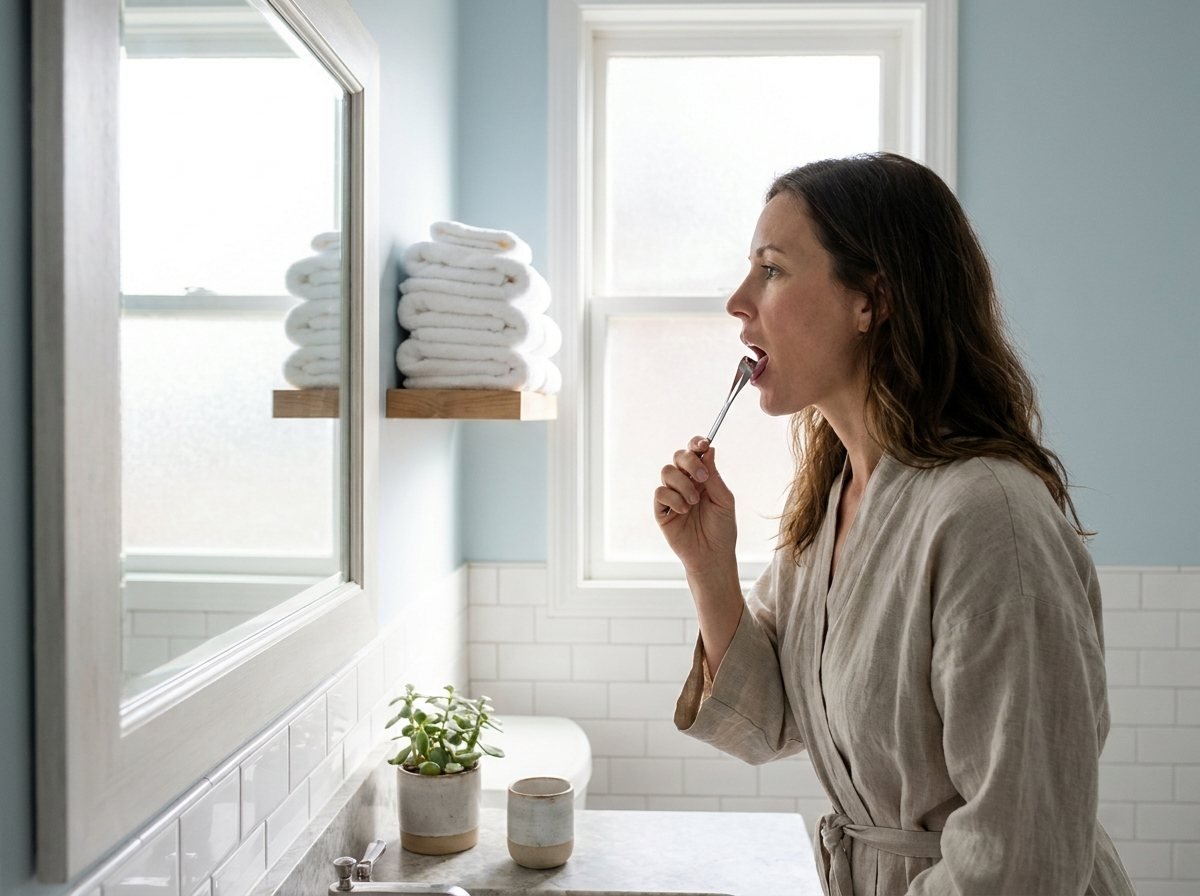
Oral probiotics are usually lozenges, chewable tablets or gum that dissolve slowly in the mouth. The idea is that the added bacteria settle on the tongue and teeth and compete with odor-producing species for space and nutrients. Some strains go further: S. salivarius K12 makes bacteriocins, natural antibacterial proteins that suppressed halitosis-related bacteria in laboratory tests [3].
These mechanisms are plausible, but they depend on the strain. Probiotics are not interchangeable: NCCIH notes that different types may have different effects, and that a benefit shown for one does not prove another works the same way [11].
What the Research Shows on Probiotics for Bad Breath
Researchers measure bad breath in two main ways: a trained panel rates the odor (organoleptic score), and a device measures VSC levels. The two do not always move together, which is one reason study results look mixed.
Individual strain trials
| Strain and format | Study | What it found |
|---|---|---|
| S. salivarius K12 lozenges, after a chlorhexidine (antiseptic) rinse | Preliminary study, 23 people with halitosis [3] | 85% of the K12 group had a substantial drop in VSCs after one week, compared with 30% on placebo |
| L. salivarius WB21 tablets, 14 days | Randomized crossover trial [4] | VSC levels fell compared with placebo; odor-panel scores improved in both periods, with no difference between them |
| L. reuteri chewing gum, 14 days | 25 healthy young adults with morning breath [5] | Odor-panel scores improved compared with placebo; VSC levels did not change |
| W. cibaria CMU tablets, 8 weeks | 100 adults with halitosis [6] | Better bad-breath scores and lower VSCs than placebo at week 8, although VSCs were already slightly lower in the probiotic group at the start; no safety issues seen |
What the systematic reviews conclude
- A 2019 meta-analysis of three randomized trials found lower odor-panel scores with probiotics but no significant difference in VSC levels [7].
- A 2022 meta-analysis of four trials (283 participants) found no statistically significant effect, although the authors still considered some probiotics potentially useful and called for more trials [8].
- A 2022 meta-analysis of seven trials found improvements in both measures over four weeks or less, but only the odor-panel score stayed better beyond four weeks [9].
- A 2025 meta-analysis of ten trials found lower VSC levels and better odor scores, with stronger results when probiotics were combined with conventional care. It flagged small samples, possible publication bias and differences between studies as limits [10].
- Strain-level research: a few specific strains have shown short-term improvements in small trials.
- Category-level picture: pooled results are modest and inconsistent, and long-term data are scarce.
- Product-level proof: most oral probiotic products, including blends that combine several strains, have not been tested as finished formulas for bad breath.
Why Strain Names on the Label Matter
Because the trials tested specific strains, the most useful thing on an oral probiotic label is the full strain name, such as S. salivarius K12 or L. salivarius WB21, plus the number of live organisms (CFU) per dose. A label that lists only a species, or hides amounts inside a proprietary blend, makes it impossible to match the product to the research.
ProDentim is a good example of this gap. It lists L. reuteri among its probiotics, a species that improved odor scores in one gum trial [5], but it does not name the strain or give per-strain amounts, so the study cannot be applied to it directly. Our ProDentim ingredients breakdown goes through what each component can and cannot be expected to do.
How to Use an Oral Probiotic Sensibly
- Keep the basics first. Brush twice a day, clean between your teeth daily and clean your tongue; these steps remove the material odor bacteria feed on [1][2].
- Take it after brushing. Most oral probiotics are designed to dissolve slowly in a clean mouth; follow the label for timing.
- Watch the mouthwash timing. Antibacterial rinses may also reduce the probiotic bacteria you just added, so it is sensible to leave a gap between them unless your dentist suggests otherwise. The K12 trial deliberately used a rinse first to clear space, then gave the probiotic [3].
- Give it a fair trial window. Studies ran from one to eight weeks [3][6]. If nothing changes after a couple of months, look for another cause rather than adding more products.
- Choose labeled strains. Prefer products that name the strain and the CFU dose, so you know what you are actually taking.
Safety and Who Should Be Careful
Oral probiotics are generally well tolerated in healthy adults, and the bad-breath trials reported no significant safety problems [5][6]. NCCIH notes that the risk of harmful effects is greater in people with severe illnesses or weakened immune systems, and that probiotic supplements do not need FDA approval before they are sold [11].
- Have a weakened immune system, are undergoing chemotherapy or are seriously ill
- Are taking antibiotics, since timing may affect whether the probiotic survives
- Are pregnant or breastfeeding
- Want to give a probiotic to a child
- Have surgery or a dental procedure scheduled: tell your care team about every supplement you take and pause it when they advise
When Bad Breath Needs a Dentist or Doctor
See a dentist if bad breath persists despite good brushing and flossing, or if you notice bleeding or swollen gums, loose teeth, a constant bad taste or a dry mouth. The ADA advises that if a dentist finds your mouth healthy, the cause may be medical, and a doctor should evaluate it [1]. Sinus symptoms, heartburn, unexplained thirst or a sweet or fruity breath odor are reasons not to wait.
Probiotics for Bad Breath: The Bottom Line
Specific probiotic strains have produced real but modest, mostly short-term improvements in small trials, and they appear to work best on top of good oral hygiene. What to do next depends on your situation:
- If your breath is mostly a morning or occasional issue, tighten the basics, especially tongue cleaning, and consider a probiotic that names a studied strain as an optional extra.
- If you are already brushing, flossing and cleaning your tongue but the odor persists, book a dental exam before buying supplements, since gum disease and dry mouth are common hidden causes.
- If you are comparing oral probiotic products, check whether the label names each strain and its dose; our ingredient analyses show how to read a formula like this.
- If you are immunocompromised, pregnant, taking antibiotics or have a procedure coming up, ask your doctor or pharmacist before starting any probiotic.
Frequently Asked Questions
Do probiotics help with bad breath?
Some strains have reduced bad-breath measures in small randomized trials, mostly in the short term. Reviews of the research describe the benefit as modest and inconsistent, and probiotics work best alongside regular brushing, flossing and tongue cleaning.
What is the best probiotic strain for bad breath?
The strains with the most specific research are Streptococcus salivarius K12, Lactobacillus salivarius WB21, Lactobacillus reuteri and Weissella cibaria CMU. No single strain has been proven best, and each was tested in small studies.
How long do oral probiotics take to work for bad breath?
Trials have measured effects after one to eight weeks. Pooled data suggest the clearest improvements appear within the first four weeks, while longer-term results are less consistent.
Are oral probiotics different from regular gut probiotics?
Oral probiotics are designed to dissolve in the mouth so the bacteria can settle on the tongue and teeth. Gut probiotics are usually swallowed capsules meant to reach the intestines, and the strains studied for bad breath are mostly specific oral strains.
Can I use mouthwash while taking an oral probiotic?
Yes, but antibacterial mouthwash may also reduce probiotic bacteria, so it is sensible to leave time between the two and follow your dentist’s advice on timing.
Are probiotics for bad breath safe?
They are generally well tolerated in healthy adults. People with weakened immune systems, serious illness, pregnancy, a child or an upcoming procedure should check with a healthcare provider first.
When should I see a dentist about bad breath?
If bad breath continues despite good oral hygiene, or comes with bleeding gums, loose teeth, a constant bad taste or dry mouth. If your mouth is healthy, a doctor can look for medical causes.