Yu Sleep Review: Ingredients, Evidence, Pros, Cons & Verdict
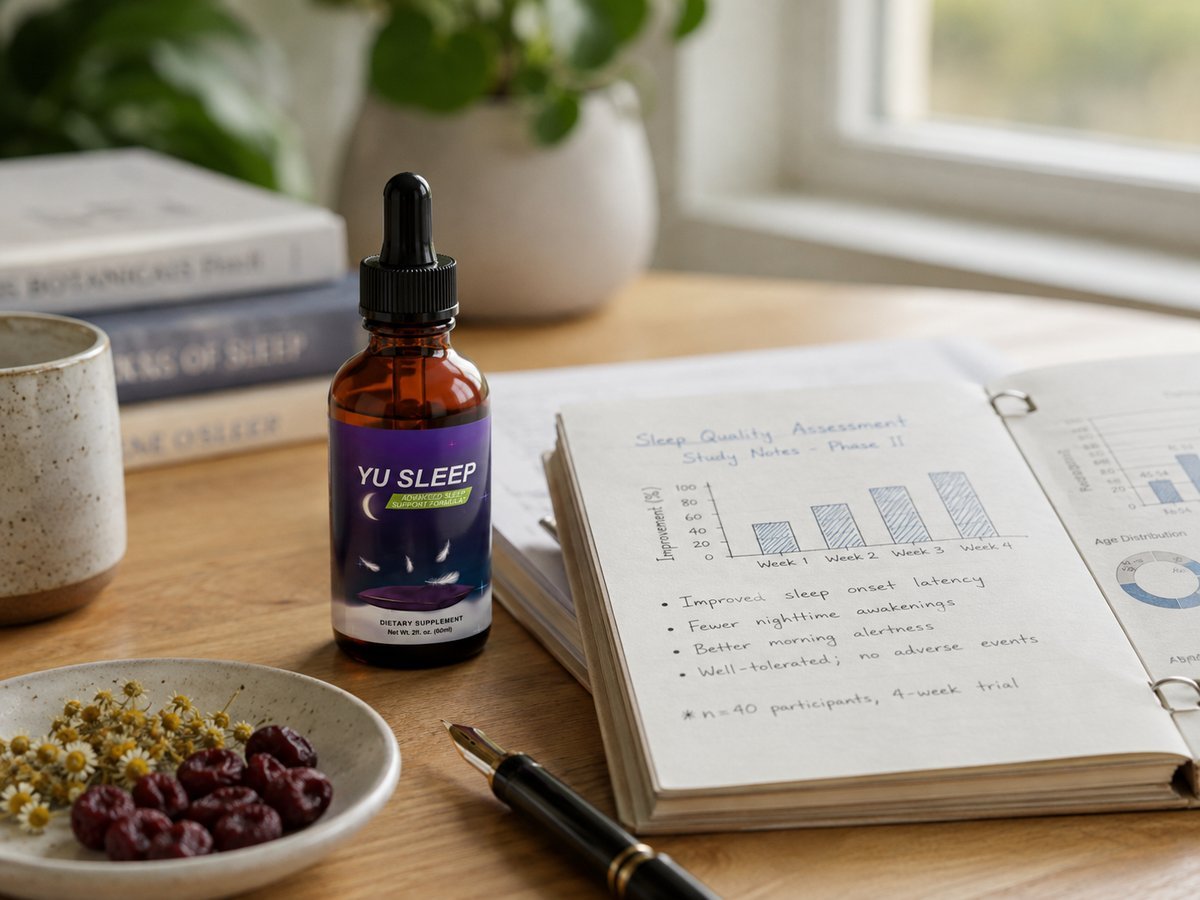
If you are looking for a sleep supplement but would prefer a lower-melatonin formula than many conventional options, Yu Sleep is likely to stand out. It is a liquid sleep-support supplement built around 0.9 mg of melatonin plus ingredients such as L-theanine, 5-HTP, magnesium glycinate, GABA, tart cherry extract, apigenin, and lemon balm.
The formula is more thoughtful than a simple high-dose melatonin product, but the marketing is also more ambitious than the evidence currently supports. Yu Sleep is promoted as a way to help people fall asleep faster, reduce nighttime wakeups, wake up refreshed, and eventually “reset” the body’s sleep pressure system.
This Health Reviews assessment separates those marketing claims from what we can reasonably infer from the ingredient research.
Quick Verdict
Yu Sleep is a plausible, multi-ingredient sleep formula with one especially appealing feature: its disclosed melatonin dose is only 0.9 mg per serving. That makes it worth considering for adults who want sleep support without starting with the multi-milligram melatonin doses commonly found in many products.
Its other listed ingredients also make sense for the category. L-theanine has increasingly useful human evidence for sleep-related outcomes, while magnesium, tart cherry, 5-HTP, GABA, apigenin, and lemon balm provide additional mechanistic or supportive rationale.
The main limitation is transparency. In the official sales-page ingredient presentation we reviewed, melatonin is specifically quantified at 0.9 mg, while comparable per-ingredient amounts are not shown for the rest of the formula. That makes it difficult to know how closely Yu Sleep matches the doses used in published studies.
There is also no independent clinical trial establishing that the finished Yu Sleep formula produces the seller’s claimed “sleep system reset” or long-term restoration timeline.
Bottom line: For an otherwise healthy adult with occasional difficulty falling asleep or staying asleep, Yu Sleep is a reasonable formula to consider. The ingredient logic is credible enough to support a trial, but expectations should stay centered on sleep support rather than a guaranteed or permanent reset of sleep architecture. (Verify stock and pricing on the official portal)
Score Breakdown
- Ingredient Logic: 7.5/10
- Formula Transparency: 5.5/10
- Evidence Quality: 6.5/10
- Ease of Use: 8.0/10
- Value: 7.0/10
- Overall Score: 6.9/10
Health Reviews editorial assessment: This score reflects formula logic, transparency, available evidence, ease of use, and value. It is not a clinical effectiveness rating.
Yu Sleep at a Glance
| Feature | Details |
|---|---|
| Product name | Yu Sleep (Yu Sleep Labs) |
| Product type | Sleep Support / Dietary Supplement |
| Main use | Sleep onset, nighttime relaxation, and morning refreshment |
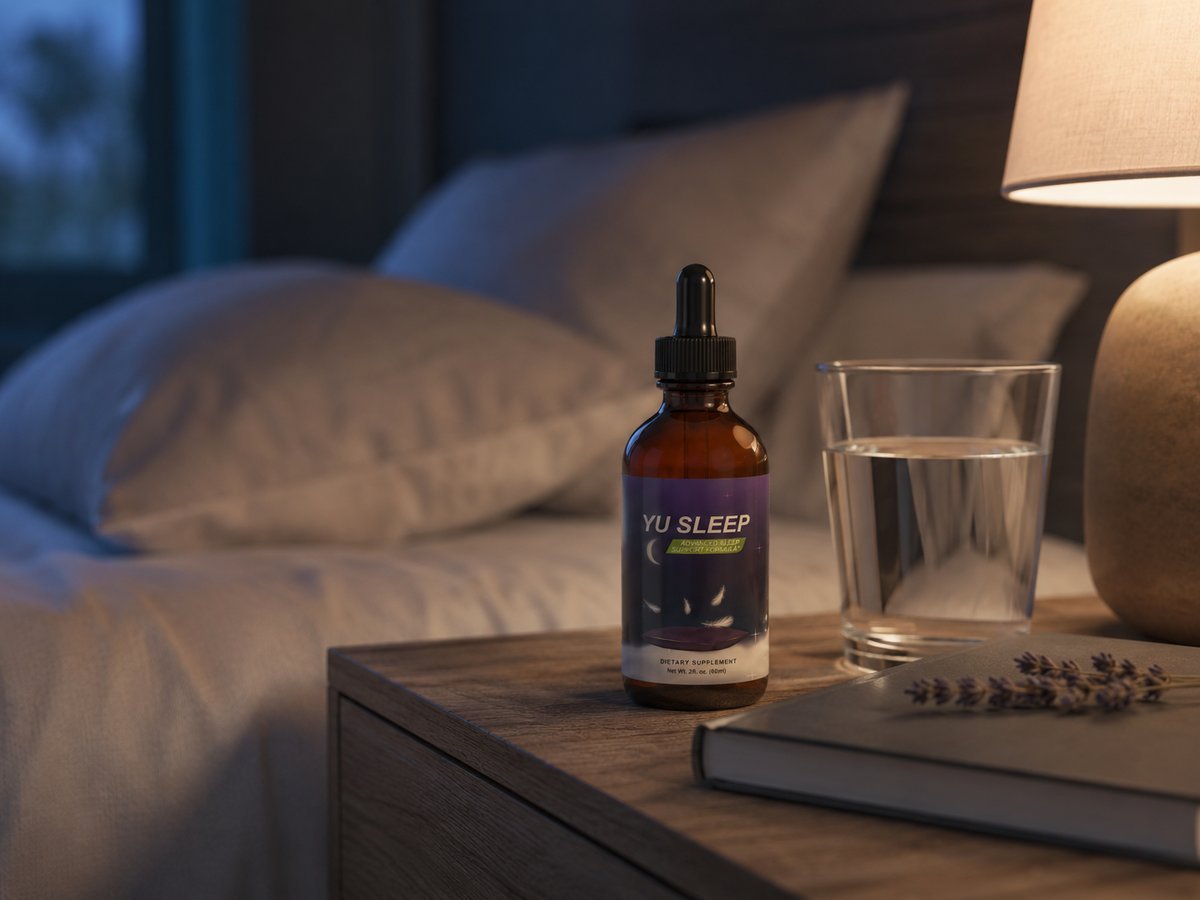
| Format | Liquid dropper (2 fl. oz. / 60 ml bottle) |
| Disclosed melatonin | 0.9 mg per serving (2 full droppers) |
| Key ingredients | Tart cherry extract, 5-HTP, L-theanine, GABA, magnesium glycinate, apigenin, lemon balm |
| Best for | Adults looking for a lower-melatonin, multi-ingredient liquid sleep aid |
| Not ideal for | People taking SSRIs/antidepressants, pregnant women, or severe chronic insomnia |
| Main strength | Coherent formula with conservative 0.9 mg melatonin dose |
| Main limitation | Limited dose transparency for non-melatonin active ingredients |
| Guarantee | 60-day money-back guarantee via official ClickBank order channel |
What Is Yu Sleep?
Yu Sleep is a liquid dietary supplement marketed for adults who want help with falling asleep, staying asleep, and waking up feeling more rested.
The seller recommends taking two droppers about 30 minutes before bed. The product is positioned differently from many basic sleep supplements because it combines a relatively low dose of melatonin with several compounds commonly associated with relaxation, neurotransmitter signaling, or sleep support.
The official sales page lists 10 active ingredients:
- Red tart cherry extract (Prunus cerasus)
- 5-HTP (5-Hydroxytryptophan)
- Vitamin B6 (Pyridoxine HCl)
- Vitamin B2 (Riboflavin)
- Magnesium glycinate
- Apigenin (Chamomile-derived bioflavonoid)
- Lemon balm extract (Melissa officinalis)
- L-theanine
- Melatonin (0.9 mg)
- GABA (Gamma-Aminobutyric Acid)
The official ingredient presentation specifies 0.9 mg of melatonin per serving.
Yu Sleep is also described as “nano-enhanced.” The seller uses that term to suggest faster or improved absorption from the liquid format. We did not find independent product-level evidence demonstrating that Yu Sleep’s finished formula has superior absorption or produces better sleep outcomes because of this technology, so we view the liquid format primarily as a convenience feature rather than a proven efficacy advantage.
How We Evaluated Yu Sleep
For this Yu Sleep review, Health Reviews separated four fundamental questions:
- Does the ingredient combination make sense for sleep support?
- Is there meaningful human evidence behind the most relevant ingredients?
- Does that evidence apply to Yu Sleep itself?
- Is the commercial offer transparent enough for a reasonable pre-purchase decision?
We used the current official Yu Sleep sales page for product positioning, ingredients, pricing, serving instructions, and seller claims. Scientific interpretation was based on independently published research, including systematic reviews, meta-analyses, and randomized trials indexed in PubMed.
This distinction matters because evidence for melatonin, L-theanine, magnesium, or another individual ingredient is not the same as evidence for the complete Yu Sleep formula.
How Does Yu Sleep Claim to Work?
Yu Sleep’s marketing centers on what it calls the body’s “sleep pressure system.” The seller describes the formula as helping support adenosine buildup, melatonin signaling, and nervous-system relaxation so users can fall asleep more naturally and stay asleep through the night.
There is a legitimate biological concept underneath part of this explanation: sleep pressure accumulates during wakefulness, circadian signaling helps regulate the sleep-wake cycle, and inhibitory or calming pathways can influence how easily a person settles at night.
Where Health Reviews draws the line is the claim that Yu Sleep can fully “reset” or permanently restore this system after several months.
That is a much stronger product-level claim. We did not identify an independent clinical trial of the finished Yu Sleep formula establishing a specific 3-to-6-month restoration process or showing that benefits persist after the supplement is discontinued.
Yu Sleep Ingredients: Does the Formula Make Sense?
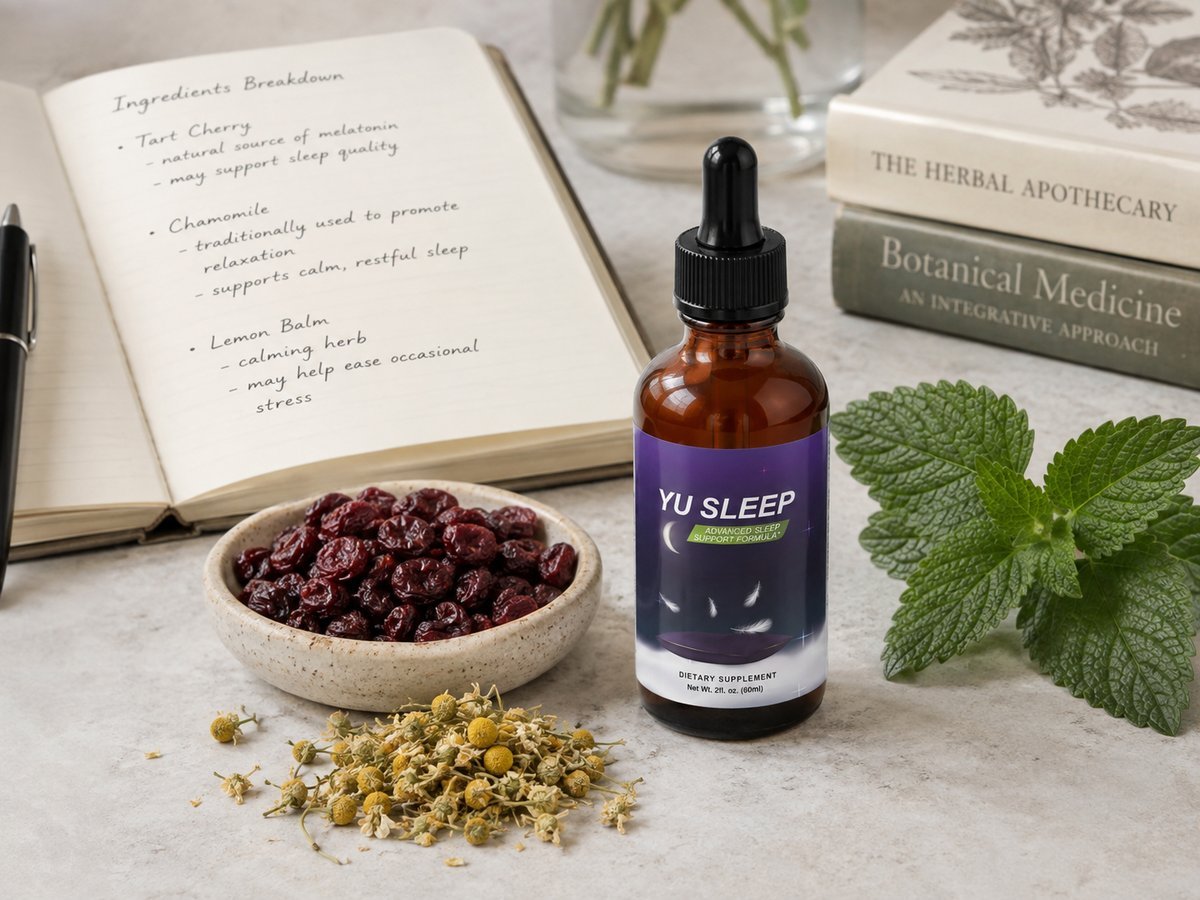
Overall, yes. The ingredient list is coherent for a sleep-support supplement. It combines a direct circadian signal from melatonin with ingredients intended to support relaxation, neurotransmitter pathways, and sleep quality. For a deeper breakdown of exact biological pathways, explore our comprehensive Yu Sleep ingredient analysis.
Melatonin — 0.9 mg
Melatonin is the most straightforward ingredient in the formula because it has a well-established role in sleep timing. Meta-analyses of randomized trials have found that supplemental melatonin can improve sleep-related outcomes, although the average effects are generally modest rather than dramatic.
Yu Sleep’s 0.9 mg dose is notable because it sits at the lower end of the range commonly seen in consumer supplements. That may appeal to buyers who want melatonin support without immediately using several milligrams per night. Importantly, a low dose should not be interpreted as automatically better for everyone; individual response varies depending on timing and personal sensitivity.
L-Theanine
L-theanine is one of the more interesting supporting ingredients in Yu Sleep. A 2025 systematic review and meta-analysis of randomized trials found improvements in several subjective sleep outcomes, including sleep onset latency and overall sleep quality. Another recent systematic review found potentially useful effects across sleep latency, maintenance, efficiency, and perceived recovery.
That gives L-theanine a reasonable evidence base for inclusion in a modern sleep formula. The limitation for Yu Sleep is dose transparency: without a clearly stated per-serving L-theanine amount in the sales-page ingredient breakdown, we cannot determine whether the formula provides amounts comparable to the doses used in human trials.
Magnesium Glycinate
Magnesium is biologically relevant to nervous-system function and is commonly included in evening supplements. The evidence for sleep, however, is more mixed than marketing often implies. A systematic review found an association between magnesium status and sleep quality in observational research, while randomized trials produced inconsistent results.
That makes magnesium a reasonable supporting ingredient rather than a reason by itself to expect a major sleep effect. The use of magnesium glycinate is consumer-friendly because this form is commonly chosen for tolerability, but research on magnesium generally should not automatically be treated as proof for magnesium glycinate specifically.
5-HTP
5-HTP is a precursor involved in serotonin synthesis, and serotonin is upstream of melatonin production. A 2024 randomized controlled trial in older adults found that 100 mg daily improved certain sleep-quality measures, particularly among participants classified as poor sleepers.
That is relevant ingredient-level evidence, but the population was specific and the study does not prove that Yu Sleep will reproduce the same result. 5-HTP is also the ingredient that deserves the most medication caution because of potential serotonergic interactions.
GABA
GABA is frequently marketed as a calming sleep ingredient because it is the brain’s principal inhibitory neurotransmitter. The practical issue is that evidence for oral supplemental GABA is still limited. A systematic review of placebo-controlled human studies concluded that evidence for sleep benefits was very limited. That does not make GABA an unreasonable ingredient; it simply means we view it as a supportive component rather than a primary clinical driver.
Tart Cherry Extract
Tart cherry has been studied because it naturally contains melatonin and other phytonutrients that may influence sleep. Small randomized trials have reported improvements in sleep measures in selected populations, while newer research in healthy adults has not always found meaningful benefits. This makes tart cherry a plausible complementary ingredient, but not one that should carry the formula on its own.
Apigenin, Lemon Balm, Vitamin B6, and Vitamin B2
These ingredients round out the formula. Apigenin and lemon balm fit the relaxation-oriented design, while vitamins B6 and B2 play broader metabolic and neurological co-factor roles. The direct human sleep evidence for these components is less compelling than it is for melatonin or L-theanine.
Formula Takeaway
The ingredient list is one of Yu Sleep’s stronger features. There are no obvious filler ingredients dominating the marketing story, and the formula is clearly built around sleep-related pathways. The main issue is the lack of clear individual dose information for most of the formula on the official sales page.
What Benefits Are Realistic?
Based on the formula, the most realistic expectations are:
- Supporting an easier transition into sleep
- Helping promote a calmer pre-bed physical and mental state
- Supporting perceived sleep quality and morning refreshment
- Potentially reducing some minor nighttime sleep disruption
- Offering a lower-melatonin alternative to heavy conventional sleep supplements
What should be interpreted more cautiously are the seller’s stronger claims about permanently restoring sleep architecture, eliminating 3 a.m. wakeups, or producing a complete “sleep system reset” after several months. There is no independent product-level trial confirming those outcomes for Yu Sleep.
How Quickly Might Yu Sleep Work?
The seller states that some customers notice changes within the first several nights and promotes a longer 3-to-6-month use period for what it calls a complete sleep reset. There is no independent Yu Sleep trial establishing that timeline.
Some ingredients, such as melatonin, are used close to bedtime and can influence sleep-related outcomes relatively quickly. Other ingredients have typically been studied over repeated use. A reasonable expectation is therefore to assess personal response over time rather than assume either an immediate result or a guaranteed cumulative effect.
Side Effects and Safety
Yu Sleep contains ingredients that are commonly found in dietary supplements, but natural does not mean appropriate for every individual. For complete medical details, review our detailed guide on Yu Sleep side effects and safety considerations.
- Melatonin: May cause next-day grogginess, mild headache, or vivid dreams in sensitive users.
- 5-HTP: Affects serotonin pathways and requires strict caution for anyone taking antidepressants (SSRIs, SNRIs) or MAOIs.
- Sedation Interactions: Combining a sleep-support formula with alcohol, prescription sedatives, or antihistamines may increase unwanted central nervous system depression.
- Magnesium: Can cause minor digestive loosening in some individuals, though glycinate is generally well-tolerated.
Medical Caution & Red Flags:
You should consult a healthcare professional before using Yu Sleep if you have:
- Concurrent prescription of antidepressants, SSRIs, SNRIs, or MAOIs (due to 5-HTP content)
- Pregnancy or active breastfeeding
- Concurrent use of prescription sedatives, sleep medications, or alcohol
- Chronic persistent insomnia, severe daytime sleepiness, or symptoms of obstructive sleep apnea
Persistent sleep disturbances require proper medical diagnosis and professional management rather than relying exclusively on dietary supplementation.
Who Yu Sleep May Be Best For
- Adults with occasional difficulty settling down at night
- People who sometimes wake during the night and want to explore a multi-ingredient sleep formula
- Buyers who specifically prefer a lower melatonin dose (0.9 mg)
- People who dislike swallowing capsules and prefer a liquid dropper
- Consumers who are comfortable trying a formula supported mainly by ingredient-level evidence
Who Should Think Twice Before Buying
- People taking antidepressants or other medications that affect serotonin without checking with a doctor
- Anyone combining multiple sedating products or prescription sleep medications
- Individuals looking for a clinically proven medical cure for chronic insomnia or sleep apnea
- Buyers who require full dose transparency for every active ingredient on the label
- Anyone expecting a guaranteed permanent fix for nighttime wakeups
Yu Sleep Pros and Cons
Pros
- 0.9 mg melatonin dose is clearly disclosed and avoids heavy dosing
- Formula is specifically designed around sleep and relaxation pathways
- Includes several ingredients with relevant published human research (melatonin, L-theanine, 5-HTP)
- L-theanine is a particularly credible supporting ingredient
- Liquid format is convenient for people who dislike swallowing large pills
- Multi-ingredient approach addresses both circadian timing and mental relaxation
- Published 60-day refund process provides purchase protection via ClickBank
- Lower per-bottle pricing is available in larger packages
Cons
- Most individual ingredient amounts are not clearly quantified in the sales-page presentation
- No independent clinical trial of the finished Yu Sleep formula was identified
- “Nano-enhanced” absorption is a marketing claim without published comparative data
- Seller claims about a 3-to-6-month permanent sleep reset go beyond available evidence
- Minimum order currently starts at two bottles (no single-bottle starter option)
- Refunds require following return procedures, and return shipping is paid by the customer
Yu Sleep Price and Value
At the time of this review, the official Yu Sleep site displayed the following multi-bottle packages:
| Package Option | Price Per Bottle | Total Investment | Shipping & Terms |
|---|---|---|---|
| 2-Month Supply (2 Bottles) | $69.00 / bottle | $138.00 | Standard Shipping + 60-Day Guarantee |
| 3-Month Supply (3 Bottles) | $59.00 / bottle | $177.00 | Free US Shipping + 60-Day Guarantee |
| 6-Month Supply (6 Bottles) | $49.00 / bottle | $294.00 | Free US Shipping + 60-Day Guarantee |
From a value perspective, Yu Sleep becomes considerably more competitive in the larger packages. At $49 per bottle in the 6-month option, the price is easier to justify for a multi-ingredient liquid formula than the $69-per-bottle entry package. However, there is an important tradeoff: the seller currently does not offer a single-bottle trial option on the main page. A first-time buyer must commit to at least two bottles. That makes the refund policy more relevant.
What the 60-Day Guarantee Actually Covers
Yu Sleep advertises a 60-day money-back guarantee. The seller’s published refund policy states that products purchased online can be returned within 60 days, but customers must contact support, receive return instructions, send the products back, provide tracking information, and cover the return shipping cost themselves.
The policy also describes the guarantee as a one-time guarantee, meaning a customer who receives a refund on a first purchase is not eligible for a second refund after ordering Yu Sleep again later. That is a real refund process, but it should not be interpreted as a completely frictionless or “risk-free” trial. For buyers who are comfortable with those terms, the policy still provides more purchase protection than a final-sale supplement would.
(Review the latest packages and refund terms on the official Yu Sleep site)
Is Yu Sleep Legit?
From a transactional standpoint, Yu Sleep has several normal commercial signals: an active official sales site, published package pricing, a documented return procedure, and order processing through ClickBank. For a complete analysis of vendor background, checkout safety, and advertising claims, read our independent investigation into whether Yu Sleep is legit or overhyped.
ClickBank’s role as reseller is useful for transaction infrastructure, but it should not be mistaken for an endorsement of Yu Sleep’s health claims. The Yu Sleep affiliate materials themselves make that distinction.
The bigger credibility issue is therefore not whether the product exists. It is how strongly some of the sales claims should be interpreted. Statements about a “permanent fix,” full restoration of sleep architecture, or guaranteed-like timelines go beyond what we can establish from independent evidence.
Where Should You Buy Yu Sleep?
The cleanest option is the official Yu Sleep sales channel because that is where the current package information, seller terms, and refund instructions are presented. Health Reviews does not recommend relying on marketplace listings or look-alike websites when the official seller already provides a direct purchase channel.
The Yu Sleep affiliate program also prohibits affiliates from bypassing the seller’s offer page and sending users directly to a cart. Any Health Reviews purchase link should therefore lead readers to an approved Yu Sleep offer page rather than directly to an order form.
Is Yu Sleep Worth Considering?
For the right buyer, yes. Yu Sleep does enough well to deserve consideration:
- It uses a coherent set of sleep-related ingredients.
- It avoids turning melatonin into a high-dose headline feature.
- The 0.9 mg melatonin dose is transparent.
- L-theanine, melatonin, and several supporting ingredients give the formula a plausible evidence-based rationale.
- The liquid format is simple to use.
- The larger packages bring the per-bottle price down substantially.
The main reason Health Reviews stops short of a stronger recommendation is not that the formula looks weak. It is that most ingredient doses are unclear on the sales-page presentation and there is no independent finished-product clinical trial.
For a generally healthy adult with occasional sleep difficulty who understands those limitations, Yu Sleep is a reasonable product to evaluate. For someone with persistent insomnia, a known sleep disorder, or relevant medication use, the better first step is professional guidance.
Final Verdict
Yu Sleep sits in a useful middle ground. It is more interesting than a basic high-dose melatonin product because it combines a low 0.9 mg melatonin serving with L-theanine, magnesium glycinate, 5-HTP, GABA, tart cherry, lemon balm, apigenin, and B vitamins.
The ingredient logic is credible, and there is legitimate human research behind several components. That gives the product a reasonable scientific rationale for sleep support. At the same time, the formula’s transparency is incomplete and the seller’s most ambitious claims should not be confused with clinical evidence for the finished product.
Health Reviews’ view: Yu Sleep may be worth considering if you are a generally healthy adult looking for a lower-melatonin, multi-ingredient sleep supplement and you are comfortable with ingredient-level rather than product-level evidence. The best reason to consider it is the overall formula design and conservative melatonin positioning—not the promise of a permanent sleep-system reset.
Frequently Asked Questions
Does Yu Sleep actually work?
Yu Sleep contains several ingredients that have been studied for sleep-related outcomes, particularly melatonin and L-theanine. That makes the formula plausible, but there is no independent clinical trial showing how well the finished Yu Sleep product works as a complete formula. Individual response should therefore be expected to vary.
How much melatonin is in Yu Sleep?
The official Yu Sleep sales page states that each serving contains 0.9 mg of melatonin.
Is 0.9 mg of melatonin enough?
Melatonin does not necessarily need to be supplied in very high doses to affect sleep signaling. Yu Sleep’s 0.9 mg serving is a relatively low-dose approach. Whether it is sufficient for a particular person depends on individual response and why melatonin is being used.
Does Yu Sleep contain 5-HTP?
Yes. 5-HTP is one of the ingredients listed on the official Yu Sleep page. Because 5-HTP affects serotonin pathways, people taking antidepressants or other serotonergic medications should consult a healthcare professional before using it.
What are the possible Yu Sleep side effects?
Possible effects depend on the ingredients and individual sensitivity. Melatonin can cause drowsiness, vivid dreams, or headache in some people, while magnesium may cause digestive effects. Medication interactions are particularly relevant because Yu Sleep contains 5-HTP and several calming ingredients.
Will Yu Sleep stop 3 a.m. wakeups?
The seller specifically markets Yu Sleep for nighttime wakeups, but there is no independent product-level evidence showing that it reliably eliminates 3 a.m. waking. Some users may find a sleep-support formula helpful, but recurring nighttime waking can have many causes.
How long does Yu Sleep take to work?
The seller promotes noticeable changes within the first week and longer use over several months. There is no independent Yu Sleep trial confirming a specific timeline. Ingredients such as melatonin are used close to bedtime, while other compounds have been studied over repeated use.
Is Yu Sleep a scam?
Health Reviews would not characterize Yu Sleep as a scam based on the commercial information reviewed. It is sold through an active official site, has published pricing and a documented refund process, and uses ClickBank for order infrastructure. That does not mean every marketing claim is clinically proven.
Does Yu Sleep have a money-back guarantee?
The seller publishes a 60-day refund policy. Customers must contact support, follow the return procedure, send the product back, and provide tracking information. Return shipping is not covered by the seller, and the policy describes the guarantee as a one-time guarantee.
Where can I buy Yu Sleep?
The most straightforward option is the official Yu Sleep sales channel, where current package pricing and seller terms can be reviewed before ordering.