Yu Sleep Side Effects: What You Should Know Before Taking It
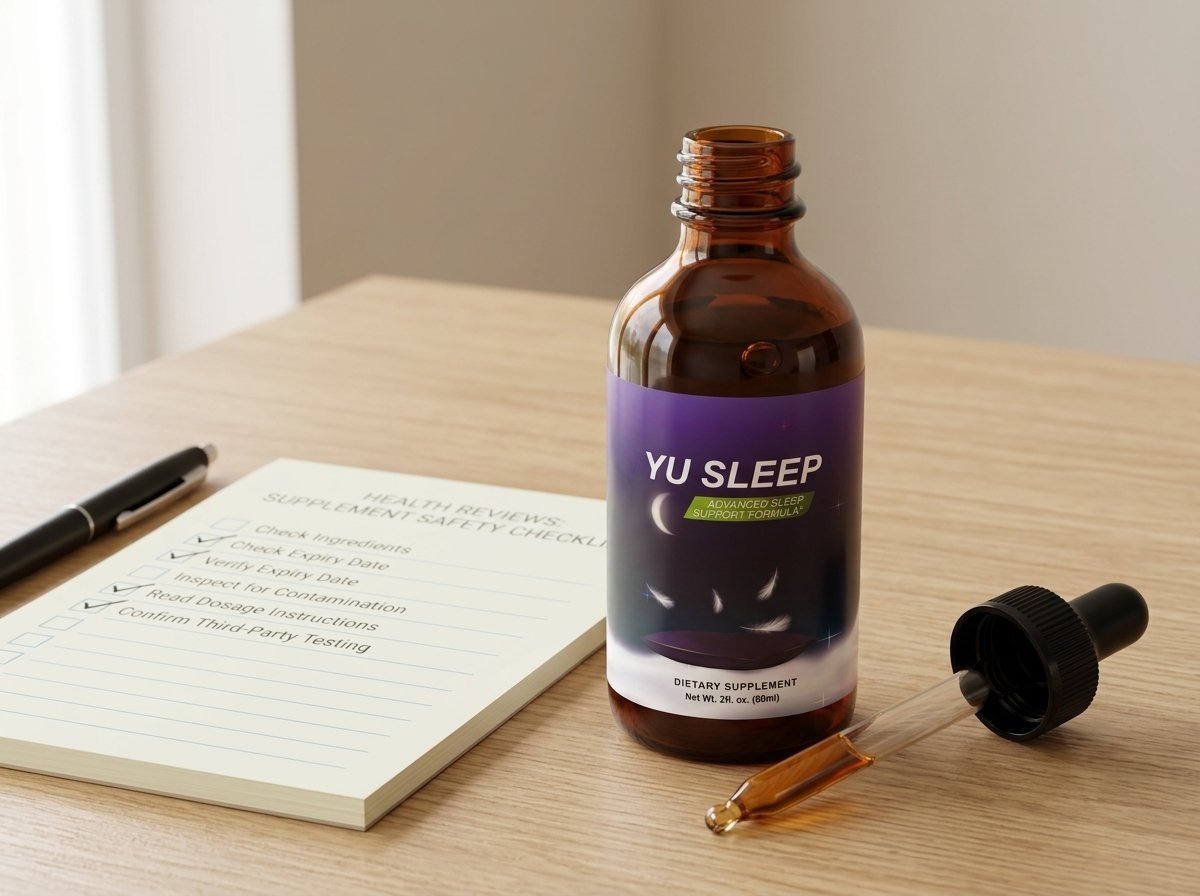
Looking into Yu Sleep side effects before buying is a sensible step, especially because this is a multi-ingredient sleep formula rather than a single-ingredient melatonin product.
Yu Sleep combines 0.9 mg of melatonin with 5-HTP, L-theanine, magnesium glycinate, GABA, tart cherry extract, apigenin, lemon balm, vitamin B6, and vitamin B2. Most of these ingredients have generally favorable tolerability profiles in human research, but Yu Sleep does not clearly disclose the individual amounts of nine of its ten listed ingredients in the official sales-page presentation reviewed by Health Reviews.
That means we can discuss the known or plausible safety considerations for the ingredients, but we cannot calculate an exact product-specific side-effect rate or predict how every user will respond.
This article focuses specifically on tolerability, medication considerations, and who may want to be more cautious. For the evidence behind the formula itself, see our Yu Sleep ingredients breakdown. For the complete purchase assessment, including pricing, value, and our overall verdict, see our Yu Sleep review.
Quick Answer
For a generally healthy adult who is not taking medications that meaningfully interact with the formula, the available ingredient-level safety evidence does not reveal an obvious reason to rule Yu Sleep out on safety grounds alone.
The most relevant medication consideration is 5-HTP, because it influences serotonin pathways. Anyone using antidepressants or other serotonergic medications should discuss a 5-HTP-containing supplement with a healthcare professional before taking it.
Other possible issues are more typical of sleep supplements: daytime drowsiness, headache, changes in dreaming, or mild digestive effects. GABA may also modestly lower blood pressure in some people, while long-term excessive vitamin B6 intake can cause nerve problems.
The key limitation is that published safety data are mostly about the individual ingredients—not Yu Sleep as a finished formula—and nine of the ten ingredient amounts are not clearly disclosed.
Possible Mild Effects Based on the Ingredients
There are no published product-specific incidence data showing how often Yu Sleep users experience side effects.
Based on research involving the individual ingredients, possible mild effects may include:
- Daytime sleepiness or drowsiness, particularly from melatonin or when the formula is combined with other substances that promote sleepiness.
- Headache or dizziness, which have been reported in melatonin studies.
- Changes in dreaming, including vivid or unusual dreams in some melatonin users.
- Digestive discomfort, particularly with magnesium or 5-HTP in some individuals.
- Temporary changes in blood pressure, which have been observed in some GABA studies.
These are potential ingredient-related effects, not established rates for Yu Sleep itself.
The 0.9 mg melatonin serving is relatively low compared with many multi-milligram sleep supplements, but that does not guarantee that every user will avoid grogginess or other melatonin-related effects.
Yu Sleep Ingredient-Related Safety Notes
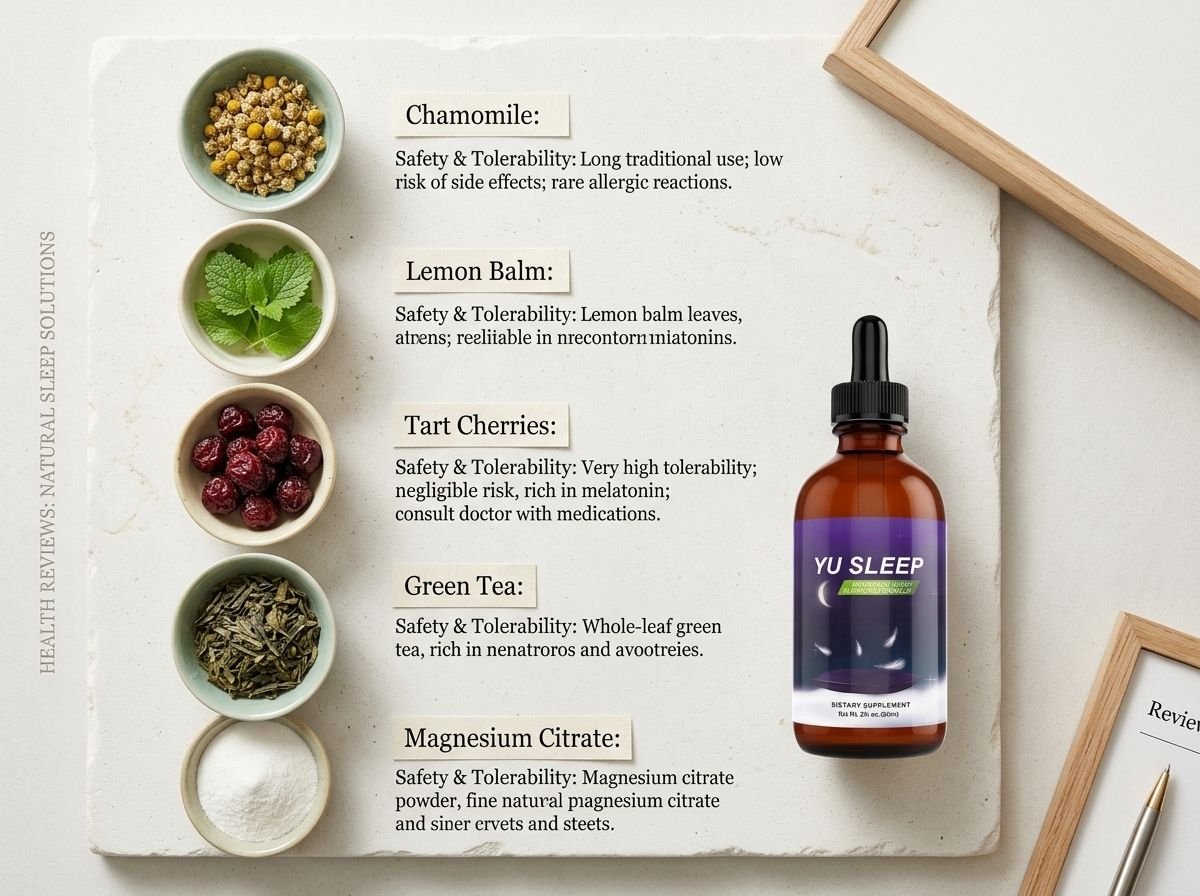
Melatonin — 0.9 mg
Melatonin is the only Yu Sleep ingredient with a clearly disclosed amount in the official sales-page presentation reviewed by Health Reviews.
A systematic review of 37 randomized placebo-controlled trials found that adverse events associated with melatonin were generally mild. The most frequently reported events included daytime sleepiness, headache, dizziness, and other sleep-related effects. Serious adverse events were uncommon in the trials reviewed.
The authors also noted an important limitation: most studies were relatively short, so long-term continuous use is not as well characterized as short-term use.
For Yu Sleep specifically, the 0.9 mg serving represents a lower-dose approach, but individual sensitivity still varies.
5-HTP — Dose Not Disclosed
5-HTP deserves the most attention from a medication-interaction standpoint.
The body converts 5-HTP into serotonin. This is part of the reason 5-HTP is used in supplements related to mood or sleep, but it is also why combining it with other substances that increase serotonin deserves caution.
Reviews of 5-HTP safety have specifically discussed serotonin syndrome as a potential concern, particularly in the context of additional serotonergic activity.
That does not mean Yu Sleep commonly causes serotonin syndrome, and Health Reviews is not aware of product-specific data showing that it does.
The practical point is simpler:
If you take an antidepressant or another medication that meaningfully affects serotonin, do not assume a 5-HTP-containing sleep supplement is automatically compatible. Ask your prescriber or pharmacist first.
5-HTP may also cause nausea or other gastrointestinal discomfort in some users.
GABA — Dose Not Disclosed
Oral GABA has generally shown a favorable safety profile in the available human literature.
A United States Pharmacopeia safety review found no serious adverse events associated with GABA in the clinical studies it evaluated. Some studies did, however, observe a temporary and moderate reduction in blood pressure.
This does not make GABA a major safety concern for most users, but it is worth knowing if you already take blood-pressure-lowering medication or are prone to low blood pressure.
The same review noted that pregnancy and breastfeeding safety data are lacking.
Magnesium Glycinate — Dose Not Disclosed
Magnesium supplements can cause digestive effects, particularly loose stools, nausea, or abdominal discomfort when intake is high.
Magnesium glycinate is commonly chosen because it is generally considered a well-tolerated supplemental form, but tolerability still depends on the actual amount consumed.
Because Yu Sleep does not clearly disclose the magnesium quantity in the product presentation reviewed by Health Reviews, it is useful to consider other magnesium-containing supplements or medications you may already be taking.
People with impaired kidney function deserve additional caution because the kidneys play an important role in clearing excess magnesium.
Apigenin — Dose Not Disclosed
Human safety data for isolated apigenin supplementation are limited compared with better-studied ingredients such as melatonin.
Apigenin occurs naturally in chamomile and other plants, but allergy information from whole chamomile preparations should not automatically be applied to isolated apigenin.
For that reason, Health Reviews would not classify chamomile or ragweed allergy as an established Yu Sleep interaction based on the apigenin content alone.
The larger issue is simply that the isolated apigenin dose in Yu Sleep is not clearly disclosed.
Lemon Balm Extract — Dose Not Disclosed
Lemon balm is generally used as a calming botanical and has been included in human trials without a strong recurring safety signal.
One laboratory study found that Melissa officinalis could inhibit TSH-stimulated signaling and interfere with TSH binding in an in-vitro cell model.
That is mechanistically interesting, but it is not the same as demonstrating a clinically important interaction between lemon balm supplements and thyroid medication in people.
If you are being treated for a thyroid disorder, mentioning regular lemon balm use to your clinician is reasonable, but Health Reviews would classify this as a mechanistic caution rather than a proven clinical interaction.
Vitamin B6 — Dose Not Disclosed
Vitamin B6 is generally safe at ordinary dietary intakes, but sustained excessive supplemental intake can cause sensory peripheral neuropathy.
Symptoms can include tingling, numbness, burning, or altered sensation.
A 2021 review examined the mechanisms behind pyridoxine-associated neuropathy, and the NIH Office of Dietary Supplements also notes that long-term high-dose B6 intake can damage nerves.
This is mainly a cumulative exposure issue, not evidence that Yu Sleep contains a dangerous amount.
Because the Yu Sleep B6 dose is not clearly disclosed, people who already take a multivitamin, B-complex, energy supplement, or other B6-containing product may want to check their total daily intake rather than assume each product should be evaluated in isolation.
Vitamin B2 — Dose Not Disclosed
Vitamin B2, or riboflavin, is generally well tolerated.
One noticeable but harmless effect of higher riboflavin intake is bright yellow urine.
Nothing in the available ingredient-level evidence makes B2 a major safety concern in this formula.
Tart Cherry Extract — Dose Not Disclosed
Tart cherry extract is generally considered well tolerated in the human research used to assess it.
Concentrated fruit products may cause mild digestive discomfort in some individuals, but Health Reviews did not identify a major recurring safety signal that would make tart cherry one of Yu Sleep’s primary concerns.
L-Theanine — Dose Not Disclosed
L-theanine also has a generally favorable tolerability profile in human studies.
Possible mild effects can include headache or digestive discomfort, but the available research does not identify a strong recurring safety problem at commonly studied amounts.
Again, the Yu Sleep dose is not clearly disclosed, so product-specific tolerability cannot be inferred precisely from published L-theanine research.
The Most Important Yu Sleep Interaction: 5-HTP and Serotonergic Medications
This is the interaction that deserves the most attention before buying.
5-HTP is a serotonin precursor.
Serotonin syndrome, also called serotonin toxicity, can occur when serotonergic activity becomes excessive. It is most often associated with serotonergic drugs, drug combinations, or overdose.
Because 5-HTP adds to serotonin availability, combining it with medications that also increase serotonin should be discussed with a healthcare professional.
Examples include certain:
- SSRIs
- SNRIs
- MAOIs
- other serotonergic prescription medications
Important context:
Health Reviews does not claim that Yu Sleep commonly causes serotonin syndrome or that the risk is identical at every 5-HTP dose. The problem is that Yu Sleep does not clearly disclose how much 5-HTP it contains, so we cannot quantify that interaction from the product information alone. If you currently use an antidepressant or another serotonergic medication, this is the strongest reason to check with your prescriber or pharmacist before starting Yu Sleep.
Other Interaction Considerations
Other Sleep or Sedating Products
Melatonin and several other ingredients in Yu Sleep are intended to support relaxation or sleep.
Combining Yu Sleep with alcohol, prescription sleep medication, benzodiazepines, sedating antihistamines, or multiple other nighttime supplements may increase drowsiness or reduce alertness.
That does not mean every combination is inherently dangerous, but stacking multiple sleep-promoting substances makes individual response less predictable.
Blood Pressure Medication
A USP safety review found that GABA was associated with a temporary and moderate reduction in blood pressure in some studies.
For most users this may not be meaningful, but people taking several antihypertensive medications or people prone to low blood pressure may want to mention GABA-containing supplements to their clinician.
Other Vitamin B6 Supplements
Long-term excessive B6 intake is the concern—not ordinary food intake.
If you already use a multivitamin, B-complex, energy supplement, or another product containing B6, check the combined amount rather than evaluating Yu Sleep in isolation.
Thyroid Treatment
Laboratory research suggests lemon balm can influence TSH-related signaling.
There is limited evidence demonstrating a clinically important lemon balm–thyroid medication interaction in humans, so Health Reviews would not treat this as equivalent to the 5-HTP/serotonergic medication concern.
Still, someone receiving treatment for a thyroid disorder may reasonably choose to mention regular lemon balm supplementation to their clinician.
Who Should Be More Careful With Yu Sleep?
A generally healthy adult is not the same as every potential buyer.
Additional guidance is sensible if you:
- Take antidepressants or other serotonergic medication, because Yu Sleep contains 5-HTP.
- Use prescription sedatives, sleep medications, or several other sleep-promoting products, because drowsiness may be additive.
- Have impaired kidney function, because magnesium handling can be affected.
- Are pregnant or breastfeeding, because the finished formula has not been adequately studied in these populations.
- Already use multiple B6-containing supplements, because long-term excessive B6 exposure can affect peripheral nerves.
- Are being treated for a thyroid disorder, because lemon balm has shown TSH-related effects in laboratory research, even though the clinical importance remains uncertain.
These points are intended to define buyer fit, not imply that Yu Sleep is broadly unsafe.
What About Surgery?
If you are preparing for surgery, tell your surgical or anesthesia team about all dietary supplements you use.
A Society for Perioperative Assessment and Quality Improvement consensus statement emphasizes the importance of reviewing supplement use before surgery and provides recommendations for whether specific supplements should be continued or discontinued.
Rather than applying a universal stop date to Yu Sleep, follow the instructions of the team responsible for your procedure.
When to Seek Medical Help
Serious reactions are not established as typical for Yu Sleep, and there are no published finished-product incidence data.

Seek medical attention if you experience:
- Symptoms suggesting a severe allergic reaction, such as swelling of the face or throat or difficulty breathing — seek urgent medical attention.
- A concerning cluster of symptoms such as marked agitation or confusion, significant muscle rigidity or twitching, heavy sweating, or high fever — particularly if a 5-HTP-containing supplement has been combined with serotonergic medication.
For persistent or unusual symptoms that begin after starting a supplement, stop using it and contact a healthcare professional rather than continuing to test whether the symptoms resolve on their own.
Is Yu Sleep Safe for Nightly Use?
Yu Sleep is marketed for regular nighttime use, but there are no independent long-term safety trials of the complete finished formula.
The individual ingredients generally do not suggest an obvious high-risk profile for a healthy adult at typical studied amounts, but nine ingredient doses are not clearly disclosed.
That makes long-term product-level safety harder to assess with precision.
If you find yourself relying on any sleep supplement every night for an extended period—particularly because sleep problems persist without it—it is reasonable to discuss the underlying sleep issue with a healthcare professional.
Final Verdict
Yu Sleep does not stand out as an obviously high-risk sleep formula based on the ingredient-level evidence reviewed by Health Reviews.
For a generally healthy adult who is not taking interacting medications, the available information does not reveal a clear safety reason to rule the product out.
The most important pre-purchase check is medication compatibility.
5-HTP is the ingredient that matters most here because of its effect on serotonin pathways. People taking antidepressants or other serotonergic medications should check with a prescriber or pharmacist before using Yu Sleep.
Other concerns—such as melatonin-related drowsiness, magnesium-related digestive effects, possible GABA-related blood-pressure changes, or cumulative vitamin B6 exposure—are more typical ingredient-level considerations and do not automatically make the formula unsuitable.
The biggest uncertainty remains the same one identified in our ingredient analysis: most individual amounts are not clearly disclosed, so the finished formula cannot be evaluated as precisely as a fully transparent label would allow. Also check is Yu Sleep legit for transaction safety and seller credibility analysis.
Health Reviews’ view: If you are generally healthy, are not pregnant or breastfeeding, and do not use medications that meaningfully interact with the formula, the available safety information is compatible with considering Yu Sleep rather than avoiding it purely because it is a multi-ingredient sleep supplement.
For the complete purchase assessment—including formula quality, price, value, and our overall verdict—read the Yu Sleep review.
For a deeper look at what each ingredient contributes to the formula, see our Yu Sleep ingredients analysis.
Frequently Asked Questions
What are the possible Yu Sleep side effects?
Yu Sleep does not have published product-specific side-effect rates. Based on its ingredients, possible mild effects may include daytime drowsiness, headache, changes in dreaming, dizziness, or digestive discomfort.
Does Yu Sleep cause morning grogginess?
It may in some people. Melatonin can cause daytime sleepiness in sensitive users. Yu Sleep contains 0.9 mg of melatonin, which is a relatively low dose, but individual sensitivity varies and there are no published Yu Sleep-specific grogginess rates.
Can Yu Sleep cause vivid dreams?
Changes in dreaming can occur with melatonin. Some users of melatonin-containing products report vivid or unusual dreams, although not everyone experiences this.
Is Yu Sleep safe with antidepressants?
This deserves medical guidance. Yu Sleep contains 5-HTP, which is converted into serotonin. Combining 5-HTP with antidepressants or other serotonergic medications may increase serotonergic activity, so check with your prescriber or pharmacist before combining them.
Can I drink alcohol while taking Yu Sleep?
Combining alcohol with a sleep-support supplement may increase drowsiness and impair alertness. Avoid assuming the combination is harmless simply because Yu Sleep is sold as a dietary supplement.
Does Yu Sleep interact with thyroid medication?
A laboratory study found that lemon balm could influence TSH-receptor signaling, but this does not establish a clinically important interaction with thyroid medication in humans. If you are being treated for a thyroid disorder, mentioning regular lemon balm use to your clinician is reasonable.
Is Yu Sleep safe during pregnancy or breastfeeding?
The finished Yu Sleep formula has not been adequately studied for safety during pregnancy or breastfeeding. Use in these situations should be discussed with a qualified healthcare professional.
Can Yu Sleep cause vitamin B6 toxicity?
There is no evidence showing that Yu Sleep itself provides a toxic B6 dose. However, the B6 amount is not clearly disclosed in the official sales-page presentation reviewed by Health Reviews. Sustained excessive B6 intake from multiple supplements can cause peripheral neuropathy, so total intake matters.
Does Yu Sleep cause dependency?
Yu Sleep does not contain a prescription sedative classically associated with physical dependence, such as a benzodiazepine. That does not mean long-term nightly use should be ignored. If ongoing sleep problems require regular supplementation for months, the underlying sleep issue is worth discussing with a healthcare professional.
Who should avoid taking Yu Sleep without medical guidance?
People taking serotonergic medications, prescription sedatives, or multiple other sleep aids; people with significant kidney impairment; pregnant or breastfeeding individuals; and anyone with relevant medical conditions should seek individualized guidance before use.