ProDentim Review: Ingredients, Evidence, Safety & Is It Worth It?
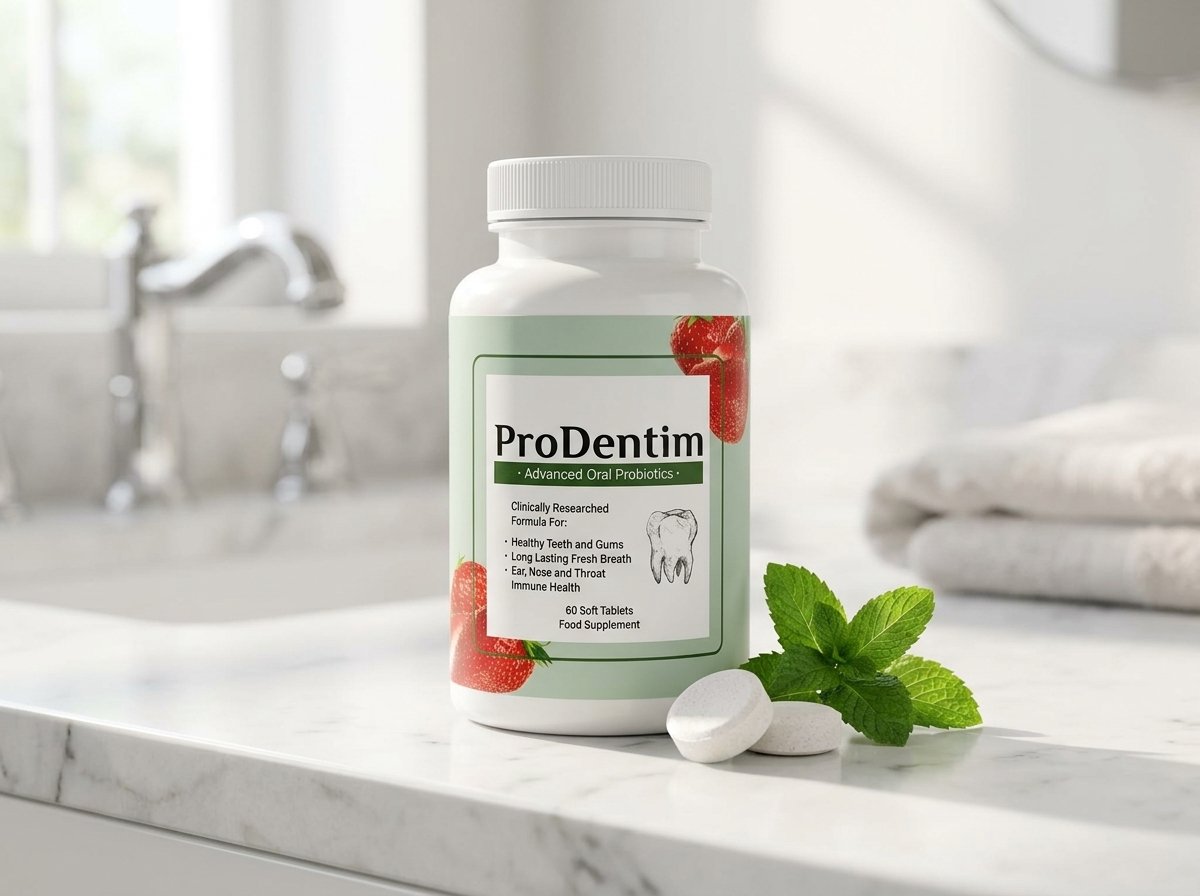
ProDentim is a dissolvable oral probiotic supplement designed to support the mouth’s bacterial environment alongside regular brushing, flossing, and professional dental care.
Its formula combines three probiotic strains with inulin, tricalcium phosphate, malic acid, and peppermint. That gives the product a credible formulation rationale: oral probiotics are a legitimate area of dental research, and some of the bacterial species used in ProDentim have been studied in relation to gums, plaque-related changes, and the oral microbiome.
That does not mean ProDentim itself has been clinically proven to deliver the results described in its marketing.
The more useful question is whether the formula is logically constructed, whether its ingredients have relevant evidence behind them, whether the product appears reasonable for the right buyer, and what limitations should be understood before purchasing.
This ProDentim review looks at those questions without assuming that ingredient research automatically proves the finished product works.
Quick Verdict
ProDentim is one of the more thoughtfully positioned oral probiotic supplements we have reviewed. Its basic concept makes sense, its melt-in-the-mouth delivery format is practical for an oral-targeted product, and several of its ingredients connect to legitimate areas of probiotic and dental research.
The strongest case for ProDentim is not that it has been proven to transform oral health. It has not. Rather, it offers a convenient way for adults interested in oral microbiome support to add a probiotic component to an already solid dental-care routine.
The main limitation is transparency. The label provides a total probiotic count of 3.5 billion CFU but does not disclose how much comes from each strain, and the finished ProDentim formula does not appear to have independent clinical testing at its marketed composition and doses.
For a generally healthy adult who brushes and flosses consistently and understands that ProDentim is a supportive supplement rather than a dental treatment, the product may be reasonable to consider.
- Best suited for: adults interested in oral probiotics who want a simple once-daily dissolvable format.
- Main strength: a formula built around a legitimate area of oral-health research rather than an arbitrary ingredient mix.
- Main limitation: no published product-level clinical trial demonstrating that the finished ProDentim formula produces the outcomes promoted in its marketing.
You can review the current formula, package options, and purchase terms on the official ProDentim website.
Score Breakdown
- Ingredient Logic: 7.5/10
- Formula Transparency: 6.0/10
- Evidence Quality: 6.0/10
- Ease of Use: 8.5/10
- Value: 6.5/10
- Overall Score: 6.9/10
These scores reflect Health Reviews’ editorial assessment of formula design, transparency, available evidence, usability, and value. They are not clinical effectiveness ratings.
Product Snapshot
| Feature | Details |
|---|---|
| Product Name | ProDentim |
| Category | Oral health probiotic supplement |
| Form | Dissolvable/chewable strawberry-flavored tablet |
| Intended Use | Oral microbiome and general oral-health support |
| Probiotic Count | 3.5 billion CFU total (L. paracasei, B. lactis BL-04, L. reuteri) |
| Other Ingredients | Inulin, malic acid, tricalcium phosphate, peppermint |
| Suggested Use | One tablet daily, according to manufacturer directions |
| Guarantee | 60-day published refund policy via official channels |
| Best For | Adults adding an oral probiotic to established oral hygiene |
| Main Drawback | Individual strain CFUs undisclosed; no published finished-product trial |
What Is ProDentim?
ProDentim is a dietary supplement positioned around the oral microbiome.
Unlike conventional probiotic capsules that are swallowed immediately, ProDentim is designed to dissolve or be chewed in the mouth. From a formulation perspective, that format is sensible for a product intended to interact with the oral environment.
The concept behind ProDentim is also broader than simply “killing bad bacteria.”
The mouth contains a complex microbial community, and modern dental research increasingly recognizes that oral health involves microbial balance rather than the complete elimination of bacteria. Probiotic research has therefore explored whether introducing selected bacterial strains may help support a healthier oral environment.
That scientific background makes ProDentim’s general concept credible.
What it does not establish is that this particular commercial formula will reproduce the outcomes seen in studies involving individual strains or other probiotic preparations.
How We Reviewed ProDentim
Health Reviews evaluated ProDentim using five main criteria:
- Formula logic
- Ingredient and strain relevance
- Quality of available evidence
- Safety and transparency
- Practical value for the intended buyer
We compared the ingredients listed for ProDentim with published research on oral probiotics and relevant ingredient categories.
We also kept an important distinction throughout the review:
Evidence for an ingredient or probiotic strain is not the same as evidence for the finished ProDentim formula.
Different probiotic strains may behave differently, study doses may not match the amounts used in ProDentim, and the total formula has not been independently validated in a published clinical trial that we could identify.
How ProDentim Is Intended to Work
ProDentim is built around the idea that supporting beneficial oral bacteria may help maintain a healthier oral environment.
That is not an unreasonable premise.
The oral microbiome has been studied in connection with plaque formation, gingival health, periodontal disease, bad breath, and other aspects of oral health. Specific probiotic strains have also been investigated for their ability to influence oral bacterial populations.
ProDentim combines that probiotic approach with a prebiotic ingredient and a calcium/phosphate compound.
The formula therefore appears designed around three complementary ideas:
- introducing selected probiotic bacteria;
- supporting those bacteria with a prebiotic fiber;
- adding secondary ingredients related to oral freshness and mineral support.
That is a coherent formulation strategy.
The uncertainty is whether the actual strains, quantities, delivery characteristics, and total composition of ProDentim are sufficient to produce a meaningful benefit for an individual user.
ProDentim Ingredients: What Matters Most?

A full strain-by-strain analysis belongs in our dedicated ProDentim Ingredients article, but several components are particularly relevant when judging the formula.
Lactobacillus reuteri
Lactobacillus reuteri is one of the more recognizable probiotic species in oral-health research.
Human studies have examined specific L. reuteri strains in gingivitis and periodontal contexts, with some trials reporting changes in periodontal bacteria and certain clinical outcomes.
The results across the wider literature are not uniformly positive, and strain identity matters. Still, its inclusion gives ProDentim a stronger oral-health rationale than a formula containing probiotic species selected only for general digestive use.
Lactobacillus paracasei
L. paracasei has also been investigated in oral and gastrointestinal contexts.
Its presence is reasonable in a formula intended to influence bacterial balance, although available evidence is generally tied to specific strains and study formulations rather than the species name alone.
That distinction matters because ProDentim does not clearly identify the exact sub-strain in the way many clinical probiotic studies do.
Bifidobacterium lactis BL-04
ProDentim includes the named BL-04 strain of B. lactis.
B. lactis as a broader category has been examined in periodontal research, but some of the stronger oral studies involve other named strains, including HN019.
That does not make BL-04 irrelevant. It simply means evidence from another strain should not automatically be treated as proof that BL-04 will produce the same effect.
Inulin
Inulin is a prebiotic fiber commonly used to support beneficial bacteria.
Its inclusion makes practical sense in a probiotic formula, although the evidence for inulin is much stronger in gastrointestinal microbiome research than in direct oral-health applications.
For some people, inulin may also contribute to temporary bloating or gas, particularly if they are sensitive to fermentable fibers.
Tricalcium Phosphate
Tricalcium phosphate provides calcium and phosphate, two minerals directly relevant to tooth structure.
Calcium/phosphate compounds are used in dental research and oral-care formulations, but the extent to which the amount included in ProDentim contributes meaningfully to enamel support is uncertain because the product does not disclose the quantity.
Its presence is therefore best viewed as a supporting formula feature rather than a reason to expect clinically meaningful remineralization.
Malic Acid and Peppermint
Malic acid and peppermint appear to play secondary roles.
Peppermint contributes flavor and breath freshness and has demonstrated antimicrobial activity in laboratory research, although this does not establish a major clinical effect in ProDentim.
Malic acid is commonly associated with tart flavor and saliva stimulation. Because it is an acid, people with significant enamel sensitivity or acid-related dental erosion may want to discuss regular use with their dentist.
Overall Formula Logic
At a glance, the formula holds together: three probiotic strains for microbiome support, inulin to help sustain them, and supporting ingredients that round out a broad oral-wellness positioning rather than targeting one specific problem.
Whether each ingredient’s evidence actually applies to ProDentim’s specific strains, undisclosed doses, and dissolving-tablet format is a bigger question than a review has room to answer properly. Our dedicated ingredients breakdown walks through the evidence tier for each of the seven ingredients individually, including where the label’s lack of dose transparency matters most.
What Benefits Are Realistic?
ProDentim is best evaluated as a supportive oral-wellness supplement.
Based on the formula, reasonable expectations may include:
Support for Oral Microbial Balance
This is the most credible reason to consider the product.
Oral probiotics are a legitimate area of research, and several ProDentim ingredients belong to probiotic groups studied for oral applications.
That said, individual results may depend on baseline oral health, diet, hygiene habits, strain behavior, and consistency of use.
Gum Support
Some probiotic research has reported benefits in gingival and periodontal settings.
For ProDentim, this should be interpreted as a possible supportive role rather than treatment for gum disease.
Persistent bleeding, swelling, recession, pain, or loose teeth require professional dental evaluation.
Breath Freshness
Peppermint may contribute an immediate sensory benefit, while changes in oral bacterial balance could theoretically influence breath over time.
ProDentim should not, however, be viewed as a substitute for identifying the cause of persistent bad breath.
General Oral-Wellness Support
For many buyers, this may be the most realistic framing.
ProDentim can be viewed as an optional addition to brushing, flossing, tongue cleaning, and routine dental visits rather than as a replacement for any of them.
How Quickly Should You Expect Results?
ProDentim should not be expected to produce dramatic changes overnight.
The official product marketing may encourage users to think in terms of ongoing daily use, but there is no independent ProDentim clinical trial that establishes a reliable timeline for results.
Studies of oral probiotics commonly evaluate outcomes over periods measured in weeks rather than days.
For that reason, anyone trying ProDentim should approach it as a gradual wellness supplement and judge its value over a reasonable period rather than expecting an immediate transformation.
ProDentim Side Effects and Safety
For most healthy adults, probiotics are generally well tolerated.
ProDentim’s ingredient profile does not raise obvious safety concerns for the average healthy adult, but individual tolerance can vary.
Digestive Discomfort
Inulin is a fermentable prebiotic fiber.
Some people may experience temporary bloating, gas, or abdominal discomfort, particularly if they are sensitive to inulin or FODMAP-type fibers.
Thyroid Medication
Calcium can reduce the absorption of levothyroxine when taken too close to the medication.
Because ProDentim contains tricalcium phosphate but does not disclose its amount, people using thyroid medication should ask their pharmacist or prescriber whether dose separation is appropriate.
Weakened Immune Systems or Serious Illness
Probiotics are widely used, but safety data is less reassuring in severely ill or significantly immunocompromised individuals.
Anyone in that group should get medical guidance before starting a probiotic supplement.
Pregnancy and Breastfeeding
There is no ProDentim-specific safety research in pregnancy or breastfeeding.
A healthcare professional should be consulted before starting it during either period.
Children
The official product information does not establish a pediatric dosing framework.
ProDentim should therefore not be given to children without guidance from an appropriate healthcare professional.
For a deeper safety analysis, see our dedicated ProDentim Side Effects article.
Medical Caution & Professional Guidance:
You should consult a qualified dentist or physician before using ProDentim if you have:
- Active, persistent gum disease, significant swelling, bleeding, or loose teeth
- Prescription thyroid medications (levothyroxine) due to mineral absorption timing
- A compromised immune system or serious systemic illness
- Pregnancy or breastfeeding considerations
Dietary supplements are designed for nutritional support and cannot replace professional diagnosis, periodontal treatment, or routine dental visits.

Who May Be a Good Fit for ProDentim?
ProDentim may make the most sense for:
- adults already brushing and flossing consistently;
- people specifically interested in oral probiotics;
- users who prefer dissolvable tablets over capsules;
- buyers who want a simple once-daily supplement;
- people comfortable with a supportive rather than treatment-oriented product;
- users willing to give a microbiome-focused product time rather than expecting immediate results.
This is the type of buyer for whom ProDentim’s proposition is strongest.
Who Should Look Elsewhere?
ProDentim is less appropriate for someone expecting it to replace professional dental care or solve an active dental problem.
A dentist should be the priority for:
- persistent bleeding gums;
- significant gum swelling;
- tooth pain;
- loose teeth;
- suspected infection;
- unexplained sores;
- persistent bad breath despite good hygiene;
- rapid changes in gum or tooth condition.
It may also be a poor fit for anyone who wants a highly transparent probiotic label with clearly disclosed CFUs for every individual strain.
ProDentim Pros and Cons
Pros
- Oral probiotics are a legitimate and developing area of dental research.
- The probiotic selection has a reasonable oral-health rationale.
- Lactobacillus reuteri has relevant human oral-health research behind specific strains.
- The dissolvable format makes practical sense for an oral-targeted product.
- Once-daily use is simple.
- Inulin complements the probiotic concept.
- The published return policy may reduce purchase uncertainty for eligible orders.
- The product can fit naturally alongside conventional oral hygiene.
Cons
- No independent clinical trial of the finished ProDentim formula was identified.
- Individual CFU amounts are not disclosed.
- Some evidence involves related species or strains rather than the exact strains used in ProDentim.
- The role of supporting ingredients such as tricalcium phosphate is difficult to judge without amounts.
- It should not be expected to replace dental care.
- Buyers comparing probiotics primarily on transparency may prefer products with more detailed strain and CFU labeling.
Is ProDentim Legit?
From a commercial standpoint, ProDentim is a real product sold through an established transaction platform.
That answers only one part of the question.
A legitimate commercial offer is not the same thing as clinically proven effectiveness.
The more balanced conclusion is that ProDentim appears to be a genuine supplement built around a plausible oral-health concept, while some of its marketing should still be interpreted more cautiously than its sales language may suggest.
Testimonials on a seller’s own website are also not the same as independently verified clinical evidence.
Consumer reviews on third-party platforms can provide useful context, but they should be interpreted as individual experiences rather than proof that the product either works or fails.
We examine the seller, refund terms, customer feedback, marketing claims, and trust signals separately in our dedicated Is ProDentim Legit? analysis.
Where Should You Buy ProDentim?
For buyers who decide ProDentim fits what they are looking for, the official sales page is the most logical place to check the current offer because it provides the current product information, package options, and applicable purchase terms in one place.
Prices and promotion structures may change, so they should be verified at the time of purchase rather than treated as permanent.
Before paying, review:
- current price;
- number of bottles;
- shipping charges, if any;
- refund terms;
- any subscription language;
- final checkout total.
Is ProDentim Worth It?
For the right buyer, ProDentim can be a reasonable product to consider.
Its strongest selling point is not a dramatic clinical claim. It is the combination of a plausible oral-probiotic concept, relevant probiotic species, an oral-friendly delivery format, and very simple daily use.
That makes it especially relevant for people who already take conventional oral hygiene seriously and want to explore microbiome support as an additional layer.
The main reason to hesitate is the lack of product-level clinical evidence and incomplete strain-dose transparency.
If you require a supplement whose complete finished formula has been independently tested in large clinical trials, ProDentim will not meet that standard.
If, instead, you are comfortable with a supplement built from ingredients connected to legitimate research, understand that outcomes are not guaranteed, and view it as a complement to dental care, ProDentim may be worth evaluating.
Final Verdict
ProDentim gets the fundamentals more right than many oral-wellness supplements.
Its formula is coherent, its delivery format suits its intended use, and the product is built around a genuine area of scientific interest: the relationship between probiotics, oral bacteria, and oral health.
The evidence is strongest for the broader probiotic concept and certain specific strains studied independently. The main uncertainty is whether ProDentim’s exact combination, strain quantities, and finished formulation produce meaningful benefits in real-world users.
That distinction should keep expectations realistic, but it does not make the product unreasonable.
If you’re a generally healthy adult with a good brushing and flossing routine who wants to explore oral microbiome support — and none of the conditions noted in the Side Effects section above apply to you — ProDentim is a reasonable supplement to consider. Reviewing the current formula, package options, and purchase terms on the official website is a sensible next step.
If you’re managing active gum disease, taking thyroid medication, immunocompromised, pregnant, breastfeeding, or considering this for a child, talk to a dentist or healthcare provider before adding ProDentim to your routine — this article isn’t a substitute for that conversation.
In either case, ProDentim should be viewed as an additional wellness product — not a treatment for cavities, gum disease, infection, tooth pain, or other dental conditions.
Frequently Asked Questions
Does ProDentim actually work?
There is legitimate research on oral probiotics and on certain probiotic strains related to those used in ProDentim. However, the finished ProDentim formula does not appear to have independent clinical testing demonstrating its effectiveness at its marketed composition and doses. That means a supportive benefit is plausible, but results should not be considered guaranteed.
How long does ProDentim take to work?
There is no independently established ProDentim-specific timeline. Oral probiotic studies commonly measure outcomes over weeks rather than days, so buyers should think in terms of gradual use rather than immediate results.
Is ProDentim safe?
For most healthy adults, probiotic supplements are generally well tolerated. People who are immunocompromised, seriously ill, pregnant, breastfeeding, taking thyroid medication, or managing significant health conditions should consult an appropriate healthcare professional before starting ProDentim.
Can ProDentim replace brushing or flossing?
No. ProDentim is designed as a supplement to oral hygiene, not a replacement for brushing with fluoride toothpaste, flossing or interdental cleaning, and routine dental care.
Can ProDentim treat gum disease?
ProDentim should not be used as a treatment for gum disease. Although probiotic strains have been studied in periodontal settings, active gum disease requires professional dental evaluation and appropriate treatment.
Does ProDentim cause side effects?
Some users may experience digestive symptoms such as bloating or gas, particularly if they are sensitive to inulin or other fermentable fibers. Individual reactions can vary.
Is ProDentim legit?
ProDentim is a real commercial product with an established sales channel. That does not mean every marketing claim has been clinically demonstrated. Its formula has a plausible scientific rationale, but product-level effectiveness remains less certain than ingredient-level research.
Is ProDentim worth buying?
It may be worth considering for healthy adults interested in oral probiotics who already maintain good dental hygiene and understand that it is a supportive supplement rather than a treatment. The decision is less compelling for buyers who require extensive product-specific clinical testing or complete disclosure of individual probiotic CFU amounts.