Yu Sleep Ingredients: What’s in the Formula and Does It Make Sense?
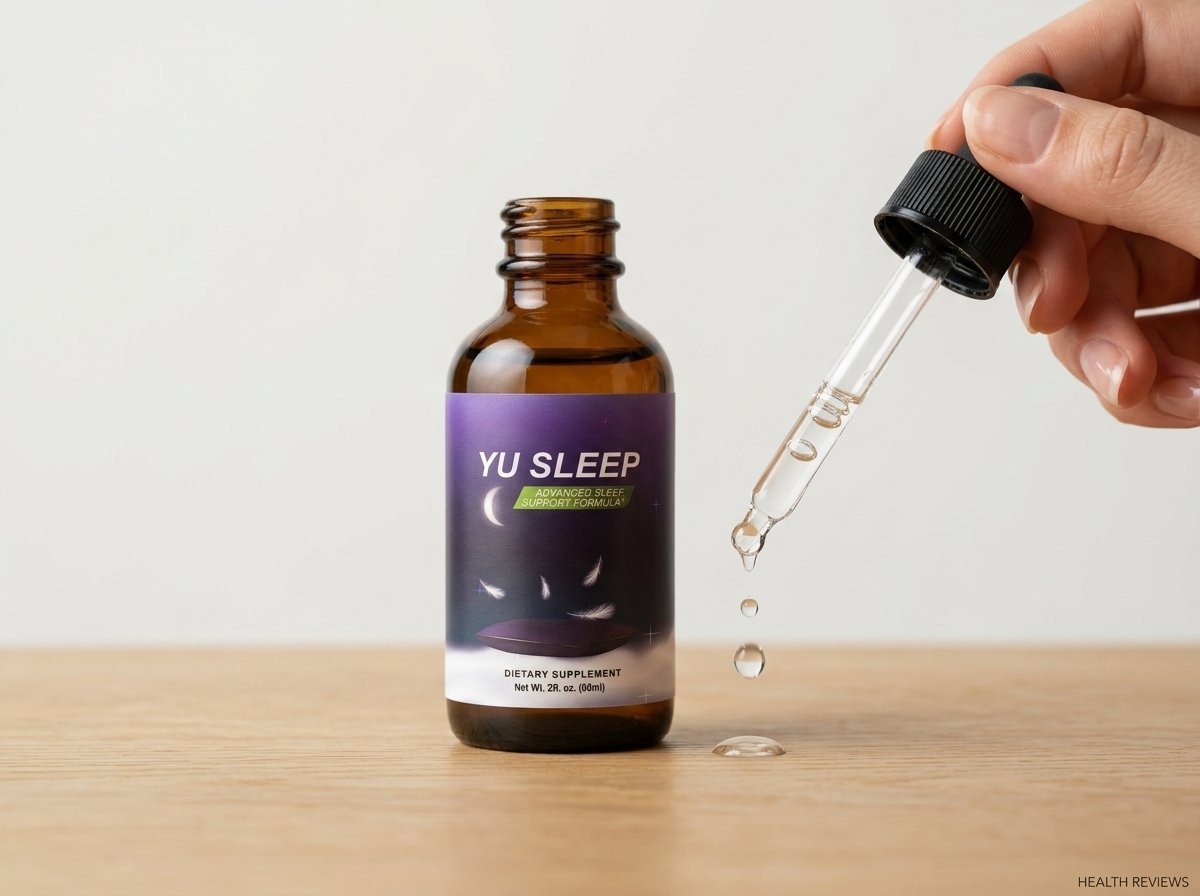
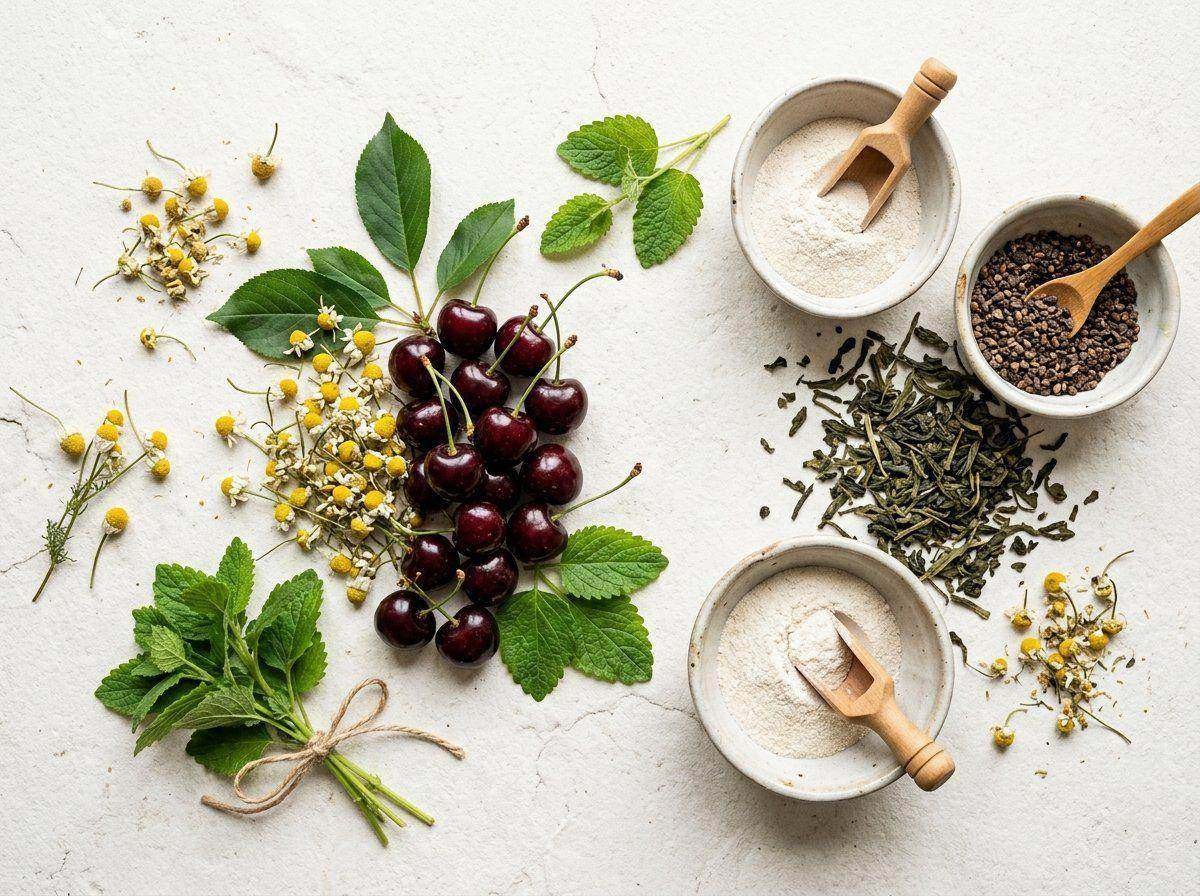
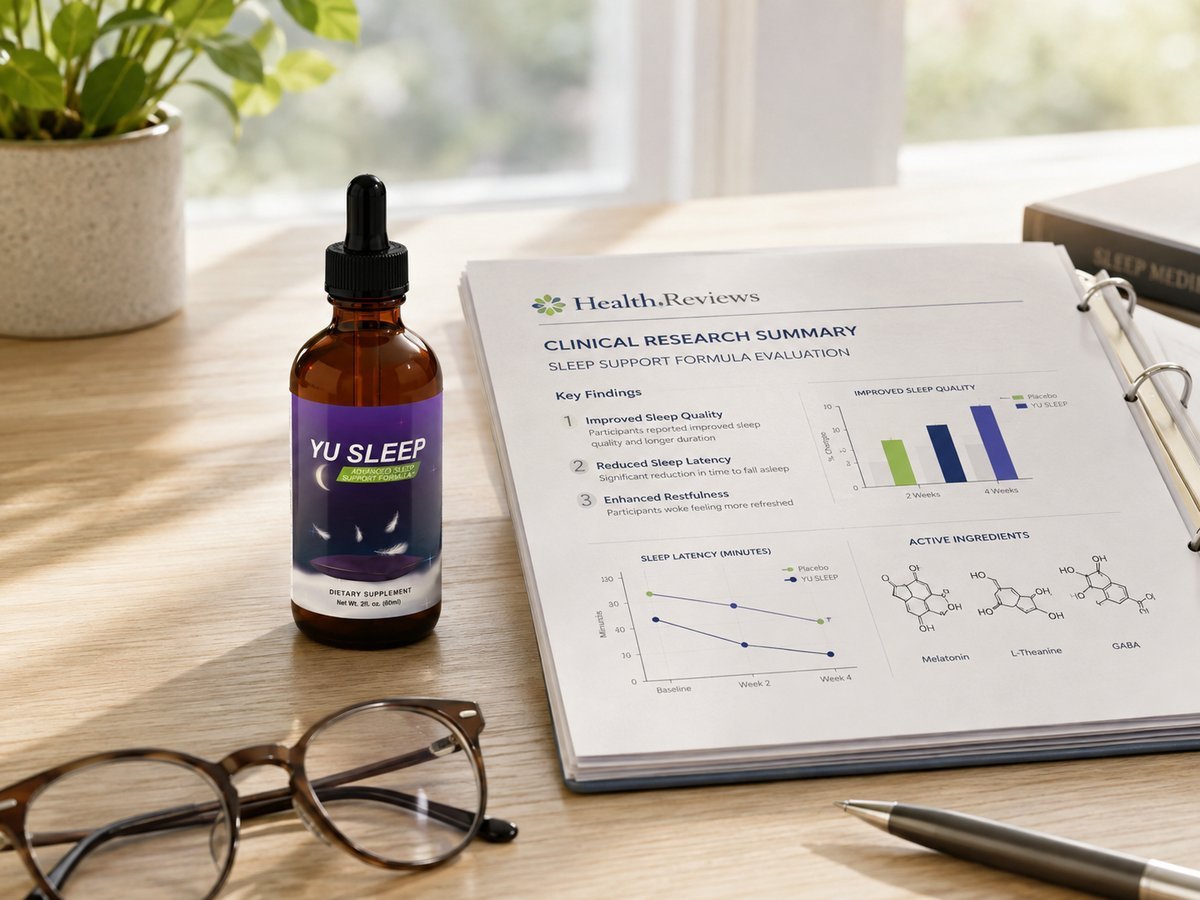
Yu Sleep is built around a 10-ingredient sleep-support formula that combines low-dose melatonin with L-theanine, 5-HTP, magnesium glycinate, GABA, tart cherry extract, apigenin, lemon balm, and vitamins B6 and B2.
On paper, the formula is coherent. The ingredients are not random wellness add-ons; most fit into one of three roles: circadian signaling, relaxation and inhibitory neurotransmitter support, or pathways related to serotonin and melatonin production.
The main question is not whether the ingredient list makes sense. It does.
The bigger limitation is dose transparency. In the official Yu Sleep sales-page ingredient presentation reviewed by Health Reviews, melatonin is specifically disclosed at 0.9 mg per serving, while comparable per-ingredient amounts are not shown for the other nine ingredients.
That means we can judge the formula’s logic much more confidently than we can judge its likely potency.
For the full purchase decision — including pricing, refund terms, buyer fit, pros, cons, and our overall verdict — see our Yu Sleep review.
Quick Answer
Yu Sleep has a well-targeted ingredient profile and a credible overall rationale for sleep support.
Melatonin has the strongest established connection to sleep timing, while L-theanine has increasingly useful human evidence for sleep-related outcomes. Magnesium, 5-HTP, tart cherry, GABA, apigenin, and lemon balm provide additional supportive or mechanistic rationale.
The biggest weakness is that the official product presentation clearly quantifies only melatonin at 0.9 mg. Without individual amounts for the other nine ingredients, it is difficult to compare the finished formula with doses used in published research.
Bottom line: The Yu Sleep ingredient list is a genuine strength. The formula makes sense on paper, but better dose transparency would make it much easier to judge how strong the finished product is likely to be in practice.
Yu Sleep Ingredients at a Glance
| Ingredient | Disclosed Dose | Main Role in Formula | Evidence Strength | Evidence Type |
|---|---|---|---|---|
| Melatonin | 0.9 mg | Circadian signaling, sleep timing | Strong | Ingredient-level |
| L-Theanine | Not disclosed | Relaxation, sleep quality support | Moderate | Ingredient-level |
| 5-HTP | Not disclosed | Serotonin precursor, sleep-related signaling | Limited–Moderate | Ingredient-level |
| Magnesium Glycinate | Not disclosed | Nervous-system support | Limited–Moderate / Mixed | Ingredient-level |
| Red Tart Cherry Extract | Not disclosed | Melatonin-containing fruit extract, complementary sleep support | Limited–Moderate | Ingredient-level |
| GABA | Not disclosed | Inhibitory neurotransmitter pathway support | Limited | Ingredient-level |
| Apigenin | Not disclosed | GABA-related calming mechanism | Limited | Ingredient-level / mechanistic |
| Lemon Balm Extract | Not disclosed | Relaxation support | Limited but promising | Ingredient-level |
| Vitamin B6 | Not disclosed | Neurotransmitter cofactor | Limited direct sleep evidence | Ingredient-level |
| Vitamin B2 | Not disclosed | General metabolic cofactor | Limited direct sleep evidence | Ingredient-level |
Important: “Strong,” “Moderate,” or “Limited” describes research on the ingredient itself. It does not mean the finished Yu Sleep formula has been shown to produce the same effect.
Health Reviews did not identify an independent clinical trial of the complete Yu Sleep formula.
Full Yu Sleep Ingredient Breakdown
Melatonin — 0.9 mg
Melatonin is the most straightforward ingredient in Yu Sleep because its biological role in circadian timing is well established and the amount used is actually disclosed.
A systematic review and meta-analysis of randomized controlled trials found that melatonin supplementation can improve several sleep-related outcomes, although average effects are generally modest rather than dramatic.
Yu Sleep provides 0.9 mg per serving.
That is a relatively low-dose approach compared with many consumer sleep products that use several milligrams of melatonin. Low-dose melatonin has demonstrated sleep-related effects in human research, so 0.9 mg should not automatically be viewed as an obvious underdose.
At the same time, dose-response research published in 2024 found that improvements in sleep onset latency and total sleep time increased with dose up to approximately 4 mg/day across the trials analyzed. That means it would also be inaccurate to imply that lower doses are always equivalent to higher ones.
The practical takeaway is more balanced:
Yu Sleep’s 0.9 mg is a deliberate low-dose formulation choice with a plausible research basis, not proof that lower is universally better.
For buyers who specifically want to avoid starting with a multi-milligram melatonin serving, that positioning is one of the formula’s most appealing features.
L-Theanine — Dose Not Disclosed
L-theanine is an amino acid naturally found in tea and commonly used in supplements designed around relaxation rather than heavy sedation.
A 2025 systematic review and meta-analysis included 19 articles and 897 participants. It reported statistically significant improvements in subjective sleep onset latency, daytime dysfunction, and overall subjective sleep quality.
The researchers also emphasized an important limitation: relatively few studies used pure L-theanine as the only intervention, and more work is needed to clarify optimal dose and duration.
That makes the evidence moderate rather than definitive, but L-theanine still stands out as one of the better-supported non-melatonin ingredients in Yu Sleep.
The unresolved question is dose.
Because the official Yu Sleep ingredient presentation does not clearly state the L-theanine amount per serving, Health Reviews cannot determine whether it falls within the ranges commonly studied in human trials.
5-HTP — Dose Not Disclosed
5-HTP, or 5-hydroxytryptophan, is a precursor the body can convert into serotonin. Serotonin is involved in multiple neurological processes and is also upstream of melatonin synthesis.
A 2024 randomized controlled trial evaluated 100 mg/day of 5-HTP in older adults. Certain sleep-quality measures improved, particularly among participants classified as poor sleepers.
That is useful evidence, but it should be interpreted in context:
- the study population was older adults;
- the trial used a known 100 mg dose;
- the sample was relatively small;
- Yu Sleep does not disclose a directly comparable 5-HTP amount in the ingredient presentation we reviewed.
For those reasons, Health Reviews rates 5-HTP as limited-to-moderate ingredient-level evidence for this use rather than a proven driver of Yu Sleep’s effects.
It is still a meaningful ingredient because the mechanism is relevant and human data exists.
Magnesium Glycinate — Dose Not Disclosed
Magnesium plays an important role in normal nervous-system function and is one of the most common minerals included in sleep-support formulas.
The sleep evidence, however, is more mixed than supplement marketing sometimes implies.
A systematic review examining magnesium and sleep found positive associations in observational research, but randomized controlled trials produced inconsistent findings.
That means magnesium is best viewed as a supportive ingredient rather than a strong standalone reason to expect a major sleep effect.
Yu Sleep uses magnesium glycinate, a form commonly chosen in supplements and generally regarded as a well-tolerated option.
Still, evidence for magnesium supplementation in general should not automatically be treated as clinical proof for magnesium glycinate specifically.
The undisclosed per-serving amount also prevents a meaningful comparison with doses used in research.
Red Tart Cherry Extract — Dose Not Disclosed
Tart cherry is relevant to sleep because it naturally contains melatonin and other bioactive compounds, including polyphenols.
A 2012 randomized, double-blind, placebo-controlled trial found that tart cherry juice increased melatonin levels and improved several sleep measures.
More recently, a 2025 systematic review evaluated seven interventional studies. Three reported significant improvements in outcomes such as sleep duration, efficiency, or sleep onset time, but the review also emphasized substantial variation in dose, intervention length, and participant characteristics.
Its conclusion was appropriately cautious: the evidence is promising but still limited and heterogeneous.
That makes tart cherry a sensible complementary ingredient in Yu Sleep.
It reinforces the product’s sleep-oriented design, but Health Reviews would not treat it as a primary driver of the formula without knowing the extract amount and characteristics.
GABA — Dose Not Disclosed
GABA, or gamma-aminobutyric acid, is the brain’s principal inhibitory neurotransmitter and is frequently included in relaxation and sleep supplements.
The logic is easy to understand: GABA-related signaling is associated with reduced neuronal excitability.
The evidence for orally supplemented GABA is less certain.
A systematic review of placebo-controlled human trials found limited evidence for stress-related benefits and very limited evidence for sleep benefits.
There is also ongoing scientific discussion about how much orally consumed GABA reaches the central nervous system and whether some effects may involve indirect pathways.
That does not make GABA a poor ingredient choice.
It simply means Health Reviews would treat it as a supporting component, not one of the strongest evidence-based reasons to choose Yu Sleep.
Apigenin — Dose Not Disclosed
Apigenin is a flavonoid naturally present in plants such as chamomile.
Laboratory and animal research suggests that apigenin can interact with GABA-related and benzodiazepine-binding pathways, which provides a plausible biological explanation for calming effects.
However, direct human sleep evidence for isolated apigenin remains limited.
This distinction matters because much of the better-known clinical literature involves whole chamomile preparations, which contain apigenin along with many other compounds.
Yu Sleep lists apigenin as an individual ingredient rather than whole chamomile extract.
So the best interpretation is:
Apigenin has an interesting mechanistic rationale, but direct human evidence for isolated apigenin as a sleep supplement is still limited.
That makes it a reasonable secondary ingredient rather than a centerpiece of the formula.
Lemon Balm Extract — Dose Not Disclosed
Lemon balm, or Melissa officinalis, has a long history of use in calming herbal preparations.
A 2023 prospective, randomized, double-blind, placebo-controlled clinical trial found improvements in several measures related to emotional distress and sleep using a standardized phospholipid carrier-based Melissa officinalis extract.
That is encouraging human evidence, but it does not establish that every lemon balm extract behaves identically.
The study used a particular standardized preparation, while the official Yu Sleep sales page does not provide enough extract-standardization detail to establish equivalence.
Health Reviews therefore considers lemon balm’s evidence limited but promising.
Its inclusion fits the overall formula well, but the undisclosed amount and extract characteristics prevent a stronger conclusion.
Vitamin B6 — Dose Not Disclosed
Vitamin B6 participates in numerous metabolic and neurotransmitter-related pathways.
It is biochemically relevant to pathways involving tryptophan and serotonin, which helps explain why it appears in many sleep-oriented formulations.
Direct evidence that supplemental B6 meaningfully improves sleep outcomes is much weaker.
A 2018 randomized study using 240 mg of vitamin B6 increased dream recall but did not demonstrate broad improvements across the other sleep measures evaluated.
That is not strong evidence for B6 as a sleep aid.
In Yu Sleep, B6 therefore makes more sense as a supporting cofactor than as an ingredient expected to drive a noticeable sleep effect by itself.
Vitamin B2 — Dose Not Disclosed
Vitamin B2, or riboflavin, is involved in energy metabolism and multiple enzyme systems.
Its role in Yu Sleep appears to be supportive rather than directly sleep-promoting.
There is limited direct human evidence showing that supplemental vitamin B2 alone meaningfully improves sleep outcomes.
Health Reviews would therefore treat B2 as part of the formula’s metabolic support rather than a meaningful reason on its own to choose the product.
Which Yu Sleep Ingredients Matter Most?
Not all 10 ingredients deserve equal weight.
1. Melatonin
Melatonin matters most because:
- it has the clearest direct connection to sleep timing;
- it has a substantial human research base;
- Yu Sleep actually discloses the dose;
- the 0.9 mg amount gives the product a distinctive low-dose positioning.
That makes melatonin the easiest ingredient in the formula to evaluate with confidence.
2. L-Theanine
L-theanine is probably the strongest non-melatonin ingredient from an evidence perspective.
Recent systematic-review data supports a potential benefit for subjective sleep outcomes, and its relaxation-oriented role fits naturally with the rest of the formula.
The main limitation is simply that Yu Sleep does not disclose the amount clearly enough to compare it with study doses.
3. 5-HTP
5-HTP deserves attention for two reasons.
First, it has a plausible serotonin-related role and some human sleep research.
Second, its presence materially changes who should use the formula casually because 5-HTP deserves additional consideration in people taking medications that affect serotonin.
So 5-HTP is not necessarily the third “strongest” ingredient scientifically, but it is one of the most important ingredients for understanding Yu Sleep as a whole.
Supporting Ingredients
Magnesium glycinate, tart cherry, GABA, apigenin, lemon balm, vitamin B6, and vitamin B2 complete the formula.
None of them needs to be a powerful standalone sleep agent for the formulation strategy to make sense.
Their purpose appears to be to provide additional support across several related pathways rather than rely on one ingredient to do everything.
What Is the Formula Designed to Do?
Yu Sleep is more targeted than a generic wellness blend.
Its ingredients broadly fit into three groups.
Circadian and Sleep-Timing Support
- Melatonin
- Tart cherry extract
These ingredients relate most directly to melatonin signaling and sleep-wake timing.
Relaxation and Calming Support
- L-theanine
- GABA
- Apigenin
- Lemon balm
- Magnesium glycinate
These components are intended to support a calmer physiological state around bedtime through different pathways.
Serotonin and Metabolic Support
- 5-HTP
- Vitamin B6
- Vitamin B2
- Magnesium
These ingredients participate directly or indirectly in pathways relevant to neurotransmitter and normal neurological function.
Taken together, the formula has a clear theme. It does not appear to be padded with unrelated digestive enzymes, generic adaptogens, or a broad multivitamin blend simply to make the ingredient list longer.
Instead of relying primarily on a multi-milligram melatonin dose, Yu Sleep spreads its formulation across several sleep- and relaxation-related mechanisms.
That is a reasonable strategy on paper. The tradeoff is that multi-ingredient formulas become much harder to evaluate when most of the individual amounts are not disclosed.
What Is Missing or Underexplained?
Yu Sleep’s ingredient selection is stronger than its transparency.
Individual Amounts for 9 of the 10 Ingredients
This is the biggest issue.
Melatonin is disclosed at 0.9 mg, but the official sales-page ingredient presentation reviewed by Health Reviews does not provide directly comparable per-serving quantities for the other nine ingredients.
Without those amounts, we cannot determine whether Yu Sleep uses doses similar to those studied in human research. That uncertainty does not mean the ingredients are ineffective. It means the finished formula cannot be evaluated with the same confidence as a product that clearly identifies each active amount.
Botanical Extract Details
The official product presentation lists ingredients such as lemon balm and tart cherry but provides limited information about extract standardization. That makes it difficult to determine how closely those ingredients resemble specific extracts used in research.
No Valerian Root or Whole Chamomile
Some third-party pages associate Yu Sleep with valerian or chamomile. Those ingredients do not appear in the official 10-ingredient presentation reviewed by Health Reviews.
Yu Sleep does contain apigenin, which is naturally found in chamomile, but isolated apigenin should not be treated as equivalent to whole chamomile extract.
“Nano-Enhanced” Positioning
Yu Sleep is marketed as “nano-enhanced,” with the implication that its liquid format may improve absorption. Health Reviews did not identify published comparative research showing that the finished Yu Sleep formula achieves superior absorption or better sleep outcomes because of this claimed technology. For now, the liquid format is easier to credit as a convenience advantage than as a proven efficacy advantage.
Does the Yu Sleep Formula Make Sense?
Yes. That is the clearest conclusion from the ingredient analysis.
The formula is targeted, the ingredient choices generally match the intended use, and several components have meaningful ingredient-level research behind them. The 0.9 mg melatonin dose also gives Yu Sleep a more deliberate positioning than products that simply compete by adding increasingly large melatonin amounts.
The formula’s biggest weakness is not poor ingredient selection. It is uncertainty about the undisclosed doses.
If the amounts of L-theanine, 5-HTP, magnesium, tart cherry, lemon balm, and the other supporting compounds are reasonably aligned with studied ranges, the formula could be quite well constructed. If some amounts are substantially below those used in relevant studies, the practical effect could be smaller than the ingredient list suggests.
Because those quantities are not publicly clear in the product presentation reviewed, Health Reviews cannot resolve that question. Still, there is enough ingredient logic here to consider Yu Sleep a credible sleep-support formula on paper rather than a random collection of trendy compounds.
Safety and Interaction Notes
Most people looking at an ingredients page do not need a full medical safety review, but several points are worth knowing before using a multi-ingredient sleep supplement. For comprehensive safety analysis, see our dedicated guide on Yu Sleep side effects.
Medical Caution & Red Flags:
You should consult a healthcare professional before using Yu Sleep if you have:
- 5-HTP with serotonergic medications: Anyone taking antidepressants (SSRIs, SNRIs, MAOIs) should discuss the combination with a physician due to serotonin syndrome risks.
- Sedative combinations: Combining multiple calming products with prescription sedatives, sleep medications, or alcohol can increase central nervous system depression.
- Kidney impairment: Magnesium clearance is reduced in individuals with compromised renal function.
- Upcoming surgery: Standard guidance requires stopping non-essential supplements 1–2 weeks beforehand and confirming with the surgical team.
- Pregnancy and breastfeeding: Consult a qualified healthcare professional before taking new sleep dietary supplements.
Persistent sleep disturbances require proper medical evaluation rather than relying exclusively on dietary supplementation.
Final Verdict
Yu Sleep’s ingredient list is one of the product’s stronger features. The formula is targeted, internally coherent, and built around ingredients that genuinely relate to sleep timing, relaxation, or neurotransmitter support.
Melatonin has the strongest established sleep rationale and is transparently dosed at 0.9 mg. L-theanine is a credible supporting ingredient with useful recent human evidence. The remaining components add plausible support, even though their individual evidence strength varies considerably.
The main limitation is straightforward: nine of the ten ingredient amounts are not clearly disclosed in the official sales-page presentation reviewed by Health Reviews. That prevents us from confidently matching the finished formula to the exact doses used in clinical studies. But it does not erase the fact that the formulation itself is thoughtfully targeted.
Health Reviews’ view: Yu Sleep has a credible ingredient profile and enough ingredient-level support to make the formula reasonable to consider. Greater dose transparency would strengthen the case considerably, but the ingredient selection itself is not the weak point. Also check is Yu Sleep legit for transaction and vendor legitimacy analysis.
If this formula logic matches what you’re looking for, and you want to evaluate pricing, guarantee terms, buyer fit, and the overall purchase decision, the next step is the full Yu Sleep review.
If you’re taking antidepressants or other serotonergic medications, are pregnant or breastfeeding, are already using a prescription sedative, or have an upcoming surgery, talk to your prescriber before adding this or any similar formula — the 5-HTP interaction in particular isn’t something to work around without medical input.
Frequently Asked Questions
How many ingredients are in Yu Sleep?
The official Yu Sleep ingredient presentation reviewed by Health Reviews lists 10: red tart cherry extract, 5-HTP, vitamin B6, vitamin B2, magnesium glycinate, apigenin, lemon balm extract, L-theanine, melatonin, and GABA.
Are all Yu Sleep ingredient doses disclosed?
No. Melatonin is specifically listed at 0.9 mg per serving. Comparable individual amounts are not clearly provided for the other nine ingredients in the official sales-page ingredient presentation reviewed by Health Reviews.
Is 0.9 mg of melatonin too low?
Not necessarily. 0.9 mg is a relatively low dose, but low-dose melatonin has demonstrated sleep-related effects in human research. That makes it a plausible formulation choice rather than an obvious underdose. Newer dose-response research also suggests that larger doses can produce larger effects for some sleep outcomes, so Health Reviews would not claim that lower doses are always equivalent or superior.
Which Yu Sleep ingredients have the strongest evidence?
Melatonin has the most established evidence base for sleep timing and sleep-related outcomes. L-theanine also has useful recent systematic-review evidence supporting several subjective sleep measures. Other ingredients, including magnesium, 5-HTP, tart cherry, GABA, apigenin, and lemon balm, have varying levels of evidence and are better viewed as supporting components.
Does Yu Sleep contain valerian root?
Not in the official 10-ingredient presentation reviewed by Health Reviews. Some third-party pages list ingredients that do not match the current official product information, which is why Health Reviews uses the seller’s current ingredient presentation as the commercial source of record.
Does Yu Sleep contain chamomile?
Whole chamomile extract is not listed in the official ingredient presentation reviewed. Yu Sleep does contain apigenin, a flavonoid naturally found in chamomile, but isolated apigenin and whole chamomile extract are not the same thing.
Is magnesium glycinate proven to improve sleep?
No. Magnesium is biologically relevant and commonly included in sleep formulas, but systematic reviews have found mixed results across randomized trials. Magnesium glycinate is therefore better viewed as a reasonable supporting ingredient rather than a clinically proven sleep solution.
Is GABA proven to improve sleep?
Evidence for oral GABA remains limited. A systematic review found very limited evidence for sleep benefits in humans, so Health Reviews considers GABA a supporting ingredient rather than one of Yu Sleep’s primary evidence-backed components.
Can 5-HTP interact with medications?
Yes, medication considerations are important. Because 5-HTP influences serotonin pathways, people taking antidepressants or other serotonergic medications should consult a qualified healthcare professional before combining them.
Does the Yu Sleep formula make biological sense?
Yes. The 10 ingredients broadly map to circadian signaling, relaxation and inhibitory pathways, or neurotransmitter-related support. That makes Yu Sleep a coherent sleep-oriented formula. The main uncertainty is not the ingredient selection but the lack of individual dose transparency for most of the formula.